Appeals Court Presses Sides in Investor Suit Over ‘Check the Website’ Disclosure
February 12, 2026 | Judicial - Appeals Court Oral Arguments, Judicial, Massachusetts
This article was created by AI summarizing key points discussed. AI makes mistakes, so for full details and context, please refer to the video of the full meeting. Please report any errors so we can fix them. Report an error »
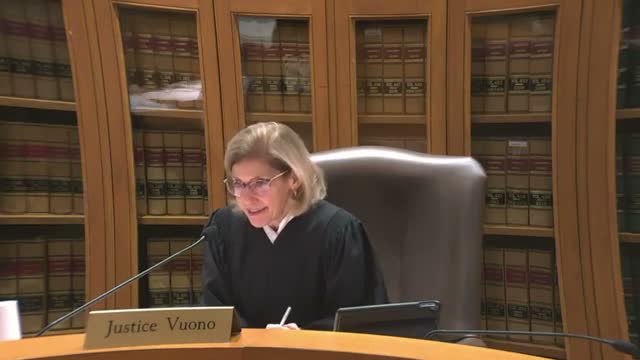
The Appeals Court panel on Wednesday questioned lawyers in Jewel LLC’s appeal from an adverse judgment in claims under the Massachusetts Uniform Securities Act (MUSA) and G.L. c. 93A. Appellant counsel Mike Gilloran said the trial court erred by allowing a seller‑beware principle to be displaced: Jewel’s investor client was not required to investigate by clicking a website link and thus lacked "actual knowledge" of the issuer’s poor finances.
"All that is required is ignorance of the untruth or omission," Gilloran told the court, invoking the governing SJC precedent he said controls the MUSA materiality standard. He told the panel his client gave $64,000 expecting to be told material facts and that later conversion of that payment and the company’s indebtedness were material omissions that the trial court should not have treated as the investor’s responsibility.
Appellees’ counsel framed the matter differently. They told the panel the record shows GTI’s public filings and the email that told the investor to "check the website," and that the trial judge found, after weighing testimony and documents, that disclosure had occurred and the investor knew the relevant facts (including a $1,000,000 raise condition referenced at trial). The panel repeatedly pressed whether clicking a hyperlink is legally equivalent to actual knowledge and explored the limits of the court’s deference to trial‑court credibility determinations.
The appellant asked the court to reverse on MUSA and 93A claims and remand for judgment; the panel did not rule from the bench and took the arguments under advisement.
"All that is required is ignorance of the untruth or omission," Gilloran told the court, invoking the governing SJC precedent he said controls the MUSA materiality standard. He told the panel his client gave $64,000 expecting to be told material facts and that later conversion of that payment and the company’s indebtedness were material omissions that the trial court should not have treated as the investor’s responsibility.
Appellees’ counsel framed the matter differently. They told the panel the record shows GTI’s public filings and the email that told the investor to "check the website," and that the trial judge found, after weighing testimony and documents, that disclosure had occurred and the investor knew the relevant facts (including a $1,000,000 raise condition referenced at trial). The panel repeatedly pressed whether clicking a hyperlink is legally equivalent to actual knowledge and explored the limits of the court’s deference to trial‑court credibility determinations.
The appellant asked the court to reverse on MUSA and 93A claims and remand for judgment; the panel did not rule from the bench and took the arguments under advisement.
Don't Miss a Word: See the Full Meeting!
Go beyond summaries. Unlock every video, transcript, and key insight with a Founder Membership.
✓
Get instant access to full meeting videos
✓
Search and clip any phrase from complete transcripts
✓
Receive AI-powered summaries & custom alerts
✓
Enjoy lifetime, unrestricted access to government data
30-day money-back guarantee
