Yuma Union social workers outline campus mental-health supports, community partnerships and funding
February 12, 2026 | Yuma Union High School District (4507), School Districts, Arizona
This article was created by AI summarizing key points discussed. AI makes mistakes, so for full details and context, please refer to the video of the full meeting. Please report any errors so we can fix them. Report an error »
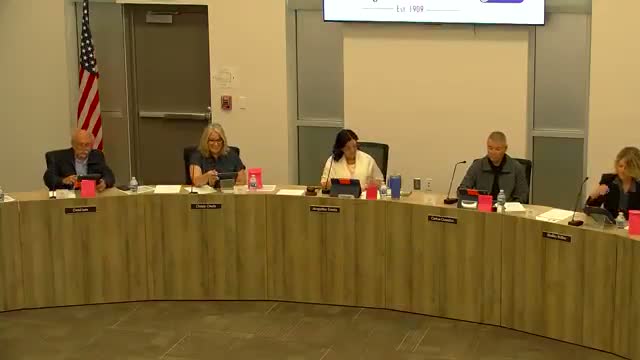
YUMA, Ariz. — Social workers for Yuma Union High School District briefed the board on Feb. 12 about on-campus mental-health services, community partnerships and funding that aim to connect students and families to care.
Henry Gonzales, director of health and safety, introduced a team of school social workers who described their role as a bridge between home, school and community: providing mental-health support, assisting with behavioral concerns, advocating for students, and coordinating referrals to outside providers. Presenters named partners and tools they use to support students, including an MOU with Easterseals and other community providers that enables on-campus therapy referrals.
Social workers described several campus resources: care closets stocked with food, clothing and hygiene items; student-support teams at each campus that include a dropout-prevention specialist, a director of student support and a social worker; and procedures to bring families into child-and-family-team meetings when an outside referral is made. Presenters emphasized parental engagement and said school-based referrals to outside providers require parental opt-in.
On crisis response, social workers noted a high incidence of suicidal ideation, chronic anxiety and grief among students and praised the mobile crisis team as a critical community partner. To ensure students without adequate insurance receive care, the presenters said block-grant funding has been applied to partner agencies so underinsured or uninsured students can access services without direct cost barriers.
Board members asked whether parents are involved when students are referred; presenters reiterated that parental engagement is “paramount” and that parents participate in child-and-family-team meetings. The district also explained that exit surveys for contracted providers are sent to the Arizona Department of Education (ADE) and are not visible to district staff directly, as part of contractual process and data flow.
What this means: the district presents a multi-layered approach to mental-health supports — campus-based social workers, contractual partnerships for on-site services, and targeted funding to cover gaps in insurance — and the board thanked staff for the work while confirming continued oversight and potential reporting back to the board.
What’s next: no formal action was taken; staff answered questions and may return with further program detail if requested by the board.
Henry Gonzales, director of health and safety, introduced a team of school social workers who described their role as a bridge between home, school and community: providing mental-health support, assisting with behavioral concerns, advocating for students, and coordinating referrals to outside providers. Presenters named partners and tools they use to support students, including an MOU with Easterseals and other community providers that enables on-campus therapy referrals.
Social workers described several campus resources: care closets stocked with food, clothing and hygiene items; student-support teams at each campus that include a dropout-prevention specialist, a director of student support and a social worker; and procedures to bring families into child-and-family-team meetings when an outside referral is made. Presenters emphasized parental engagement and said school-based referrals to outside providers require parental opt-in.
On crisis response, social workers noted a high incidence of suicidal ideation, chronic anxiety and grief among students and praised the mobile crisis team as a critical community partner. To ensure students without adequate insurance receive care, the presenters said block-grant funding has been applied to partner agencies so underinsured or uninsured students can access services without direct cost barriers.
Board members asked whether parents are involved when students are referred; presenters reiterated that parental engagement is “paramount” and that parents participate in child-and-family-team meetings. The district also explained that exit surveys for contracted providers are sent to the Arizona Department of Education (ADE) and are not visible to district staff directly, as part of contractual process and data flow.
What this means: the district presents a multi-layered approach to mental-health supports — campus-based social workers, contractual partnerships for on-site services, and targeted funding to cover gaps in insurance — and the board thanked staff for the work while confirming continued oversight and potential reporting back to the board.
What’s next: no formal action was taken; staff answered questions and may return with further program detail if requested by the board.
View the Full Meeting & All Its Details
This article offers just a summary. Unlock complete video, transcripts, and insights as a Founder Member.
✓
Watch full, unedited meeting videos
✓
Search every word spoken in unlimited transcripts
✓
AI summaries & real-time alerts (all government levels)
✓
Permanent access to expanding government content
30-day money-back guarantee
