Senate Judiciary reviews narrow amendment to S.183 to include change orders in contract-fraud language
February 13, 2026 | Judiciary, SENATE, Committees, Legislative , Vermont
This article was created by AI summarizing key points discussed. AI makes mistakes, so for full details and context, please refer to the video of the full meeting. Please report any errors so we can fix them. Report an error »
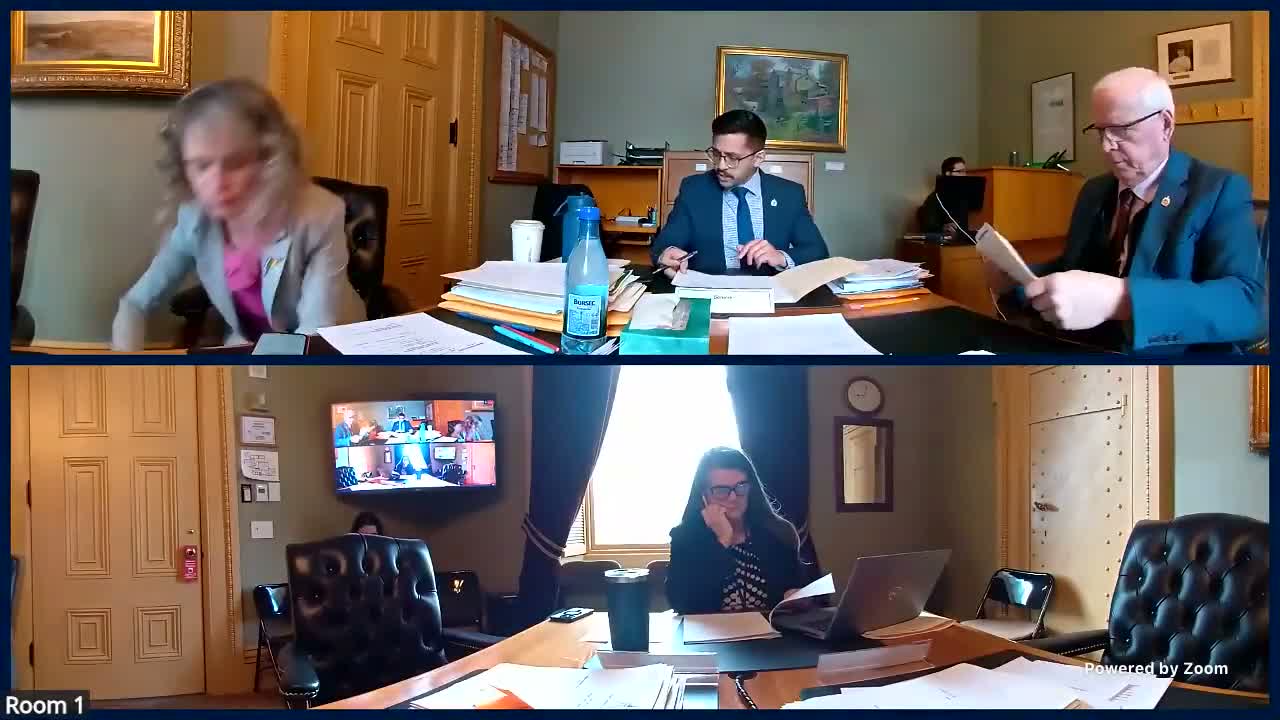
Legislative counsel told the Senate Judiciary committee on Feb. 12 that a single, limited change to S.183 would add the phrase “change orders” to existing contract language so that later alterations cannot be used to evade an intent-to-defraud requirement.
Michelle Channels of the Office of Legislative Council said the attorney general’s office recommended the fix. "The AG's office brought up the... issue of, well, what if there's a change order?" she said, explaining the amendment would treat a change order as a contract for purposes of proving intent at the time the new or altered agreement was entered.
Channels said the bill as drafted already applies at two monetary thresholds — $1,000 for a single owner contract and $2,500 aggregated across multiple clients — and she proposed mirroring the new wording in both places so the change-order language applies consistently. "You'd be striking out... contracts or agreements and then putting in contracts, agreements, or change orders," she said.
Committee members pressed several practical questions, including whether change orders are technically contracts and whether aligning the two threshold references is appropriate. Channels confirmed a change order would be treated as a contract and offered to circulate revised amendment language to committee staff (Emery) for a later vote.
Members also discussed enforcement logistics: Channels noted that such complaints typically go first to county state's attorneys and that the attorney general’s criminal division prosecutes selectively. The committee did not vote on the amendment and asked Channels to revise the aggregate-language wording and circulate the amendment for consideration when more members are present.
What happens next: Channels will edit the draft to align the aggregate threshold language, send the amendment to staff, and the committee will reconvene to consider the amendment when additional senators (including Senator Mattis) are present. No formal vote was recorded at the Feb. 12 meeting.
Michelle Channels of the Office of Legislative Council said the attorney general’s office recommended the fix. "The AG's office brought up the... issue of, well, what if there's a change order?" she said, explaining the amendment would treat a change order as a contract for purposes of proving intent at the time the new or altered agreement was entered.
Channels said the bill as drafted already applies at two monetary thresholds — $1,000 for a single owner contract and $2,500 aggregated across multiple clients — and she proposed mirroring the new wording in both places so the change-order language applies consistently. "You'd be striking out... contracts or agreements and then putting in contracts, agreements, or change orders," she said.
Committee members pressed several practical questions, including whether change orders are technically contracts and whether aligning the two threshold references is appropriate. Channels confirmed a change order would be treated as a contract and offered to circulate revised amendment language to committee staff (Emery) for a later vote.
Members also discussed enforcement logistics: Channels noted that such complaints typically go first to county state's attorneys and that the attorney general’s criminal division prosecutes selectively. The committee did not vote on the amendment and asked Channels to revise the aggregate-language wording and circulate the amendment for consideration when more members are present.
What happens next: Channels will edit the draft to align the aggregate threshold language, send the amendment to staff, and the committee will reconvene to consider the amendment when additional senators (including Senator Mattis) are present. No formal vote was recorded at the Feb. 12 meeting.
View the Full Meeting & All Its Details
This article offers just a summary. Unlock complete video, transcripts, and insights as a Founder Member.
✓
Watch full, unedited meeting videos
✓
Search every word spoken in unlimited transcripts
✓
AI summaries & real-time alerts (all government levels)
✓
Permanent access to expanding government content
30-day money-back guarantee
