Defender general warns S.193 could recreate 'a jail' rather than a forensic hospital; prosecutors propose targeted edits
February 13, 2026 | Judiciary, SENATE, Committees, Legislative , Vermont
This article was created by AI summarizing key points discussed. AI makes mistakes, so for full details and context, please refer to the video of the full meeting. Please report any errors so we can fix them. Report an error »
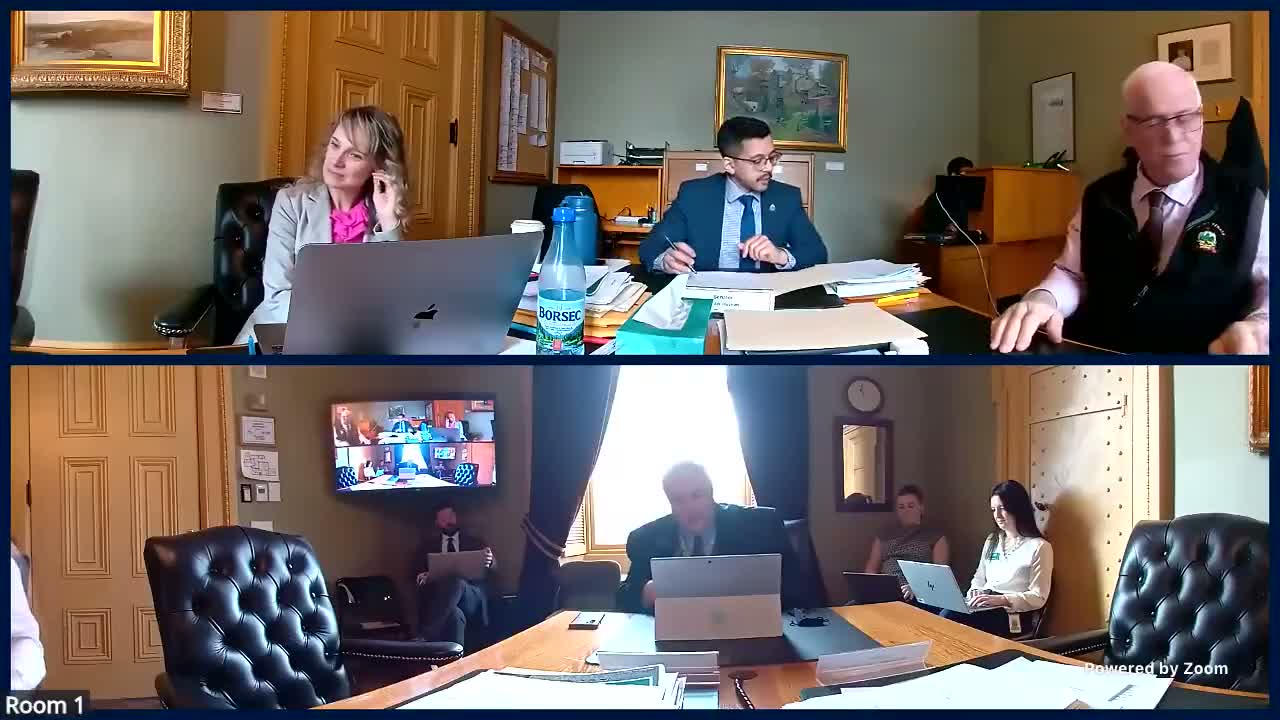
The Senate Judiciary heard testimony Feb. 12 on S.193, a bill to create a forensic hospital and revise competency-restoration procedures. Defender General Matt Valery told the panel that while his office supports the creation of a forensic hospital in principle, the current draft reads like a detention statute rather than a treatment law and risks running afoul of constitutional limits.
"To be constitutional, it cannot be operated in a manner that is akin to incarceration," Valery said, adding later, "If it looks like a jail, acts like a jail, and . . . it's a jail." He cited past experience, saying an earlier facility (Woodside) was effectively treated as a jail and prompted lawsuits and liability that led to its closure.
Valery identified several provisions he said raise legal risks: language that would let competency-restoration services be maintained "until the person receives a verdict"; dismissal criteria tied to the maximum sentence of the underlying charge; and a provision that he said shifts the burden of proof onto the person being held to show they are not dangerous. "So you gotta prove a negative," he said of the draft's clear-and-convincing evidence requirement for release.
Valery pointed to a line of case law, including Jackson v. Indiana and Foucha v. Louisiana, and referenced federal practice that typically limits incompetency detentions to measured time frames. He said courts in other jurisdictions have set short limits (he cited four to six months as a common outer range) and have invalidated detention that is functionally punitive or where restoration services are not promptly provided.
Deputy State Attorney Jared Bianchi, who said the draft is modeled on other states, disputed the implication that the bill was intended to create a new holding category for misdemeanors. He told the committee the statutory structure inserts new sections into existing chapters to create a special competency track for serious offenses while preserving existing judicial mechanisms such as Rule 48, which allows dismissal "in the interest of justice." Bianchi said the draft was not intended to keep people incarcerated without clinical justification.
To address Valery’s specific concern about maintaining services until verdict, Bianchi proposed a narrow drafting fix: changing the term "shall" to "may" in the subsection at issue, which he said would preserve the committee’s goals while reducing the risk of mandatory indefinite detention.
Committee members and staff said they expect suggested edits from the Agency of Human Services and other stakeholders in the coming week and agreed to invite Vermont Legal Aid back to address how hospitalization and nonhospitalization hearings should be navigated.
The discussion concluded without a vote; sponsors indicated they will circulate a revised draft that may address some constitutional and procedural concerns.
Next steps: committee staff said a second version of the draft will be provided within about a week and that additional testimony (including from Vermont Legal Aid) will be scheduled.
"To be constitutional, it cannot be operated in a manner that is akin to incarceration," Valery said, adding later, "If it looks like a jail, acts like a jail, and . . . it's a jail." He cited past experience, saying an earlier facility (Woodside) was effectively treated as a jail and prompted lawsuits and liability that led to its closure.
Valery identified several provisions he said raise legal risks: language that would let competency-restoration services be maintained "until the person receives a verdict"; dismissal criteria tied to the maximum sentence of the underlying charge; and a provision that he said shifts the burden of proof onto the person being held to show they are not dangerous. "So you gotta prove a negative," he said of the draft's clear-and-convincing evidence requirement for release.
Valery pointed to a line of case law, including Jackson v. Indiana and Foucha v. Louisiana, and referenced federal practice that typically limits incompetency detentions to measured time frames. He said courts in other jurisdictions have set short limits (he cited four to six months as a common outer range) and have invalidated detention that is functionally punitive or where restoration services are not promptly provided.
Deputy State Attorney Jared Bianchi, who said the draft is modeled on other states, disputed the implication that the bill was intended to create a new holding category for misdemeanors. He told the committee the statutory structure inserts new sections into existing chapters to create a special competency track for serious offenses while preserving existing judicial mechanisms such as Rule 48, which allows dismissal "in the interest of justice." Bianchi said the draft was not intended to keep people incarcerated without clinical justification.
To address Valery’s specific concern about maintaining services until verdict, Bianchi proposed a narrow drafting fix: changing the term "shall" to "may" in the subsection at issue, which he said would preserve the committee’s goals while reducing the risk of mandatory indefinite detention.
Committee members and staff said they expect suggested edits from the Agency of Human Services and other stakeholders in the coming week and agreed to invite Vermont Legal Aid back to address how hospitalization and nonhospitalization hearings should be navigated.
The discussion concluded without a vote; sponsors indicated they will circulate a revised draft that may address some constitutional and procedural concerns.
Next steps: committee staff said a second version of the draft will be provided within about a week and that additional testimony (including from Vermont Legal Aid) will be scheduled.
Don't Miss a Word: See the Full Meeting!
Go beyond summaries. Unlock every video, transcript, and key insight with a Founder Membership.
✓
Get instant access to full meeting videos
✓
Search and clip any phrase from complete transcripts
✓
Receive AI-powered summaries & custom alerts
✓
Enjoy lifetime, unrestricted access to government data
30-day money-back guarantee
