Cook County Board of Adjustment denies Vertical Bridge setback variance for proposed Highway 61 tower
February 12, 2026 | Cook County, Minnesota
This article was created by AI summarizing key points discussed. AI makes mistakes, so for full details and context, please refer to the video of the full meeting. Please report any errors so we can fix them. Report an error »
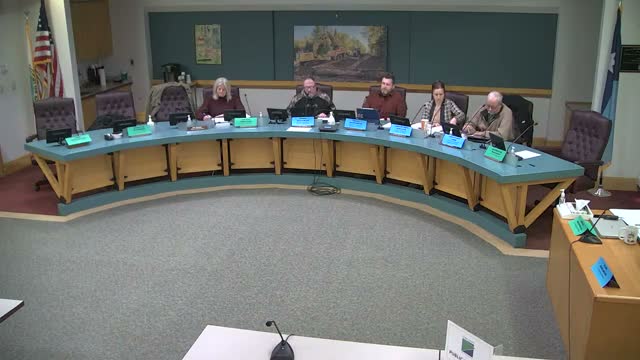
The Cook County Board of Adjustment voted unanimously to deny a variance request from Vertical Bridge that would have allowed a wireless telecommunications tower to be relocated within 1,000 feet of two neighboring residences.
Land services staff told the board the relocation was proposed to avoid direct wetland impacts identified in a recent wetland delineation and WACAA (Wetland Conservation Act) reviews. The staff presentation said the parcel (58.61 acres, FAR 1 zoning) and prior conditional use permit authorized a 195‑foot self‑supporting lattice tower with a four‑foot lightning rod. Staff said the proposed relocation reduces wetland impacts but places the tower site approximately 573 feet from a proposed structure on one neighboring property and 831 feet from another, triggering the need for setback relief under the Cook County Tower Ordinance.
Richard Furlong, attorney for neighbor Doug Kamak, urged denial, telling the board the relocation was an economic choice rather than a true practical difficulty. "Is there a practical difficulty on this lot that prevents the tower company from building the tower where they'd like to do it? Simply, I think the answer is no," Furlong said. He argued the company could proceed at the original CUP‑approved location or negotiate compensation with neighbors who might sign release letters allowed under the ordinance.
Nearby resident Paul Renison told the board satellite services such as T‑Mobile/Starlink can fill coverage gaps and questioned whether a new tower remains necessary. "This gap‑filling technology solves the county board's communications concerns and is in use today," Renison said.
The applicant's representative responded that the Wetland Conservation Act requires sequencing — first avoid, then minimize, then mitigate wetland impacts — and that the relocation is the outcome of that sequencing. The representative said the applicant provided structural analysis and fall‑zone documentation signed by a licensed engineer and disputed claims that wildfire risk or property‑value loss had been proven.
Board members spent significant time weighing the ordinance's 1,000‑foot residential setback against the county's wetland protections and whether alternative locations would reasonably reduce impacts to both wetlands and neighboring properties. Staff cautioned that tabling the item would require a written extension because of processing deadlines.
Board member (identified in the record as Speaker 11) moved to deny the variance with findings that the practical‑difficulty claim did not outweigh alternatives that could better minimize impacts. The motion carried by voice vote; the board indicated the tally was 5–0. As a result, the requested setback relief for the proposed relocated tower was denied; the previously approved CUP location remains the applicant's option, subject to wetland mitigation and any further county board action on CUP amendments.
The denial ends the variance request as presented to the Board of Adjustment; staff noted the applicant may pursue other locations or reapply if they choose.
Land services staff told the board the relocation was proposed to avoid direct wetland impacts identified in a recent wetland delineation and WACAA (Wetland Conservation Act) reviews. The staff presentation said the parcel (58.61 acres, FAR 1 zoning) and prior conditional use permit authorized a 195‑foot self‑supporting lattice tower with a four‑foot lightning rod. Staff said the proposed relocation reduces wetland impacts but places the tower site approximately 573 feet from a proposed structure on one neighboring property and 831 feet from another, triggering the need for setback relief under the Cook County Tower Ordinance.
Richard Furlong, attorney for neighbor Doug Kamak, urged denial, telling the board the relocation was an economic choice rather than a true practical difficulty. "Is there a practical difficulty on this lot that prevents the tower company from building the tower where they'd like to do it? Simply, I think the answer is no," Furlong said. He argued the company could proceed at the original CUP‑approved location or negotiate compensation with neighbors who might sign release letters allowed under the ordinance.
Nearby resident Paul Renison told the board satellite services such as T‑Mobile/Starlink can fill coverage gaps and questioned whether a new tower remains necessary. "This gap‑filling technology solves the county board's communications concerns and is in use today," Renison said.
The applicant's representative responded that the Wetland Conservation Act requires sequencing — first avoid, then minimize, then mitigate wetland impacts — and that the relocation is the outcome of that sequencing. The representative said the applicant provided structural analysis and fall‑zone documentation signed by a licensed engineer and disputed claims that wildfire risk or property‑value loss had been proven.
Board members spent significant time weighing the ordinance's 1,000‑foot residential setback against the county's wetland protections and whether alternative locations would reasonably reduce impacts to both wetlands and neighboring properties. Staff cautioned that tabling the item would require a written extension because of processing deadlines.
Board member (identified in the record as Speaker 11) moved to deny the variance with findings that the practical‑difficulty claim did not outweigh alternatives that could better minimize impacts. The motion carried by voice vote; the board indicated the tally was 5–0. As a result, the requested setback relief for the proposed relocated tower was denied; the previously approved CUP location remains the applicant's option, subject to wetland mitigation and any further county board action on CUP amendments.
The denial ends the variance request as presented to the Board of Adjustment; staff noted the applicant may pursue other locations or reapply if they choose.
View the Full Meeting & All Its Details
This article offers just a summary. Unlock complete video, transcripts, and insights as a Founder Member.
✓
Watch full, unedited meeting videos
✓
Search every word spoken in unlimited transcripts
✓
AI summaries & real-time alerts (all government levels)
✓
Permanent access to expanding government content
30-day money-back guarantee
