Colorado Senate limits discharges of preproduction plastic materials after debate over penalties and scope
February 12, 2026 | Senate, Committees, Legislative, Colorado
This article was created by AI summarizing key points discussed. AI makes mistakes, so for full details and context, please refer to the video of the full meeting. Please report any errors so we can fix them. Report an error »
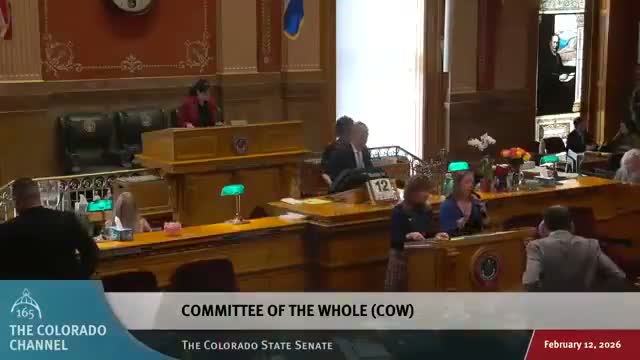
The Colorado Senate on Feb. 12 passed an amended bill prohibiting the discharge of preproduction plastic materials, a measure senators said aims to curb microplastic pollution from manufacturing feedstocks known as plastic pellets.
Senator Cutter, a prime sponsor on the floor, framed the bill as a targeted environmental protection: “Every single piece of plastic that’s ever been created ... can take anywhere from hundreds to thousands of years to break down,” she said, urging support for measures that prevent pellet loss during production and transport.
The bill, as amended, narrows the regulation to preproduction plastic materials and exempts wastewater treatment facilities; amendments adopted in the Transportation and Energy Committee clarified the bill’s legislative declaration, the definition of covered materials and effective dates. Senator Wallace, a co-prime sponsor, said the measure focuses on corporate facilities that manufacture, use, package or transport pellets and that “CDPHE may not issue permits allowing the disposal of plastic pellets or other preproduction materials.”
Opponents raised enforcement and fiscal questions. Senator Kirk Meyer asked how the bill would be enforced and where civil-penalty revenue — up to $25,000 per violation in the bill’s language — would be deposited. Cutter responded that civil penalties would go to the Water Quality Improvement Fund. Senator Kirk Meyer also pressed budget committees to resist unfunded agency requests related to the bill’s implementation.
Senator Bazley and others cautioned that the bill’s broad language could reach facilities already participating in voluntary programs such as Operation Clean Sweep and that the criminal and civil penalties in the fiscal note might be disproportionate. Bazley also urged federal coordination, saying national standards might be preferable.
Sponsors said the bill was a proportionate step because microplastics have been detected statewide: senators cited testing that found microplastics in waterways sampled in 2023. After floor debate and adoption of amendments L9, L7, L8 and L6 to refine scope and definitions, the Senate adopted the committee report and passed the bill on the floor.
What happens next
The bill, as amended on the floor, will proceed through any remaining engrossment steps before being sent to the governor for signature or veto.
Senator Cutter, a prime sponsor on the floor, framed the bill as a targeted environmental protection: “Every single piece of plastic that’s ever been created ... can take anywhere from hundreds to thousands of years to break down,” she said, urging support for measures that prevent pellet loss during production and transport.
The bill, as amended, narrows the regulation to preproduction plastic materials and exempts wastewater treatment facilities; amendments adopted in the Transportation and Energy Committee clarified the bill’s legislative declaration, the definition of covered materials and effective dates. Senator Wallace, a co-prime sponsor, said the measure focuses on corporate facilities that manufacture, use, package or transport pellets and that “CDPHE may not issue permits allowing the disposal of plastic pellets or other preproduction materials.”
Opponents raised enforcement and fiscal questions. Senator Kirk Meyer asked how the bill would be enforced and where civil-penalty revenue — up to $25,000 per violation in the bill’s language — would be deposited. Cutter responded that civil penalties would go to the Water Quality Improvement Fund. Senator Kirk Meyer also pressed budget committees to resist unfunded agency requests related to the bill’s implementation.
Senator Bazley and others cautioned that the bill’s broad language could reach facilities already participating in voluntary programs such as Operation Clean Sweep and that the criminal and civil penalties in the fiscal note might be disproportionate. Bazley also urged federal coordination, saying national standards might be preferable.
Sponsors said the bill was a proportionate step because microplastics have been detected statewide: senators cited testing that found microplastics in waterways sampled in 2023. After floor debate and adoption of amendments L9, L7, L8 and L6 to refine scope and definitions, the Senate adopted the committee report and passed the bill on the floor.
What happens next
The bill, as amended on the floor, will proceed through any remaining engrossment steps before being sent to the governor for signature or veto.
View the Full Meeting & All Its Details
This article offers just a summary. Unlock complete video, transcripts, and insights as a Founder Member.
✓
Watch full, unedited meeting videos
✓
Search every word spoken in unlimited transcripts
✓
AI summaries & real-time alerts (all government levels)
✓
Permanent access to expanding government content
30-day money-back guarantee
