Subcommittee backs substitute to set parole‑board scoring criteria, preserves board discretion
February 12, 2026 | 2026 Legislature VA, Virginia
This article was created by AI summarizing key points discussed. AI makes mistakes, so for full details and context, please refer to the video of the full meeting. Please report any errors so we can fix them. Report an error »
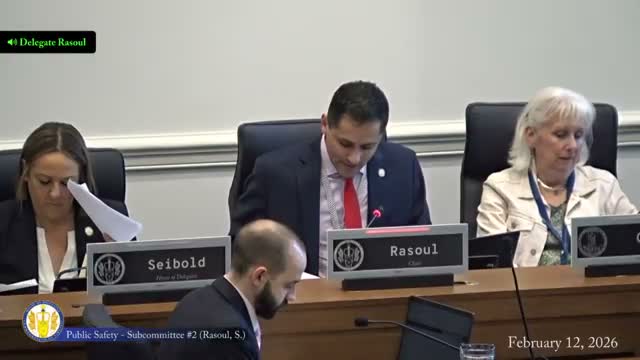
The House Public Safety Subcommittee No. 2 on Friday reported a substitute for House Bill 10 30 that would require the Parole Board and Department of Corrections to develop a codified scoring process to guide parole‑eligibility reviews, while explicitly preserving the board’s discretion to grant or deny parole.
Delegate Wilt, the bill patron, told the committee the measure "sets a set of criteria, a scoring process" to help the board prioritize hearings and evaluate similarly situated individuals consistently. Supporters described the substitute as procedural, not mandatory: "It does sort of give ... a little bit of criteria and a little bit of guidelines to help them sort determine who might be a little bit more acceptable," said Sean Waneta of the Valley Justice Coalition.
Proponents said the change responds to an anticipated increase in parole‑eligible aging inmates and to turnover on the Parole Board. Waneta said the state could face "12,000 people aging against geriatric parole eligibility over the course of the next several years," and that a structured approach would help the board manage caseloads. Academic and advocacy witnesses—among them criminology professor Steven Keener and Timothy Walker—said clearer criteria would promote fairness without reducing board authority.
Several public witnesses described personal experience with long incarceration and reintegration programs. Tina Ramsey, a former corrections officer, testified the bill would help the board consider factors previously overlooked. Delegate Sebel moved to report the bill with the substitute; the committee approved the motion and reported the substitute 6–0.
Next steps: the substitute was reported out of the subcommittee and will proceed through the legislative process; the committee encouraged stakeholders to continue refining the language before further action.
Delegate Wilt, the bill patron, told the committee the measure "sets a set of criteria, a scoring process" to help the board prioritize hearings and evaluate similarly situated individuals consistently. Supporters described the substitute as procedural, not mandatory: "It does sort of give ... a little bit of criteria and a little bit of guidelines to help them sort determine who might be a little bit more acceptable," said Sean Waneta of the Valley Justice Coalition.
Proponents said the change responds to an anticipated increase in parole‑eligible aging inmates and to turnover on the Parole Board. Waneta said the state could face "12,000 people aging against geriatric parole eligibility over the course of the next several years," and that a structured approach would help the board manage caseloads. Academic and advocacy witnesses—among them criminology professor Steven Keener and Timothy Walker—said clearer criteria would promote fairness without reducing board authority.
Several public witnesses described personal experience with long incarceration and reintegration programs. Tina Ramsey, a former corrections officer, testified the bill would help the board consider factors previously overlooked. Delegate Sebel moved to report the bill with the substitute; the committee approved the motion and reported the substitute 6–0.
Next steps: the substitute was reported out of the subcommittee and will proceed through the legislative process; the committee encouraged stakeholders to continue refining the language before further action.
View the Full Meeting & All Its Details
This article offers just a summary. Unlock complete video, transcripts, and insights as a Founder Member.
✓
Watch full, unedited meeting videos
✓
Search every word spoken in unlimited transcripts
✓
AI summaries & real-time alerts (all government levels)
✓
Permanent access to expanding government content
30-day money-back guarantee
