San Bernardino County teams carry out annual point-in-time count to assess homelessness
This article was created by AI summarizing key points discussed. AI makes mistakes, so for full details and context, please refer to the video of the full meeting. Please report any errors so we can fix them. Report an error »
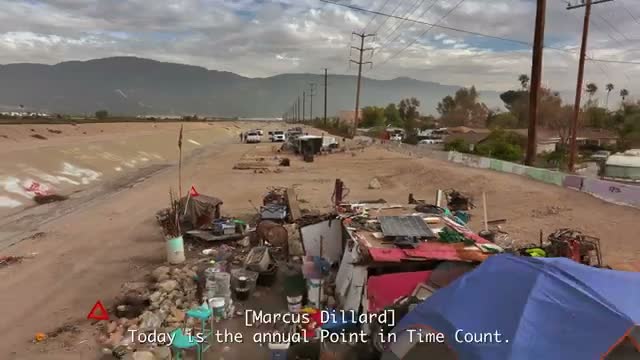
Speaker 1 (Unidentified Speaker) opened the briefing by saying, “Today is the annual point in time count,” and described the event as an effort to find community members displaced or impacted by homelessness and to identify what the community can do to better serve them.
Organizers said the count combines data collection with on-the-ground assistance. “By identifying individuals today, it provides a data we need to try to address problems in the near future,” Speaker 2 (Unidentified Speaker) said, adding that some people “will get some help today.” Speaker 3 (Unidentified Speaker) explained teams will visit known hot spots and ask willing individuals to be interviewed “to find out what kind of services in the future they may or may not need.”
Officials said the information gathered will guide where state and federal resources are focused. “The account lets us know where resources from both the state and the federal government need to be spent by geographical area,” Speaker 4 (Unidentified Speaker) said, describing the count as a tool to make sure resources are available in areas of highest need throughout the year.
Speakers also described the human side of outreach. “It can be a little emotional, seeing and hearing their stories,” Speaker 5 (Unidentified Speaker) said, while Speaker 6 (Unidentified Speaker) cautioned that some people decline offers of assistance. Speaker 7 (Unidentified Speaker) noted outreach encountered people who had “previously been in the foster care system,” underscoring the presence of vulnerable populations.
Organizers said the count helps leaders estimate housing needs and plan prevention. “That helps us gauge the number of housing units we need to produce to help create a front door so people have a pathway into shelter,” Speaker 5 said. Speaker 8 (Unidentified Speaker) added the data are used “to actually even look from a standpoint of how to prevent homelessness.”
On operational capacity, Speaker 1 said seven teams were available to dispatch and three driver crews were available to transport people into shelter and connect them with the transitional assistance department. Speaker 4 said the county has invested in long-term housing and navigation centers where people can walk in to seek help.
Speaker 9 (Unidentified Speaker) urged continued focus and coordinated investments across cities and communities to make a meaningful reduction in homelessness. Speaker 10 (Unidentified Speaker) closed by urging the effort be repeated next January and reaffirming determination to address the impacts of the homeless population.
County organizers said teams were deployed to known locations to both count and, when possible, connect people to services and shelter; they framed the exercise as both a data-gathering and outreach operation that informs resource allocation and long-term planning.
Organizers said the count combines data collection with on-the-ground assistance. “By identifying individuals today, it provides a data we need to try to address problems in the near future,” Speaker 2 (Unidentified Speaker) said, adding that some people “will get some help today.” Speaker 3 (Unidentified Speaker) explained teams will visit known hot spots and ask willing individuals to be interviewed “to find out what kind of services in the future they may or may not need.”
Officials said the information gathered will guide where state and federal resources are focused. “The account lets us know where resources from both the state and the federal government need to be spent by geographical area,” Speaker 4 (Unidentified Speaker) said, describing the count as a tool to make sure resources are available in areas of highest need throughout the year.
Speakers also described the human side of outreach. “It can be a little emotional, seeing and hearing their stories,” Speaker 5 (Unidentified Speaker) said, while Speaker 6 (Unidentified Speaker) cautioned that some people decline offers of assistance. Speaker 7 (Unidentified Speaker) noted outreach encountered people who had “previously been in the foster care system,” underscoring the presence of vulnerable populations.
Organizers said the count helps leaders estimate housing needs and plan prevention. “That helps us gauge the number of housing units we need to produce to help create a front door so people have a pathway into shelter,” Speaker 5 said. Speaker 8 (Unidentified Speaker) added the data are used “to actually even look from a standpoint of how to prevent homelessness.”
On operational capacity, Speaker 1 said seven teams were available to dispatch and three driver crews were available to transport people into shelter and connect them with the transitional assistance department. Speaker 4 said the county has invested in long-term housing and navigation centers where people can walk in to seek help.
Speaker 9 (Unidentified Speaker) urged continued focus and coordinated investments across cities and communities to make a meaningful reduction in homelessness. Speaker 10 (Unidentified Speaker) closed by urging the effort be repeated next January and reaffirming determination to address the impacts of the homeless population.
County organizers said teams were deployed to known locations to both count and, when possible, connect people to services and shelter; they framed the exercise as both a data-gathering and outreach operation that informs resource allocation and long-term planning.
View the Full Meeting & All Its Details
This article offers just a summary. Unlock complete video, transcripts, and insights as a Founder Member.
✓
Watch full, unedited meeting videos
✓
Search every word spoken in unlimited transcripts
✓
AI summaries & real-time alerts (all government levels)
✓
Permanent access to expanding government content
30-day money-back guarantee
