House Passes HR 2189 After Heated Floor Debate Over Loopholes, 233-185
February 12, 2026 | House Office of the Clerk, House, Legislative, Federal
This article was created by AI summarizing key points discussed. AI makes mistakes, so for full details and context, please refer to the video of the full meeting. Please report any errors so we can fix them. Report an error »
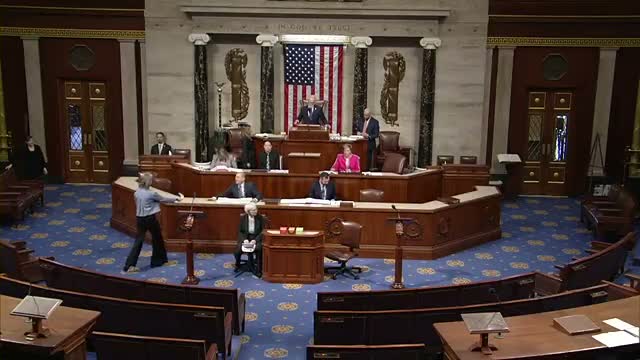
The House on Feb. 12 passed HR 2189, a measure the floor described as the Law Enforcement Innovative Deescalate Act, by a recorded vote of 233 to 185 after an extended, often contentious debate over whether the bill would create a statutory loophole in federal firearms law.
Supporters, led on the floor by the bill’s managers, said the legislation updates an outdated statutory definition that can classify modern less‑lethal projectile devices — including some long‑range taser systems — as firearms, which they said has slowed adoption by law enforcement and other public‑safety agencies. Representative Fitzgerald, one of the managers, said the bill “makes a small but important change to the Gun Control Act’s definition of a firearm” and would ease procurement barriers and tax burdens that can delay access to newer de‑escalation tools.
The bill also contains a tax‑related provision adopted in the nature of a substitute on the floor; sponsors said it clarifies excise‑tax treatment so agencies and manufacturers need not navigate decades‑old refund procedures. The sponsor asked unanimous consent to enter the Congressional Budget Office score into the record during floor remarks; the score text was entered but is not included in the floor excerpt.
Opponents, including Representative Raskin of Maryland and other Democrats, argued the measure goes too far and would exempt certain devices from federal firearms laws in a way that could allow prohibited purchasers to obtain them without background checks or serialization. “This bill would rip a dangerous new loophole in the Gun Control Act by changing the definition of firearm throughout the entire criminal code to exclude from coverage certain less‑than‑lethal but still highly dangerous weapons such as tasers,” Representative Raskin said on the floor.
Members debating the bill disputed several points of fact and effect. Opponents pointed to warnings from Justice Department reviewers of earlier versions and to groups including Brady, Everytown for Gun Safety, and the National Domestic Violence Hotline, which the floor record shows opposed the measure. Supporters countered the bill includes a five‑part test to limit exemptions, directs the ATF to deny classification for devices that could be readily converted into firearms, and preserves state regulation on misuse and possession.
Floor debate included allegations — voiced by Representative Frost and others — that industry influence shaped the legislation; Frost named a manufacturer and said parts of the measure appeared aligned with corporate interests. Sponsors said the change is largely an updating of tax and classificatory language rather than a broad deregulatory move, and said law enforcement in many states already uses the technologies at issue.
After debate time expired, the House ordered the previous question, proceeded to engrossment and third reading, and conducted a recorded vote. The Chair announced the ayes had it, and the Clerk reported the recorded vote as 233 yeas and 185 nays. The House passed the bill and the motion to reconsider was laid on the table.
What happens next: Passage in the House sends HR 2189 to the Senate for further consideration. The House record shows CBO material was entered into the record during floor proceedings; the transcript excerpt does not include the CBO estimate itself.
Supporters, led on the floor by the bill’s managers, said the legislation updates an outdated statutory definition that can classify modern less‑lethal projectile devices — including some long‑range taser systems — as firearms, which they said has slowed adoption by law enforcement and other public‑safety agencies. Representative Fitzgerald, one of the managers, said the bill “makes a small but important change to the Gun Control Act’s definition of a firearm” and would ease procurement barriers and tax burdens that can delay access to newer de‑escalation tools.
The bill also contains a tax‑related provision adopted in the nature of a substitute on the floor; sponsors said it clarifies excise‑tax treatment so agencies and manufacturers need not navigate decades‑old refund procedures. The sponsor asked unanimous consent to enter the Congressional Budget Office score into the record during floor remarks; the score text was entered but is not included in the floor excerpt.
Opponents, including Representative Raskin of Maryland and other Democrats, argued the measure goes too far and would exempt certain devices from federal firearms laws in a way that could allow prohibited purchasers to obtain them without background checks or serialization. “This bill would rip a dangerous new loophole in the Gun Control Act by changing the definition of firearm throughout the entire criminal code to exclude from coverage certain less‑than‑lethal but still highly dangerous weapons such as tasers,” Representative Raskin said on the floor.
Members debating the bill disputed several points of fact and effect. Opponents pointed to warnings from Justice Department reviewers of earlier versions and to groups including Brady, Everytown for Gun Safety, and the National Domestic Violence Hotline, which the floor record shows opposed the measure. Supporters countered the bill includes a five‑part test to limit exemptions, directs the ATF to deny classification for devices that could be readily converted into firearms, and preserves state regulation on misuse and possession.
Floor debate included allegations — voiced by Representative Frost and others — that industry influence shaped the legislation; Frost named a manufacturer and said parts of the measure appeared aligned with corporate interests. Sponsors said the change is largely an updating of tax and classificatory language rather than a broad deregulatory move, and said law enforcement in many states already uses the technologies at issue.
After debate time expired, the House ordered the previous question, proceeded to engrossment and third reading, and conducted a recorded vote. The Chair announced the ayes had it, and the Clerk reported the recorded vote as 233 yeas and 185 nays. The House passed the bill and the motion to reconsider was laid on the table.
What happens next: Passage in the House sends HR 2189 to the Senate for further consideration. The House record shows CBO material was entered into the record during floor proceedings; the transcript excerpt does not include the CBO estimate itself.
View the Full Meeting & All Its Details
This article offers just a summary. Unlock complete video, transcripts, and insights as a Founder Member.
✓
Watch full, unedited meeting videos
✓
Search every word spoken in unlimited transcripts
✓
AI summaries & real-time alerts (all government levels)
✓
Permanent access to expanding government content
30-day money-back guarantee
