Reno County commissioners raise alarm about state bills they say would curb local control
February 12, 2026 | Reno County, Kansas
This article was created by AI summarizing key points discussed. AI makes mistakes, so for full details and context, please refer to the video of the full meeting. Please report any errors so we can fix them. Report an error »
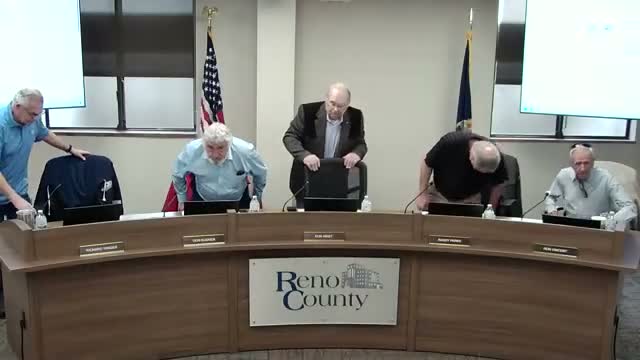
Several members of the Reno County Board of Commissioners used their Feb. 11 meeting to criticize recently introduced bills at the Kansas Legislature that they said would reduce local decision-making and constrain county finances.
An unnamed commissioner opened the comments period saying two measures—referred to in the meeting as "House bill 27 45" and "House bill 27 28"—would be difficult for local governments to use and would limit local input. "House bill 27 28... takes away local citizens' right to have input to any energy systems," the commissioner said, and said the bills appear to vest authority at the state level with the KCC.
Several commissioners described the bills as a broader push to cap local taxing authority and to shift decision-making away from local officials. Commissioner Don said that removing local control on matters such as water and taxation would make it harder for counties to provide state-mandated services like fire and EMS. "If you take our tax north and we're gonna give it back to us down here, who's administering that?" one commissioner asked, urging caution before ceding home-rule powers.
The commission discussed responding as a body. County staff said written testimony could be filed by the afternoon deadline referenced in the meeting; the county administrator offered to draft a letter for the commission to sign. "I'll draft and getting all your signatures by 3," one staff speaker said. Commissioners agreed it would have more impact to submit testimony signed by the full commission rather than by individuals.
No formal vote on legislative positions was recorded during the meeting, but staff indicated they would prepare testimony and seek chairman signature if the full board could not sign by the deadline. Commissioners repeatedly urged residents to contact their state representatives to express concerns.
The transcript records concerns about timing, fiscal effects and exemptions in the proposed bill language (for example, an exemption for school-district levies was noted), but contains no final legislative text or a formal county ordinance; the action captured in the meeting is the board’s direction to prepare and, if possible, sign testimony before the committee hearing referenced in the meeting.
An unnamed commissioner opened the comments period saying two measures—referred to in the meeting as "House bill 27 45" and "House bill 27 28"—would be difficult for local governments to use and would limit local input. "House bill 27 28... takes away local citizens' right to have input to any energy systems," the commissioner said, and said the bills appear to vest authority at the state level with the KCC.
Several commissioners described the bills as a broader push to cap local taxing authority and to shift decision-making away from local officials. Commissioner Don said that removing local control on matters such as water and taxation would make it harder for counties to provide state-mandated services like fire and EMS. "If you take our tax north and we're gonna give it back to us down here, who's administering that?" one commissioner asked, urging caution before ceding home-rule powers.
The commission discussed responding as a body. County staff said written testimony could be filed by the afternoon deadline referenced in the meeting; the county administrator offered to draft a letter for the commission to sign. "I'll draft and getting all your signatures by 3," one staff speaker said. Commissioners agreed it would have more impact to submit testimony signed by the full commission rather than by individuals.
No formal vote on legislative positions was recorded during the meeting, but staff indicated they would prepare testimony and seek chairman signature if the full board could not sign by the deadline. Commissioners repeatedly urged residents to contact their state representatives to express concerns.
The transcript records concerns about timing, fiscal effects and exemptions in the proposed bill language (for example, an exemption for school-district levies was noted), but contains no final legislative text or a formal county ordinance; the action captured in the meeting is the board’s direction to prepare and, if possible, sign testimony before the committee hearing referenced in the meeting.
View the Full Meeting & All Its Details
This article offers just a summary. Unlock complete video, transcripts, and insights as a Founder Member.
✓
Watch full, unedited meeting videos
✓
Search every word spoken in unlimited transcripts
✓
AI summaries & real-time alerts (all government levels)
✓
Permanent access to expanding government content
30-day money-back guarantee
