Vermont educators and health experts urge caution on school dye ban, ask for implementation review
February 12, 2026 | Health & Welfare, SENATE, Committees, Legislative , Vermont
This article was created by AI summarizing key points discussed. AI makes mistakes, so for full details and context, please refer to the video of the full meeting. Please report any errors so we can fix them. Report an error »
Supporters of a bill to restrict synthetic food dyes in school foods told the Senate Health & Welfare Committee on Friday that the policy is grounded in emerging science but needs a clear, workable path to implementation.
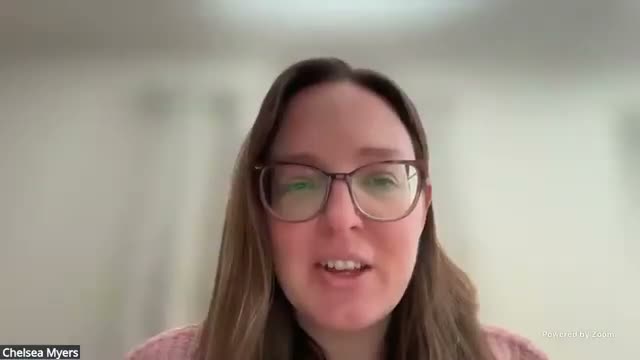
Chelsea Myers, executive director of the Vermont Superintendents Association, asked legislators to delay action on S.26 until school food service directors can testify about day-to-day operational realities, citing potential hidden costs for schools such as additional paperwork, training and procurement adjustments. "Assumptions about impact are not the same as understanding the day-to-day operational realities in our schools," Myers said.
Physicians and public-health experts who testified backed the bill’s precautionary goal. Dr. Shilpa Ravella, a practicing gastroenterologist, summarized evidence from randomized trials and observational studies she said link synthetic dyes to changes in children’s behavior, including inattention and hyperactivity, and argued that dyes provide no nutritional benefit. "From a physician’s perspective, this is a reasonable precautionary step that aligns school food policy with child health priorities," she said.
Lisa Lefferts, a science consultant and former senior scientist at the Center for Science in the Public Interest, described a recent systematic assessment she called rigorous and comprehensive and urged the committee to consider expanding the bill to include other additives of concern. "Synthetic food dyes can cause or exacerbate neurobehavioral problems in children," Lefferts said, adding that numerous food manufacturers have reformulated products to be dye-free.
From the Agency of Education, Rosie Krueger, who oversees child nutrition programs, told the committee Vermont schools currently encounter relatively few products that contain synthetic dyes — primarily a small number of breakfast cereals and some competitive "smart snacks" sold outside the school meal programs. Krueger noted that school meal menus, recipes and labels are reviewed under existing federally required administrative reviews and suggested aligning state compliance checks with that process to limit additional administrative burden. She also said the bill’s one-year implementation window would likely give manufacturers and schools time to switch to compliant products.
Committee members focused on two practical questions: whether food service directors should be convened to provide implementation detail and whether the bill should include an enforcement or corrective-action mechanism. Members voiced concern about creating unfunded mandates for already stretched school food programs but acknowledged the bill as written targets foods provided in publicly regulated settings rather than parental choice outside schools.
The committee did not take a vote on S.26 during the session recorded in the transcript. Chair remarks indicated the panel will continue to solicit testimony from food service directors and other implementers before finalizing action.
What's next: The committee asked supporters to provide contact information for food service directors and indicated it will schedule additional testimony from those practitioners to help shape any compliance or enforcement language in the bill.
Chelsea Myers, executive director of the Vermont Superintendents Association, asked legislators to delay action on S.26 until school food service directors can testify about day-to-day operational realities, citing potential hidden costs for schools such as additional paperwork, training and procurement adjustments. "Assumptions about impact are not the same as understanding the day-to-day operational realities in our schools," Myers said.
Physicians and public-health experts who testified backed the bill’s precautionary goal. Dr. Shilpa Ravella, a practicing gastroenterologist, summarized evidence from randomized trials and observational studies she said link synthetic dyes to changes in children’s behavior, including inattention and hyperactivity, and argued that dyes provide no nutritional benefit. "From a physician’s perspective, this is a reasonable precautionary step that aligns school food policy with child health priorities," she said.
Lisa Lefferts, a science consultant and former senior scientist at the Center for Science in the Public Interest, described a recent systematic assessment she called rigorous and comprehensive and urged the committee to consider expanding the bill to include other additives of concern. "Synthetic food dyes can cause or exacerbate neurobehavioral problems in children," Lefferts said, adding that numerous food manufacturers have reformulated products to be dye-free.
From the Agency of Education, Rosie Krueger, who oversees child nutrition programs, told the committee Vermont schools currently encounter relatively few products that contain synthetic dyes — primarily a small number of breakfast cereals and some competitive "smart snacks" sold outside the school meal programs. Krueger noted that school meal menus, recipes and labels are reviewed under existing federally required administrative reviews and suggested aligning state compliance checks with that process to limit additional administrative burden. She also said the bill’s one-year implementation window would likely give manufacturers and schools time to switch to compliant products.
Committee members focused on two practical questions: whether food service directors should be convened to provide implementation detail and whether the bill should include an enforcement or corrective-action mechanism. Members voiced concern about creating unfunded mandates for already stretched school food programs but acknowledged the bill as written targets foods provided in publicly regulated settings rather than parental choice outside schools.
The committee did not take a vote on S.26 during the session recorded in the transcript. Chair remarks indicated the panel will continue to solicit testimony from food service directors and other implementers before finalizing action.
What's next: The committee asked supporters to provide contact information for food service directors and indicated it will schedule additional testimony from those practitioners to help shape any compliance or enforcement language in the bill.
View the Full Meeting & All Its Details
This article offers just a summary. Unlock complete video, transcripts, and insights as a Founder Member.
✓
Watch full, unedited meeting videos
✓
Search every word spoken in unlimited transcripts
✓
AI summaries & real-time alerts (all government levels)
✓
Permanent access to expanding government content
30-day money-back guarantee
