Harvard researcher outlines state options to shore up primary care as Vermont considers S.197
February 12, 2026 | Health & Welfare, SENATE, Committees, Legislative , Vermont
This article was created by AI summarizing key points discussed. AI makes mistakes, so for full details and context, please refer to the video of the full meeting. Please report any errors so we can fix them. Report an error »
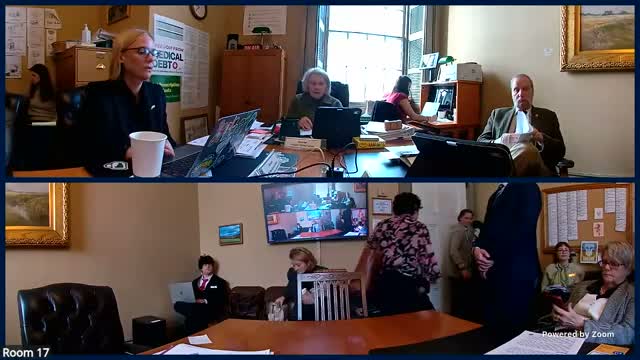
A Harvard Medical School researcher told the Senate Health & Welfare Committee that Vermont’s efforts to shore up primary care face tradeoffs between bolstering fee-for-service billing codes and providing prospective per-patient payments.
Dr. Song summarized national data showing a decline in clinicians staying in primary care and described two broad policy paths for states considering S.197: enhance or expand fee-schedule billing codes (the federal approach) or create non-fee-for-service, prospective payments (per member per month) that support practices directly. "The main paths for investments in primary care are doing it on the fee schedule... or doing it off the fee schedule through a per person per month or per year lump sum," he said.
He told the committee that fee-schedule approaches have practical limits: many new billing codes are rarely billed (he said fewer than 10% of eligible visits use some supplemental codes), and specialists often capture a disproportionate share of related dollars. Dr. Song pointed to Rhode Island’s model, which increased non-fee-for-service primary care spending substantially (he cited an increase from about $3,000,000 to roughly $52,000,000 by 2023) after adopting affordability and payment reforms.
The witness also discussed private-sector responses, such as concierge primary care, that improve access for patients who can pay but can worsen access for the broader population because physicians leaving traditional practice reduce available primary-care capacity. "In the short run this actually exacerbates our societal primary care shortages even as it solves the primary care crisis for a small portion of society," Dr. Song said.
Committee members asked how states might balance design choices; Dr. Song recommended weighing the administrative tradeoffs and noted that off-fee-schedule prospective payments allow subsidies to reach patients regardless of insurance status and to be targeted based on community need.
What's next: The committee signaled this testimony will inform continued work on S.197’s payment-design options and interactions with Vermont’s ongoing regionalization and global-budgeting efforts.
Dr. Song summarized national data showing a decline in clinicians staying in primary care and described two broad policy paths for states considering S.197: enhance or expand fee-schedule billing codes (the federal approach) or create non-fee-for-service, prospective payments (per member per month) that support practices directly. "The main paths for investments in primary care are doing it on the fee schedule... or doing it off the fee schedule through a per person per month or per year lump sum," he said.
He told the committee that fee-schedule approaches have practical limits: many new billing codes are rarely billed (he said fewer than 10% of eligible visits use some supplemental codes), and specialists often capture a disproportionate share of related dollars. Dr. Song pointed to Rhode Island’s model, which increased non-fee-for-service primary care spending substantially (he cited an increase from about $3,000,000 to roughly $52,000,000 by 2023) after adopting affordability and payment reforms.
The witness also discussed private-sector responses, such as concierge primary care, that improve access for patients who can pay but can worsen access for the broader population because physicians leaving traditional practice reduce available primary-care capacity. "In the short run this actually exacerbates our societal primary care shortages even as it solves the primary care crisis for a small portion of society," Dr. Song said.
Committee members asked how states might balance design choices; Dr. Song recommended weighing the administrative tradeoffs and noted that off-fee-schedule prospective payments allow subsidies to reach patients regardless of insurance status and to be targeted based on community need.
What's next: The committee signaled this testimony will inform continued work on S.197’s payment-design options and interactions with Vermont’s ongoing regionalization and global-budgeting efforts.
View the Full Meeting & All Its Details
This article offers just a summary. Unlock complete video, transcripts, and insights as a Founder Member.
✓
Watch full, unedited meeting videos
✓
Search every word spoken in unlimited transcripts
✓
AI summaries & real-time alerts (all government levels)
✓
Permanent access to expanding government content
30-day money-back guarantee
