State farmland program offers tools and limited funds as Johnston County faces high conversion risk
February 12, 2026 | Johnston County, North Carolina
This article was created by AI summarizing key points discussed. AI makes mistakes, so for full details and context, please refer to the video of the full meeting. Please report any errors so we can fix them. Report an error »
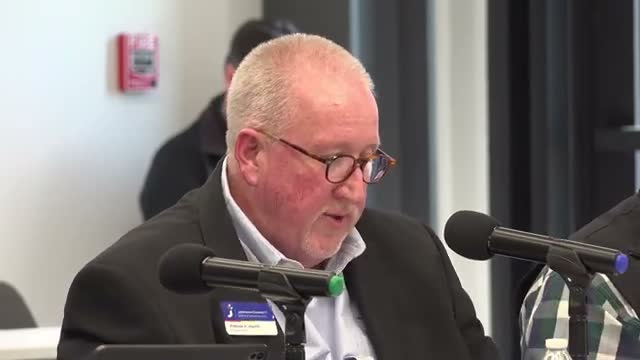
Kevin Leonard, executive director of the North Carolina Association of County Commissioners, introduced a presentation from Evan Davis, director of farmland preservation at the North Carolina Department of Agriculture and Consumer Services, who said the state is losing farmland at an alarming rate and offered concrete tools counties can use to protect working lands.
Davis said studies by American Farmland Trust show North Carolina lost about 732,000 acres of agricultural land between 2001 and 2016, and projections to 2040 show between 1.1 million and 1.6 million acres could be converted under different development scenarios. He told the board that, by one county-level metric, Johnston County ranked 19th nationally for potential farmland loss.
The state program Davis described centers on agricultural conservation easements administered through the Agricultural Development and Farmland Preservation (ADFP) Trust Fund. He described easements as voluntary, real-estate transactions that restrict future development rights while leaving land in private ownership. “We are not buying land,” Davis said, “there are no condemnations, no land transfers. The landowner retains the fee.”
Davis explained typical easement mechanics: two appraisal values (fair market value and value with the easement) determine the potential easement purchase price; easements commonly restrict subdivision, industrial or commercial uses outside agriculture, and limit impervious surface; but they generally preserve the landowner’s right to farm, make customary rural enterprise changes, and retain privacy (no public access). He said the program commonly funds perpetual easements but also offers term easements of 30, 40 and 50 years and is exploring short-term conservation agreements and buy-protect-sell models to expand options.
On funding, Davis said demand greatly exceeds supply: in the most recent grant cycle the program received roughly $60 million in requests but had about $6 million available. He said the new Agricultural Growth Zones (AGZ) program, launched in 2023, lets counties leverage local cash matches at a 1:1 rate to pull down state money for priority geographic blocks, but noted local matches are a requirement and budgets limit the awards; Johnston County’s AGZ award this cycle was $335,000.
Commissioners pressed Davis on practical issues: how easements affect local zoning (he said easements do not change county zoning), what options exist to make land affordable to beginning farmers (buy-protect-sell and options to purchase at agricultural value), and how appraisals are handled (qualified appraisers, average appraisal cost $5,000–$8,000). Davis also said conservation agreements that require affirmative farming are difficult to enforce and the state program does not include an enforceable “must farm” clause.
Davis urged counties to be active partners: counties and qualified nonprofits are the eligible applicants and, if awarded a grant, the easement-holding entity responsible for long-term monitoring and enforcement. He also recommended local investment and using the new AGZ tools when possible to concentrate conservation resources.
Next steps and context: Davis noted the state program had recorded about 42,000 acres of easements statewide and that Johnston County has six recorded agricultural conservation easements totaling roughly 592 acres. He recommended counties strengthen outreach to landowners, consider matching funds to expand AGZ projects, and use county planning and soil-and-water resources to identify high-value parcels and beginning-farmer opportunities.
The board did not take formal action at the session; the presentation was intended to inform priority-setting and potential budget requests in this year’s CIP and legislative advocacy.
Davis said studies by American Farmland Trust show North Carolina lost about 732,000 acres of agricultural land between 2001 and 2016, and projections to 2040 show between 1.1 million and 1.6 million acres could be converted under different development scenarios. He told the board that, by one county-level metric, Johnston County ranked 19th nationally for potential farmland loss.
The state program Davis described centers on agricultural conservation easements administered through the Agricultural Development and Farmland Preservation (ADFP) Trust Fund. He described easements as voluntary, real-estate transactions that restrict future development rights while leaving land in private ownership. “We are not buying land,” Davis said, “there are no condemnations, no land transfers. The landowner retains the fee.”
Davis explained typical easement mechanics: two appraisal values (fair market value and value with the easement) determine the potential easement purchase price; easements commonly restrict subdivision, industrial or commercial uses outside agriculture, and limit impervious surface; but they generally preserve the landowner’s right to farm, make customary rural enterprise changes, and retain privacy (no public access). He said the program commonly funds perpetual easements but also offers term easements of 30, 40 and 50 years and is exploring short-term conservation agreements and buy-protect-sell models to expand options.
On funding, Davis said demand greatly exceeds supply: in the most recent grant cycle the program received roughly $60 million in requests but had about $6 million available. He said the new Agricultural Growth Zones (AGZ) program, launched in 2023, lets counties leverage local cash matches at a 1:1 rate to pull down state money for priority geographic blocks, but noted local matches are a requirement and budgets limit the awards; Johnston County’s AGZ award this cycle was $335,000.
Commissioners pressed Davis on practical issues: how easements affect local zoning (he said easements do not change county zoning), what options exist to make land affordable to beginning farmers (buy-protect-sell and options to purchase at agricultural value), and how appraisals are handled (qualified appraisers, average appraisal cost $5,000–$8,000). Davis also said conservation agreements that require affirmative farming are difficult to enforce and the state program does not include an enforceable “must farm” clause.
Davis urged counties to be active partners: counties and qualified nonprofits are the eligible applicants and, if awarded a grant, the easement-holding entity responsible for long-term monitoring and enforcement. He also recommended local investment and using the new AGZ tools when possible to concentrate conservation resources.
Next steps and context: Davis noted the state program had recorded about 42,000 acres of easements statewide and that Johnston County has six recorded agricultural conservation easements totaling roughly 592 acres. He recommended counties strengthen outreach to landowners, consider matching funds to expand AGZ projects, and use county planning and soil-and-water resources to identify high-value parcels and beginning-farmer opportunities.
The board did not take formal action at the session; the presentation was intended to inform priority-setting and potential budget requests in this year’s CIP and legislative advocacy.
View the Full Meeting & All Its Details
This article offers just a summary. Unlock complete video, transcripts, and insights as a Founder Member.
✓
Watch full, unedited meeting videos
✓
Search every word spoken in unlimited transcripts
✓
AI summaries & real-time alerts (all government levels)
✓
Permanent access to expanding government content
30-day money-back guarantee
