House Judiciary Committee debates H.741, which would require warrants after failures to appear
February 12, 2026 | Judiciary, HOUSE OF REPRESENTATIVES, Committees, Legislative , Vermont
This article was created by AI summarizing key points discussed. AI makes mistakes, so for full details and context, please refer to the video of the full meeting. Please report any errors so we can fix them. Report an error »
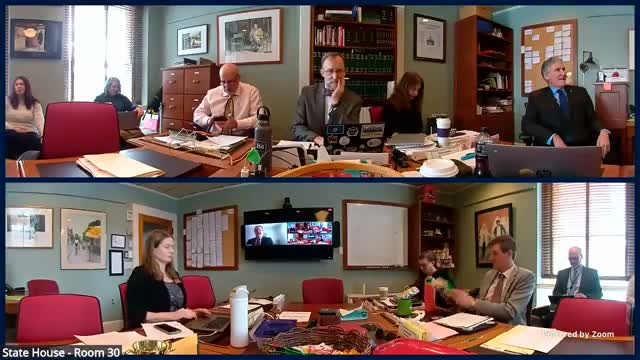
BURLINGTON — The House Judiciary Committee on Thursday discussed H.741, a bill that would require courts to issue an arrest warrant when a criminal defendant fails to appear, instead of permitting law enforcement to issue a second citation.
Eric Fitzpatrick of the Office of Legislative Counsel told the committee the measure addresses two common scenarios: a defendant arrested and released on conditions who does not return for a scheduled court date, and a person who was issued a citation to appear and then fails to attend. “The court has to issue an actual arrest warrant and require that the person be arrested rather than given a citation to appear again,” Fitzpatrick said, describing the bill as mechanically straightforward.
Supporters, including the sponsor referenced in the hearing as Representative Oliver, said the change is intended to reduce repeat encounters that can lead to new offenses and to ease burdens on law enforcement. Oliver told the committee his offices and police in Chittenden County frequently encounter people who repeatedly fail to appear, and that the practice of issuing successive citations can let those individuals avoid timely judicial review.
Judicial witnesses and defense‑oriented commenters pushed back, arguing H.741 would curtail judges’ ability to weigh case‑specific facts. Tom Jones, introduced at the hearing as a superior‑court judge, said judges already can issue warrants where appropriate and warned that mandating warrants could have harsh consequences. “What this does is effectively institute a hold without bail for everybody,” Jones said, offering hypothetical examples — an elderly shoplifting diversion case and a single parent delayed by weather — to illustrate how a required warrant could lead to arrests that judges today might avoid.
The hearing also surfaced operational and procedural concerns. A law‑enforcement witness cautioned that placing certain warrant records into national databases may violate NCIC user rules unless an arrest is attached, and suggested relying on a statewide database (VCIC) or other technical workarounds for recordkeeping and extradition issues. Committee members asked for data on pre‑ and post‑COVID failure‑to‑appear rates and noted pilots and administrative changes that have improved appearance rates, such as shorter intervals between hearings and reminder systems.
Several committee members said they want to target repeat absentees who 'game the system' while preserving tools for judges to account for individual circumstances, including health, caregiving responsibilities, and unreliable contact information. Committee discussion referenced prior pilots and the defender general’s concerns about automated text reminders (clients changing phones, shared devices, and lack of a confirmed delivery receipt).
No formal vote on H.741 was recorded in the provided transcript. Committee members agreed to continue the conversation, collect data requested during questioning, and reconvene later in the afternoon. The transcript also contains a reference to "75 54 of Title 13" in testimony; the committee discussion cited that statutory framework in describing current judicial authority, but the hearing transcript does not provide a formal statutory citation beyond the phrasing used by a witness.
Next procedural step: the committee paused for a break and planned to resume consideration of H.741 later in the session; no final action on the bill is recorded in the transcript.
Eric Fitzpatrick of the Office of Legislative Counsel told the committee the measure addresses two common scenarios: a defendant arrested and released on conditions who does not return for a scheduled court date, and a person who was issued a citation to appear and then fails to attend. “The court has to issue an actual arrest warrant and require that the person be arrested rather than given a citation to appear again,” Fitzpatrick said, describing the bill as mechanically straightforward.
Supporters, including the sponsor referenced in the hearing as Representative Oliver, said the change is intended to reduce repeat encounters that can lead to new offenses and to ease burdens on law enforcement. Oliver told the committee his offices and police in Chittenden County frequently encounter people who repeatedly fail to appear, and that the practice of issuing successive citations can let those individuals avoid timely judicial review.
Judicial witnesses and defense‑oriented commenters pushed back, arguing H.741 would curtail judges’ ability to weigh case‑specific facts. Tom Jones, introduced at the hearing as a superior‑court judge, said judges already can issue warrants where appropriate and warned that mandating warrants could have harsh consequences. “What this does is effectively institute a hold without bail for everybody,” Jones said, offering hypothetical examples — an elderly shoplifting diversion case and a single parent delayed by weather — to illustrate how a required warrant could lead to arrests that judges today might avoid.
The hearing also surfaced operational and procedural concerns. A law‑enforcement witness cautioned that placing certain warrant records into national databases may violate NCIC user rules unless an arrest is attached, and suggested relying on a statewide database (VCIC) or other technical workarounds for recordkeeping and extradition issues. Committee members asked for data on pre‑ and post‑COVID failure‑to‑appear rates and noted pilots and administrative changes that have improved appearance rates, such as shorter intervals between hearings and reminder systems.
Several committee members said they want to target repeat absentees who 'game the system' while preserving tools for judges to account for individual circumstances, including health, caregiving responsibilities, and unreliable contact information. Committee discussion referenced prior pilots and the defender general’s concerns about automated text reminders (clients changing phones, shared devices, and lack of a confirmed delivery receipt).
No formal vote on H.741 was recorded in the provided transcript. Committee members agreed to continue the conversation, collect data requested during questioning, and reconvene later in the afternoon. The transcript also contains a reference to "75 54 of Title 13" in testimony; the committee discussion cited that statutory framework in describing current judicial authority, but the hearing transcript does not provide a formal statutory citation beyond the phrasing used by a witness.
Next procedural step: the committee paused for a break and planned to resume consideration of H.741 later in the session; no final action on the bill is recorded in the transcript.
View the Full Meeting & All Its Details
This article offers just a summary. Unlock complete video, transcripts, and insights as a Founder Member.
✓
Watch full, unedited meeting videos
✓
Search every word spoken in unlimited transcripts
✓
AI summaries & real-time alerts (all government levels)
✓
Permanent access to expanding government content
30-day money-back guarantee
