Judiciary committee questions pretrial supervision pilot, DOC role and eligibility rules
February 12, 2026 | Judiciary, HOUSE OF REPRESENTATIVES, Committees, Legislative , Vermont
This article was created by AI summarizing key points discussed. AI makes mistakes, so for full details and context, please refer to the video of the full meeting. Please report any errors so we can fix them. Report an error »
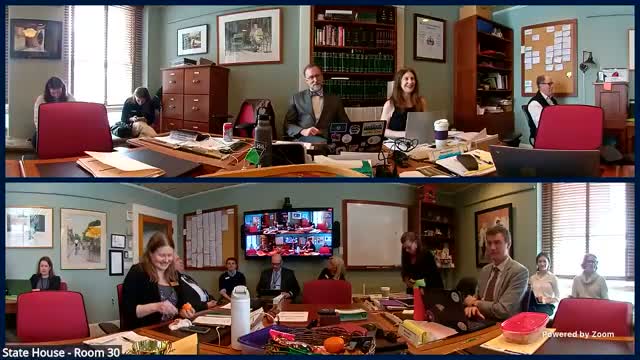
The Health Judiciary Committee on Feb. 13 took testimony on the state’s pretrial supervision pilot and whether the program should be restructured, with prosecutors and a chief superior judge urging lawmakers to clarify who the program is meant to serve and how the Department of Corrections (DOC) would be involved.
“For the record, Kim McManus, Department of State's Attorneys and Sheriffs,” McManus said, explaining the pilot began in Orleans, moved to Chittenden County and saw limited engagement. McManus told members the program sits within the state’s bail statute and current eligibility — which requires either a violation of release conditions or having five or more open dockets — leaves uncertainty about who would benefit and whether the program is the least‑restrictive option for many defendants.
The core legal limit McManus underscored was procedural: conditions of pretrial supervision are court orders. “The supervising officer for pretrial supervision cannot file criminal charge,” she said, and any change to a defendant’s release conditions would require the court, the prosecutor and defense counsel to be present for a hearing rather than unilateral administrative action.
Committee members asked whether lifting the five‑docket threshold and leaving eligibility decisions to prosecutors, defense counsel and judges would increase utilization. McManus agreed that removing the five‑docket rule could expand the pool of participants but cautioned that the program must still be considered as part of arraignment and bail decisionmaking.
Witnesses and members contrasted the pretrial supervision pilot with the accountability docket, which several said resolves cases more quickly and therefore generated more defendant engagement. McManus and others noted the accountability docket connects defendants with services early and often — an approach that produced higher participation than the supervision pilot, which was designed for cases taking six to 18 months to resolve.
Chief Superior Judge Tom Soney, who also testified, pointed to local examples where DOC staff served as liaisons to the court and helped check curfews or follow up when defendants missed appointments. He said early reports from pilot dockets show tangible benefits and urged lawmakers to weigh the pilot docket’s results against changes to the supervision statute.
On resources, members debated whether the legislature should fund DOC liaisons embedded in courthouses, statewide supervisors dedicated to pretrial monitoring, or expansion of accountability pilot dockets. McManus said DOC does not currently have capacity for intensive electronic monitoring at scale and that supervision functions (reminders, service connections, check‑ins) are different from enforcement (charging or filing a new criminal case).
Committee members sought concrete next steps; staff said further discussions with DOC and the administration are needed to decide where to deploy limited resources and whether language in pending bills — including the bill documents cited during testimony — should be revised. The committee agreed to coordinate bill language to avoid duplication and scheduled follow‑up conversations with DOC staff.
The committee adjourned and said it will return for additional testimony and administrative input before making any statutory changes.
“For the record, Kim McManus, Department of State's Attorneys and Sheriffs,” McManus said, explaining the pilot began in Orleans, moved to Chittenden County and saw limited engagement. McManus told members the program sits within the state’s bail statute and current eligibility — which requires either a violation of release conditions or having five or more open dockets — leaves uncertainty about who would benefit and whether the program is the least‑restrictive option for many defendants.
The core legal limit McManus underscored was procedural: conditions of pretrial supervision are court orders. “The supervising officer for pretrial supervision cannot file criminal charge,” she said, and any change to a defendant’s release conditions would require the court, the prosecutor and defense counsel to be present for a hearing rather than unilateral administrative action.
Committee members asked whether lifting the five‑docket threshold and leaving eligibility decisions to prosecutors, defense counsel and judges would increase utilization. McManus agreed that removing the five‑docket rule could expand the pool of participants but cautioned that the program must still be considered as part of arraignment and bail decisionmaking.
Witnesses and members contrasted the pretrial supervision pilot with the accountability docket, which several said resolves cases more quickly and therefore generated more defendant engagement. McManus and others noted the accountability docket connects defendants with services early and often — an approach that produced higher participation than the supervision pilot, which was designed for cases taking six to 18 months to resolve.
Chief Superior Judge Tom Soney, who also testified, pointed to local examples where DOC staff served as liaisons to the court and helped check curfews or follow up when defendants missed appointments. He said early reports from pilot dockets show tangible benefits and urged lawmakers to weigh the pilot docket’s results against changes to the supervision statute.
On resources, members debated whether the legislature should fund DOC liaisons embedded in courthouses, statewide supervisors dedicated to pretrial monitoring, or expansion of accountability pilot dockets. McManus said DOC does not currently have capacity for intensive electronic monitoring at scale and that supervision functions (reminders, service connections, check‑ins) are different from enforcement (charging or filing a new criminal case).
Committee members sought concrete next steps; staff said further discussions with DOC and the administration are needed to decide where to deploy limited resources and whether language in pending bills — including the bill documents cited during testimony — should be revised. The committee agreed to coordinate bill language to avoid duplication and scheduled follow‑up conversations with DOC staff.
The committee adjourned and said it will return for additional testimony and administrative input before making any statutory changes.
Don't Miss a Word: See the Full Meeting!
Go beyond summaries. Unlock every video, transcript, and key insight with a Founder Membership.
✓
Get instant access to full meeting videos
✓
Search and clip any phrase from complete transcripts
✓
Receive AI-powered summaries & custom alerts
✓
Enjoy lifetime, unrestricted access to government data
30-day money-back guarantee
