CSG recommends lower caseloads, streamlined referrals and more coordination for Vermonts pretrial supervision
February 12, 2026 | Judiciary, HOUSE OF REPRESENTATIVES, Committees, Legislative , Vermont
This article was created by AI summarizing key points discussed. AI makes mistakes, so for full details and context, please refer to the video of the full meeting. Please report any errors so we can fix them. Report an error »
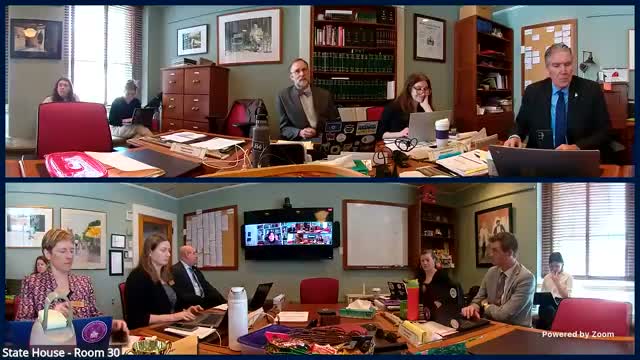
A CSG Justice Center presentation to the House Judiciary Committee on Feb. 12 outlined findings from pilot visits and offered concrete recommendations to improve Vermonts pretrial supervision program.
Ellen Whelan Wiese of the CSG Justice Center summarized the programs statutory framework (Act 138, 2024) and the RNR—risk, need and responsivity—model the Department of Corrections uses to place and supervise clients. She said the statutory triggers now (for example, a five‑docket rule) can be a blunt instrument that excludes people who would benefit from supervision based on clinical risk and needs.
CSGs key recommendations included funding dedicated pretrial supervision officers who carry caseloads of no more than 20 clients, streamlining referral and reporting processes so timely responses follow violations, and changing referral criteria to prioritize validated risk and need factors over an arbitrary docket count. Whelan Wiese noted DOC has 10 business days to report eligibility to the court under current practice and urged quicker, more time‑sensitive responses to violations to preserve supervisory leverage.
The CSG team pointed to local pilots—notably Chittenden Countys Forensic Assertive Community Treatment (FACT) program and a specialized accountability court (the "3b docket")—as examples where low caseloads, cross‑agency collaboration (DOC, Department of Mental Health, and community provider Pathways), and federal SAMHSA funding improved access to treatment and coordination.
Committee members asked whether pretrial supervision should be delivered by DOC or by outside community providers; Whelan Wiese said multiple administrative models exist nationally, that courts often administer such programs elsewhere, and that Vermonts comparatively strong DOC supervision staff made DOC a reasonable foundation in this state while emphasizing the need for strong community partnerships for behavioral‑health services.
Whelan Wiese said CSG found three obstacles to statewide scaling: referral/reporting processes that prevent appropriate placements, insufficient DOC capacity for higher‑intensity supervision, and siloing between corrections and behavioral‑health agencies that limits access to services. She urged legislative and administrative fixes to increase referrals, lower caseloads, and improve interagency coordination.
The committee did not vote on any bill that day and recessed for a 15‑minute break after the presentation.
Ellen Whelan Wiese of the CSG Justice Center summarized the programs statutory framework (Act 138, 2024) and the RNR—risk, need and responsivity—model the Department of Corrections uses to place and supervise clients. She said the statutory triggers now (for example, a five‑docket rule) can be a blunt instrument that excludes people who would benefit from supervision based on clinical risk and needs.
CSGs key recommendations included funding dedicated pretrial supervision officers who carry caseloads of no more than 20 clients, streamlining referral and reporting processes so timely responses follow violations, and changing referral criteria to prioritize validated risk and need factors over an arbitrary docket count. Whelan Wiese noted DOC has 10 business days to report eligibility to the court under current practice and urged quicker, more time‑sensitive responses to violations to preserve supervisory leverage.
The CSG team pointed to local pilots—notably Chittenden Countys Forensic Assertive Community Treatment (FACT) program and a specialized accountability court (the "3b docket")—as examples where low caseloads, cross‑agency collaboration (DOC, Department of Mental Health, and community provider Pathways), and federal SAMHSA funding improved access to treatment and coordination.
Committee members asked whether pretrial supervision should be delivered by DOC or by outside community providers; Whelan Wiese said multiple administrative models exist nationally, that courts often administer such programs elsewhere, and that Vermonts comparatively strong DOC supervision staff made DOC a reasonable foundation in this state while emphasizing the need for strong community partnerships for behavioral‑health services.
Whelan Wiese said CSG found three obstacles to statewide scaling: referral/reporting processes that prevent appropriate placements, insufficient DOC capacity for higher‑intensity supervision, and siloing between corrections and behavioral‑health agencies that limits access to services. She urged legislative and administrative fixes to increase referrals, lower caseloads, and improve interagency coordination.
The committee did not vote on any bill that day and recessed for a 15‑minute break after the presentation.
View the Full Meeting & All Its Details
This article offers just a summary. Unlock complete video, transcripts, and insights as a Founder Member.
✓
Watch full, unedited meeting videos
✓
Search every word spoken in unlimited transcripts
✓
AI summaries & real-time alerts (all government levels)
✓
Permanent access to expanding government content
30-day money-back guarantee
