Aurora rolls out 911-linked telehealth pilot to divert low-acuity calls
February 12, 2026 | Aurora City, Douglas County, Colorado
This article was created by AI summarizing key points discussed. AI makes mistakes, so for full details and context, please refer to the video of the full meeting. Please report any errors so we can fix them. Report an error »
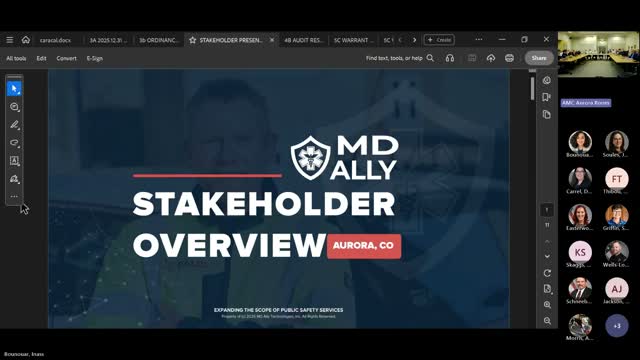
Aurora has begun a pilot that routes lower-acuity 911 calls to a telehealth provider in an effort to reduce ambulance and emergency-room transports, city officials said at a public safety study session.
"It literally is faster," said Mark Hayes, deputy chief of operations with Aurora Fire Rescue, describing MD Ally’s ability to connect callers to a U.S.-based, board-certified emergency physician within minutes. Hayes and other presenters said the system can handle matters such as prescription refills, basic respiratory and gastrointestinal complaints, and behavioral-health referrals so that heavy emergency resources remain available for critical calls.
The pilot went live about a week before the meeting. City staff reported that MD Ally handled 58 routed incidents during the test period and diverted 23 of those calls from ambulance response or emergency-room transport. Officials said there is no charge to the caller and that the vendor works with insurers and HMOs; the service can be accessed by regular phone for residents without smartphones.
Hayes said the city issued a yearlong contract to test outcomes and dashboard metrics and will track run hours avoided, response-time impacts and patient dispositions. "We wanna make sure it works and be fiscally responsible," Hayes said, noting the short contract term gives flexibility to modify or end the program if performance falls short.
City staff emphasized safeguards: calls routed to MD Ally remain subject to the city’s dispatch protocols and can be reintroduced into the full emergency-response system if clinicians determine an in-person ambulance is needed. Officials said phase two could add field providers to follow up when telehealth dispositions require in-person care.
The study session concluded with council members asking staff to return with regular performance reports and any budget implications if the pilot expands beyond the initial year.
"It literally is faster," said Mark Hayes, deputy chief of operations with Aurora Fire Rescue, describing MD Ally’s ability to connect callers to a U.S.-based, board-certified emergency physician within minutes. Hayes and other presenters said the system can handle matters such as prescription refills, basic respiratory and gastrointestinal complaints, and behavioral-health referrals so that heavy emergency resources remain available for critical calls.
The pilot went live about a week before the meeting. City staff reported that MD Ally handled 58 routed incidents during the test period and diverted 23 of those calls from ambulance response or emergency-room transport. Officials said there is no charge to the caller and that the vendor works with insurers and HMOs; the service can be accessed by regular phone for residents without smartphones.
Hayes said the city issued a yearlong contract to test outcomes and dashboard metrics and will track run hours avoided, response-time impacts and patient dispositions. "We wanna make sure it works and be fiscally responsible," Hayes said, noting the short contract term gives flexibility to modify or end the program if performance falls short.
City staff emphasized safeguards: calls routed to MD Ally remain subject to the city’s dispatch protocols and can be reintroduced into the full emergency-response system if clinicians determine an in-person ambulance is needed. Officials said phase two could add field providers to follow up when telehealth dispositions require in-person care.
The study session concluded with council members asking staff to return with regular performance reports and any budget implications if the pilot expands beyond the initial year.
View the Full Meeting & All Its Details
This article offers just a summary. Unlock complete video, transcripts, and insights as a Founder Member.
✓
Watch full, unedited meeting videos
✓
Search every word spoken in unlimited transcripts
✓
AI summaries & real-time alerts (all government levels)
✓
Permanent access to expanding government content
30-day money-back guarantee
