Bourbon County work session surfaces priorities: family, rural lifestyle, infrastructure and jobs
February 13, 2026 | Bourbon County, Kentucky
This article was created by AI summarizing key points discussed. AI makes mistakes, so for full details and context, please refer to the video of the full meeting. Please report any errors so we can fix them. Report an error »
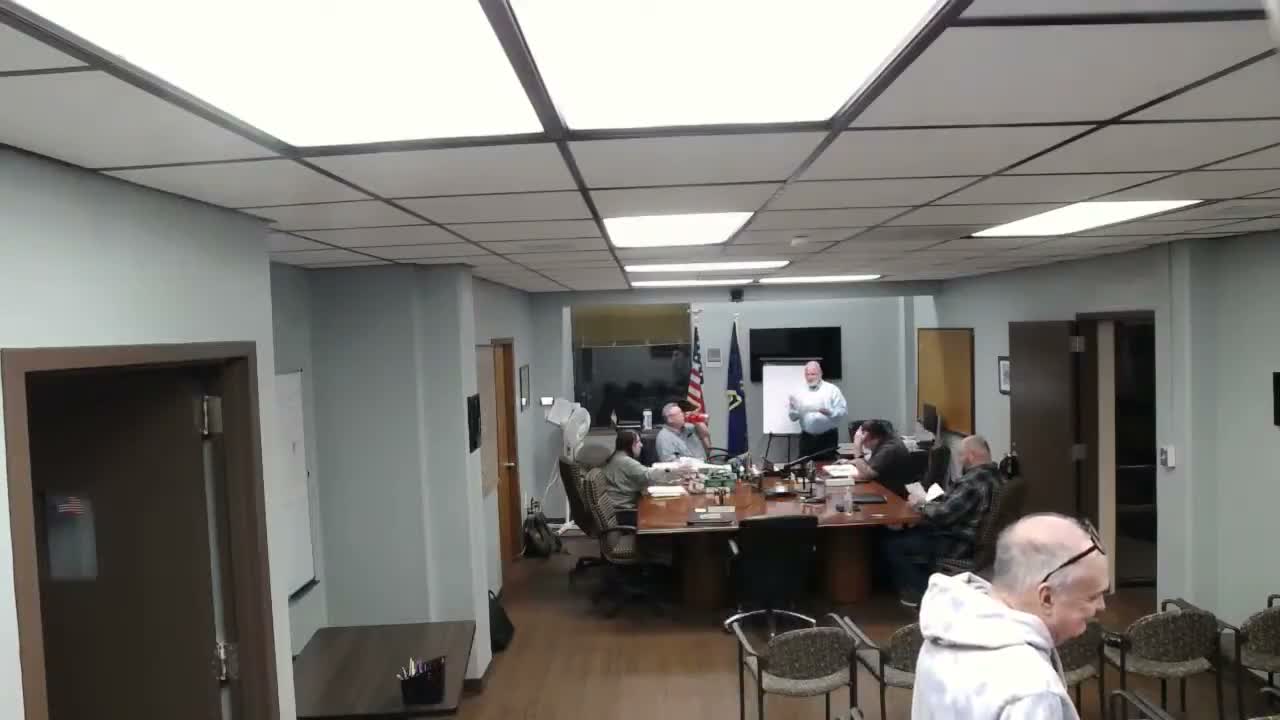
Participants in a Bourbon County work session spent the meeting mapping high-level priorities intended to guide the county's budget and planning decisions, saying they want government to be efficient, responsive and focused on preserving a rural, family-oriented way of life.
Speaker 2, an unidentified participant who led the session, described the method at the start: "The first questions are 30,000-foot view questions," and asked for short, one- to six-word answers so the group could surface shared priorities without debating them. He instructed the group that "there are no wrong answers here," and asked participants to later relate the high-level answers to statutory duties and budgeting choices.
Throughout the session, participants repeatedly named "family," "community," "agriculture," and a "rural lifestyle" as core local values, and emphasized safety as a defining feature. On housing and growth, Speaker 4 proposed developing the industrial park and encouraging infill and $100,000–$150,000 homes to broaden the tax base; the group also called for more high-quality, affordable rental housing.
Speakers linked several priorities to reversing an aging and shrinking population. "We have no incentive for our young people to return after college," Speaker 1 said, and urged better jobs and incentives to retain residents. Examples from neighboring towns were cited as models for attracting blue-collar employers that can support family-sustaining jobs.
Infrastructure and maintenance drew sustained attention. One participant said deferred maintenance estimates in the city could be "as much as $100,000,000," and multiple speakers urged shifting from reactive repairs toward incremental, planned investment in roads, water and sewer systems. Participants also suggested strengthening partnerships with the city and local college on workforce and education initiatives.
On county services, residents' expectations were summarized as lower taxes, good roads, efficient government and responsive follow-up from officials. "Return my calls," one speaker said when describing constituent demands; others asked for "good stewardship" of taxpayer dollars and for government not to expand scope unnecessarily but to perform core functions well.
Speakers warned that local "tribalism"—geographic, generational and cultural divisions—can impede cooperation and development. They recommended improving the community's openness to newcomers as a prerequisite for economic growth.
The group paused after about 15 minutes of questions and agreed to set another date to continue the exercise. No motions or formal votes were recorded during the session.
The work session focused on compiling priorities commissioners and staff can use when drafting budgets and exploring strategic steps; participants said next steps include follow-up meetings and further translation of these priorities into budget choices.
Speaker 2, an unidentified participant who led the session, described the method at the start: "The first questions are 30,000-foot view questions," and asked for short, one- to six-word answers so the group could surface shared priorities without debating them. He instructed the group that "there are no wrong answers here," and asked participants to later relate the high-level answers to statutory duties and budgeting choices.
Throughout the session, participants repeatedly named "family," "community," "agriculture," and a "rural lifestyle" as core local values, and emphasized safety as a defining feature. On housing and growth, Speaker 4 proposed developing the industrial park and encouraging infill and $100,000–$150,000 homes to broaden the tax base; the group also called for more high-quality, affordable rental housing.
Speakers linked several priorities to reversing an aging and shrinking population. "We have no incentive for our young people to return after college," Speaker 1 said, and urged better jobs and incentives to retain residents. Examples from neighboring towns were cited as models for attracting blue-collar employers that can support family-sustaining jobs.
Infrastructure and maintenance drew sustained attention. One participant said deferred maintenance estimates in the city could be "as much as $100,000,000," and multiple speakers urged shifting from reactive repairs toward incremental, planned investment in roads, water and sewer systems. Participants also suggested strengthening partnerships with the city and local college on workforce and education initiatives.
On county services, residents' expectations were summarized as lower taxes, good roads, efficient government and responsive follow-up from officials. "Return my calls," one speaker said when describing constituent demands; others asked for "good stewardship" of taxpayer dollars and for government not to expand scope unnecessarily but to perform core functions well.
Speakers warned that local "tribalism"—geographic, generational and cultural divisions—can impede cooperation and development. They recommended improving the community's openness to newcomers as a prerequisite for economic growth.
The group paused after about 15 minutes of questions and agreed to set another date to continue the exercise. No motions or formal votes were recorded during the session.
The work session focused on compiling priorities commissioners and staff can use when drafting budgets and exploring strategic steps; participants said next steps include follow-up meetings and further translation of these priorities into budget choices.
View the Full Meeting & All Its Details
This article offers just a summary. Unlock complete video, transcripts, and insights as a Founder Member.
✓
Watch full, unedited meeting videos
✓
Search every word spoken in unlimited transcripts
✓
AI summaries & real-time alerts (all government levels)
✓
Permanent access to expanding government content
30-day money-back guarantee
