Committee backs tougher licensing and testing for specialty vape/tobacco shops, endorses $10,000 license fee
February 12, 2026 | 2026 Utah Legislature, Utah Legislature, Utah Legislative Branch, Utah
This article was created by AI summarizing key points discussed. AI makes mistakes, so for full details and context, please refer to the video of the full meeting. Please report any errors so we can fix them. Report an error »
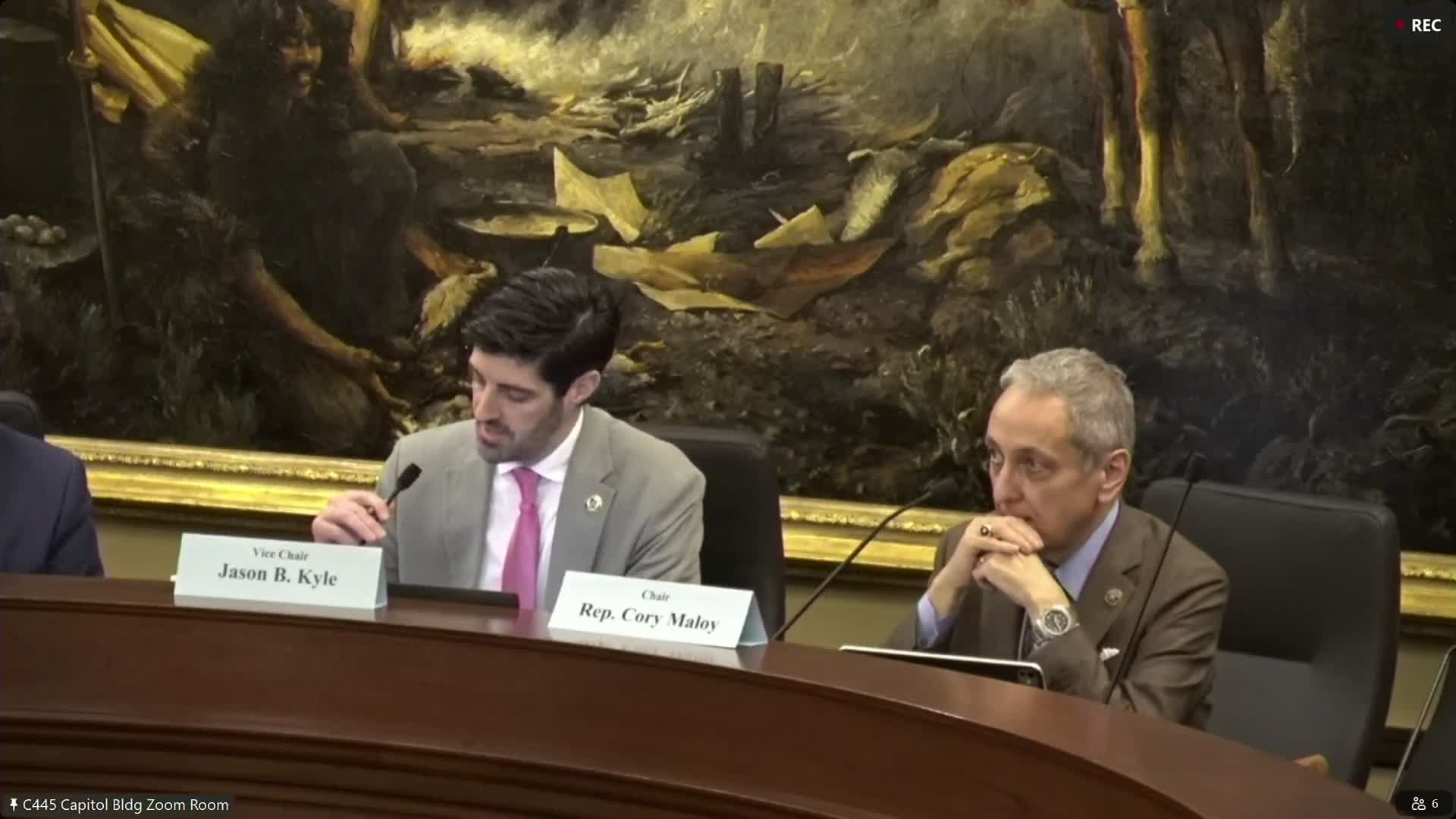
The House Business, Labor and Commerce Committee favorably recommended the first substitute to House Bill 385, a package of nicotine‑sales and retail tobacco specialty business (RTSB) reforms that would create a specialized license, require product registration, and increase enforcement resources.
Sponsor testimony framed the measure as a response to years of easy youth access and a regulatory gap in shops selling vaping, cannabinoid and other emerging products. Representative Veil said the bill creates licensing infrastructure and enforcement tools that do not exist under the current $30 tax commission registration. “The new license... create meaningful infrastructure and regulation with real teeth on the RTSB’s,” the sponsor said.
The proposal would attach licenses to individuals rather than just business names to curb serial relicensing after violations, require registries of products and ingredients, and give the Department of Agriculture and Food (UDAF) authority and revenue to expand lab testing. UDAF deputy commissioner Amber Brown told the committee the agency currently lacks sufficient inspectors and lab capacity; she said revenue from the fee would help hire inspectors and test emerging dangerous products, including items found with illicit additives.
Public‑safety witnesses reinforced the enforcement rationale. Alex Garcia, deputy chief with the Salt Lake City Police Department, said warrants in specialty shops frequently recover illicit or controlled substances disguised as consumer products that can expose youth to dangerous compounds. “These products are containing illegitimate substances... our teens may think they’re doing something innocent,” Garcia said.
Sponsor and agency testimony explained the proposed $10,000 license is intended to fund enforcement and prevention work: the fiscal estimate shown to the committee assumes approximately 168 businesses would purchase the license, generating about $1.68 million in revenue; sponsor said 90% of fee revenue would fund regulation/enforcement and 10% would support tobacco‑prevention programs.
Industry testimony was mixed. Some operators and trade representatives warned a $10,000 fee is high and urged clarity about parity with gas stations; law‑enforcement and public‑health witnesses countered that specialty shops have been linked to repeated illegal sales and product adulteration and that stronger enforcement tools, including license revocation, are needed.
The substitute also addresses underage sales enforcement by clarifying criminal negligence elements so prosecutors need not prove a retailer knowingly sold to a minor in order to pursue cases where carding was deliberately avoided.
After debate about enforcement mechanics and the fee level, the committee adopted the first substitute and voted to recommend the substitute favorably. The measure will proceed with a committee endorsement to the full House.
Sponsor testimony framed the measure as a response to years of easy youth access and a regulatory gap in shops selling vaping, cannabinoid and other emerging products. Representative Veil said the bill creates licensing infrastructure and enforcement tools that do not exist under the current $30 tax commission registration. “The new license... create meaningful infrastructure and regulation with real teeth on the RTSB’s,” the sponsor said.
The proposal would attach licenses to individuals rather than just business names to curb serial relicensing after violations, require registries of products and ingredients, and give the Department of Agriculture and Food (UDAF) authority and revenue to expand lab testing. UDAF deputy commissioner Amber Brown told the committee the agency currently lacks sufficient inspectors and lab capacity; she said revenue from the fee would help hire inspectors and test emerging dangerous products, including items found with illicit additives.
Public‑safety witnesses reinforced the enforcement rationale. Alex Garcia, deputy chief with the Salt Lake City Police Department, said warrants in specialty shops frequently recover illicit or controlled substances disguised as consumer products that can expose youth to dangerous compounds. “These products are containing illegitimate substances... our teens may think they’re doing something innocent,” Garcia said.
Sponsor and agency testimony explained the proposed $10,000 license is intended to fund enforcement and prevention work: the fiscal estimate shown to the committee assumes approximately 168 businesses would purchase the license, generating about $1.68 million in revenue; sponsor said 90% of fee revenue would fund regulation/enforcement and 10% would support tobacco‑prevention programs.
Industry testimony was mixed. Some operators and trade representatives warned a $10,000 fee is high and urged clarity about parity with gas stations; law‑enforcement and public‑health witnesses countered that specialty shops have been linked to repeated illegal sales and product adulteration and that stronger enforcement tools, including license revocation, are needed.
The substitute also addresses underage sales enforcement by clarifying criminal negligence elements so prosecutors need not prove a retailer knowingly sold to a minor in order to pursue cases where carding was deliberately avoided.
After debate about enforcement mechanics and the fee level, the committee adopted the first substitute and voted to recommend the substitute favorably. The measure will proceed with a committee endorsement to the full House.
View the Full Meeting & All Its Details
This article offers just a summary. Unlock complete video, transcripts, and insights as a Founder Member.
✓
Watch full, unedited meeting videos
✓
Search every word spoken in unlimited transcripts
✓
AI summaries & real-time alerts (all government levels)
✓
Permanent access to expanding government content
30-day money-back guarantee
