Senate committee advances bill to create secure mental‑health facility for violent juveniles
February 13, 2026 | 2026 Legislature KY, Kentucky
This article was created by AI summarizing key points discussed. AI makes mistakes, so for full details and context, please refer to the video of the full meeting. Please report any errors so we can fix them. Report an error »
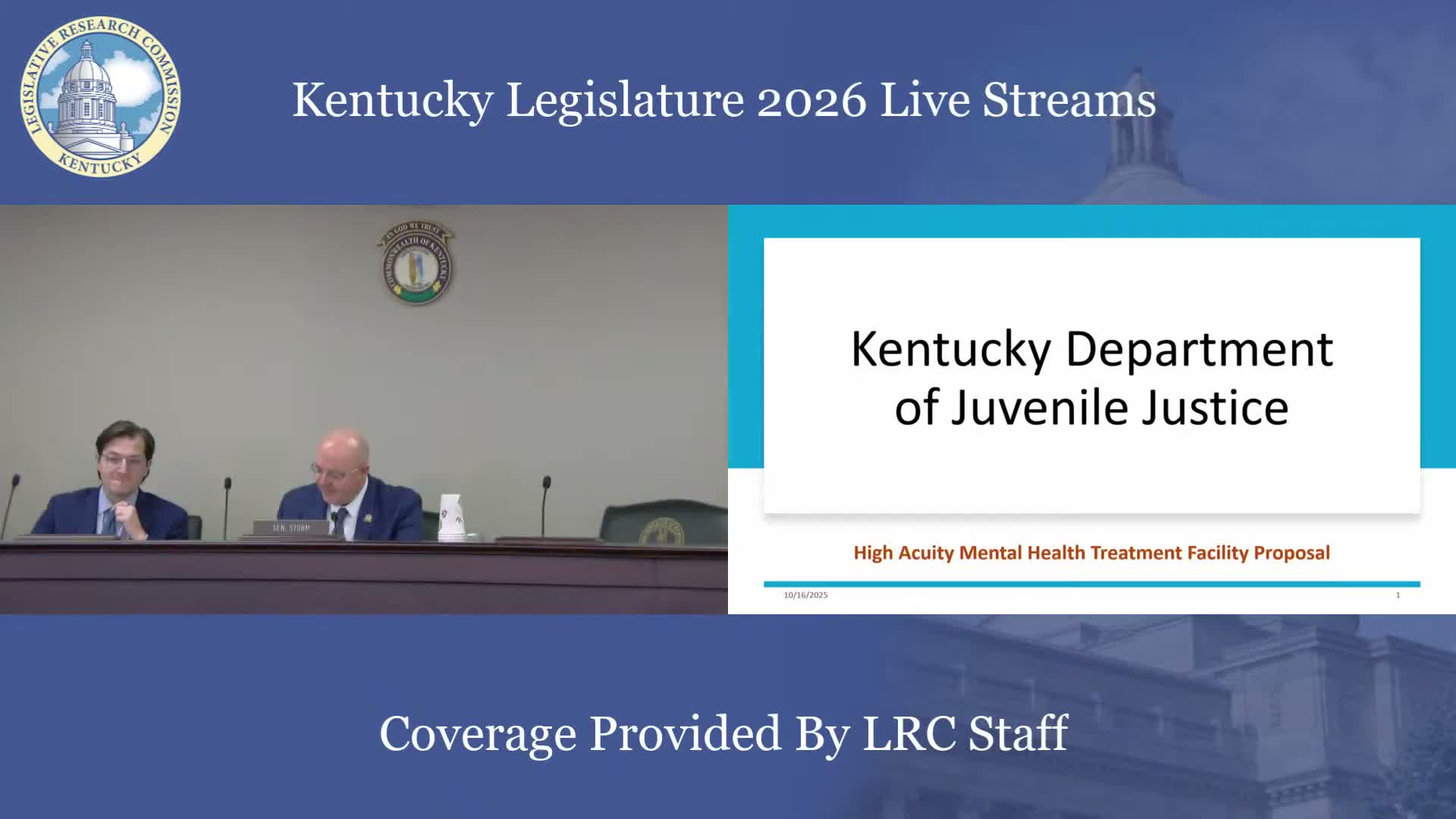
The Senate Judiciary Committee on a unanimous vote advanced Senate Bill 125, a measure that would create a secure, state‑run high‑acuity mental‑health treatment facility for juveniles judged to be severely mentally ill and violent, and would authorize construction of two additional female juvenile detention centers.
Senator Danny Carroll, the bill’s sponsor, told the committee the measure establishes a continuum of care, a process for clinical assessment, and a placement pathway that involves both executive cabinet representatives with judicial review when there are placement disputes. "We have worked with all the stakeholders," Carroll said, describing the bill as the final major step following previous reforms after a 2023 detention crisis.
Why it matters: Department of Juvenile Justice (DJJ) officials and clinicians told the committee judges can order any youth into detention and that detention centers lack the medical and staffing capacity to treat juveniles who become uncontrollably violent because of acute mental illness. "Detention centers are not psychiatric hospitals," Deputy Secretary Mona Womack said, arguing a dedicated facility would allow medically equipped psychiatric care and reduce the use of isolation.
Clinical and procedural safeguards: DJJ and the bill sponsor said admission to the facility would be limited to youths who are clinically assessed as needing secure treatment. Womack and other presenters stressed that private psychiatric hospitals routinely refuse these youth because of assaultive behavior and that the proposed facility would be designed with trauma‑informed clinical spaces and security features. Senator Carroll noted the bill clarifies confidentiality provisions and adds a process for removing publicly released escape information from access once a youth is returned to custody.
Medical limitations and staffing: Dr. Clark Lester, DJJ’s chief medical officer and a child psychiatrist affiliated with the University of Kentucky, told the panel DJJ can provide oral psychiatric medication when youth comply but currently lacks the capability to give intramuscular injections or perform certain emergency clinical interventions that hospital settings can provide. DJJ officials said a high‑acuity facility would require higher staff‑to‑youth ratios and specialized training.
Costs and timeline: Rebecca Norton, the cabinet’s executive budget director, estimated annual operating costs for a high‑acuity facility at about $12,000,000 compared with roughly $8,000,000 for a standard juvenile detention facility. She said potential Medicaid offsets were possible but not yet quantified. DJJ staff said construction and build‑out would likely take about two‑and‑a‑half to three years after authorization and funding.
Process and next steps: Committee members pressed on eligibility, safety risks of concentrating violent youth, and the judiciary’s role in placement decisions. Carroll and DJJ emphasized that clinical assessment and judicial oversight would govern admissions. The committee voted to report SB125 favorably as amended; the roll call recorded eight yes votes, zero no votes.
Funding context and federal oversight: Presenters noted the Capital Planning Advisory Board recommended funding for the facilities and Carroll warned that the Department of Justice is investigating DJJ; he said passing this bill could affect whether DOJ seeks a consent decree. "This could very well make the difference as to whether or not we are issued a consent decree," Carroll said.
The committee reported the bill favorably to the full Senate; further committee consideration and any appropriation decisions remain steps the General Assembly must take before construction could begin.
Senator Danny Carroll, the bill’s sponsor, told the committee the measure establishes a continuum of care, a process for clinical assessment, and a placement pathway that involves both executive cabinet representatives with judicial review when there are placement disputes. "We have worked with all the stakeholders," Carroll said, describing the bill as the final major step following previous reforms after a 2023 detention crisis.
Why it matters: Department of Juvenile Justice (DJJ) officials and clinicians told the committee judges can order any youth into detention and that detention centers lack the medical and staffing capacity to treat juveniles who become uncontrollably violent because of acute mental illness. "Detention centers are not psychiatric hospitals," Deputy Secretary Mona Womack said, arguing a dedicated facility would allow medically equipped psychiatric care and reduce the use of isolation.
Clinical and procedural safeguards: DJJ and the bill sponsor said admission to the facility would be limited to youths who are clinically assessed as needing secure treatment. Womack and other presenters stressed that private psychiatric hospitals routinely refuse these youth because of assaultive behavior and that the proposed facility would be designed with trauma‑informed clinical spaces and security features. Senator Carroll noted the bill clarifies confidentiality provisions and adds a process for removing publicly released escape information from access once a youth is returned to custody.
Medical limitations and staffing: Dr. Clark Lester, DJJ’s chief medical officer and a child psychiatrist affiliated with the University of Kentucky, told the panel DJJ can provide oral psychiatric medication when youth comply but currently lacks the capability to give intramuscular injections or perform certain emergency clinical interventions that hospital settings can provide. DJJ officials said a high‑acuity facility would require higher staff‑to‑youth ratios and specialized training.
Costs and timeline: Rebecca Norton, the cabinet’s executive budget director, estimated annual operating costs for a high‑acuity facility at about $12,000,000 compared with roughly $8,000,000 for a standard juvenile detention facility. She said potential Medicaid offsets were possible but not yet quantified. DJJ staff said construction and build‑out would likely take about two‑and‑a‑half to three years after authorization and funding.
Process and next steps: Committee members pressed on eligibility, safety risks of concentrating violent youth, and the judiciary’s role in placement decisions. Carroll and DJJ emphasized that clinical assessment and judicial oversight would govern admissions. The committee voted to report SB125 favorably as amended; the roll call recorded eight yes votes, zero no votes.
Funding context and federal oversight: Presenters noted the Capital Planning Advisory Board recommended funding for the facilities and Carroll warned that the Department of Justice is investigating DJJ; he said passing this bill could affect whether DOJ seeks a consent decree. "This could very well make the difference as to whether or not we are issued a consent decree," Carroll said.
The committee reported the bill favorably to the full Senate; further committee consideration and any appropriation decisions remain steps the General Assembly must take before construction could begin.
View the Full Meeting & All Its Details
This article offers just a summary. Unlock complete video, transcripts, and insights as a Founder Member.
✓
Watch full, unedited meeting videos
✓
Search every word spoken in unlimited transcripts
✓
AI summaries & real-time alerts (all government levels)
✓
Permanent access to expanding government content
30-day money-back guarantee
