Committee adopts substitute and favorably advances bill clarifying ‘performance’ offenses involving minors
February 12, 2026 | 2026 Utah Legislature, Utah Legislature, Utah Legislative Branch, Utah
This article was created by AI summarizing key points discussed. AI makes mistakes, so for full details and context, please refer to the video of the full meeting. Please report any errors so we can fix them. Report an error »
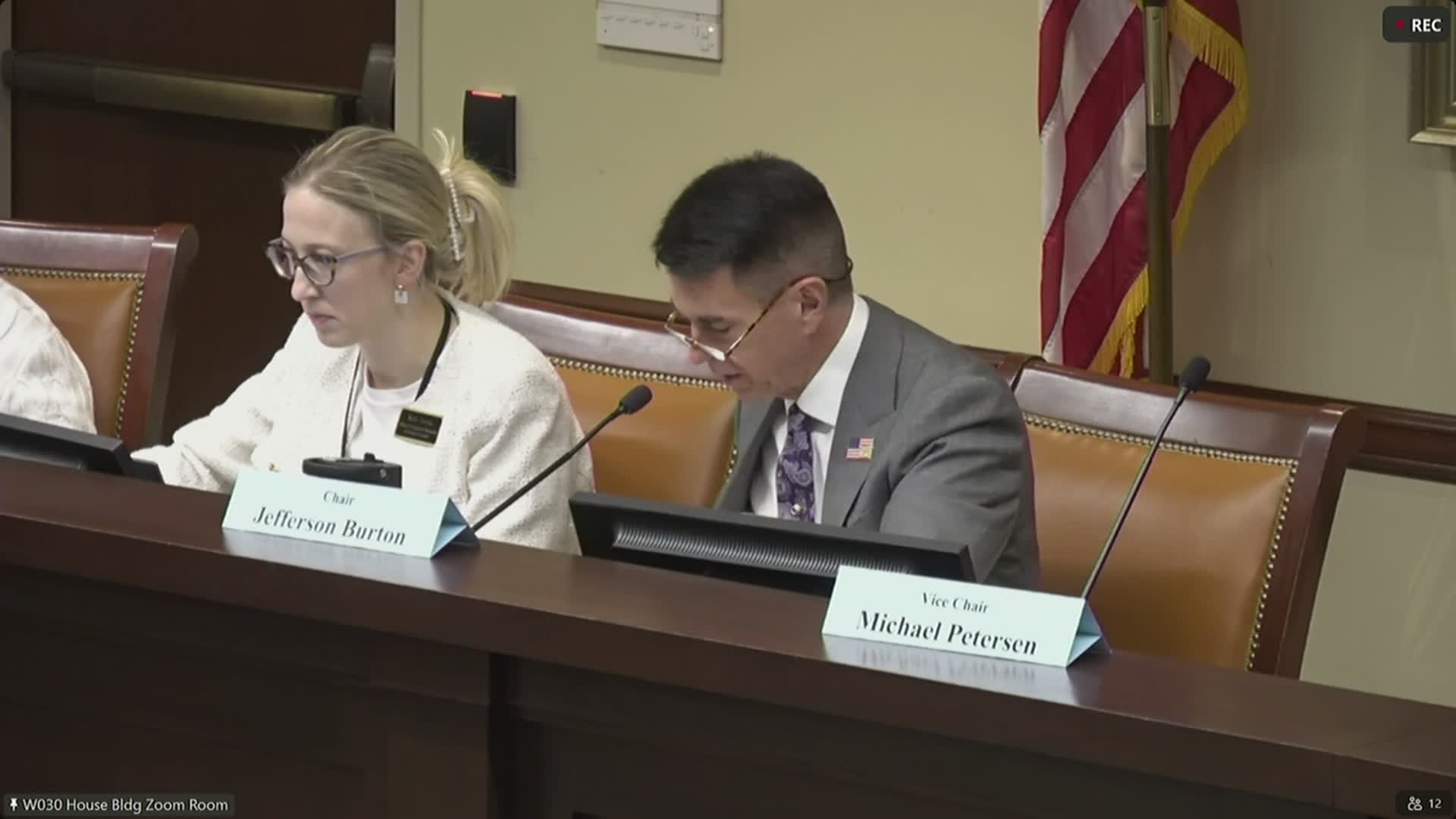
Representative Jack introduced House Bill 114, a technical reorganization of criminal statutes related to pornographic and lewd performances that the sponsor and criminal-justice experts said is intended to make existing law clearer and easier to enforce.
"What this bill does to make it clearer for everyone in this space, law enforcement or performers, is it takes one paragraph and puts it into two separate paragraphs divided by subject so that you can see where's the line on [obscenity] and where is the line on lewdness," Representative Jack said during the committee presentation. He also referenced a coordination clause in the first substitute that the committee adopted.
Dan Strong of the Commission on Criminal and Juvenile Justice testified that the proposal consolidates performance-related elements into a separate statute titled "performance" and preserves the penalties that already exist in other statutes. "If it meets those elements, then it is not protected by the First Amendment," Strong said in explaining the court-established obscenity test the bill relies on. He added the substitute creates a mens rea of recklessness regarding the presence of a child for offenses involving performances in front of minors; penalties mirror prior law in the sections from which the performance elements are moved.
During committee questioning, Representative McPherson confirmed the change relocates mens rea language into the new section and does not reduce culpability: the new text includes intentional, knowing, and reckless mental states for the performance offenses. Representative Keltner raised questions about age-gap provisions carried over from statutes concerning distribution to minors; Strong said those provisions were designed to treat smaller age gaps less harshly.
Public commenters were split. Mary Anne Christensen, executive director of Utah Legislative Watch, urged support, saying the state had “gaps in our statute” that left law enforcement without clear authority to shut down lewd productions in public parks. Cameron Whiting, a private citizen from Logan, told the committee he opposed the bill and worried the language could be vague enough to "criminalize being gay in public or criminalize drag shows." Online callers Alexis Entz and Hailey Kaplan—both parents from Washington County—told the committee they supported the bill as clarifying protections for children.
Representative McPherson moved to adopt the first substitute and to pass HB114 as substituted out of committee. Both motions carried; the committee adopted the substitute and then unanimously recommended the bill to pass favorably.
The committee’s action advances the bill to the House for further deliberation; sponsors and supporters said the measure is aimed at clarity and enforceability rather than expanding criminal liability beyond existing statutory and constitutional limits.
"What this bill does to make it clearer for everyone in this space, law enforcement or performers, is it takes one paragraph and puts it into two separate paragraphs divided by subject so that you can see where's the line on [obscenity] and where is the line on lewdness," Representative Jack said during the committee presentation. He also referenced a coordination clause in the first substitute that the committee adopted.
Dan Strong of the Commission on Criminal and Juvenile Justice testified that the proposal consolidates performance-related elements into a separate statute titled "performance" and preserves the penalties that already exist in other statutes. "If it meets those elements, then it is not protected by the First Amendment," Strong said in explaining the court-established obscenity test the bill relies on. He added the substitute creates a mens rea of recklessness regarding the presence of a child for offenses involving performances in front of minors; penalties mirror prior law in the sections from which the performance elements are moved.
During committee questioning, Representative McPherson confirmed the change relocates mens rea language into the new section and does not reduce culpability: the new text includes intentional, knowing, and reckless mental states for the performance offenses. Representative Keltner raised questions about age-gap provisions carried over from statutes concerning distribution to minors; Strong said those provisions were designed to treat smaller age gaps less harshly.
Public commenters were split. Mary Anne Christensen, executive director of Utah Legislative Watch, urged support, saying the state had “gaps in our statute” that left law enforcement without clear authority to shut down lewd productions in public parks. Cameron Whiting, a private citizen from Logan, told the committee he opposed the bill and worried the language could be vague enough to "criminalize being gay in public or criminalize drag shows." Online callers Alexis Entz and Hailey Kaplan—both parents from Washington County—told the committee they supported the bill as clarifying protections for children.
Representative McPherson moved to adopt the first substitute and to pass HB114 as substituted out of committee. Both motions carried; the committee adopted the substitute and then unanimously recommended the bill to pass favorably.
The committee’s action advances the bill to the House for further deliberation; sponsors and supporters said the measure is aimed at clarity and enforceability rather than expanding criminal liability beyond existing statutory and constitutional limits.
View the Full Meeting & All Its Details
This article offers just a summary. Unlock complete video, transcripts, and insights as a Founder Member.
✓
Watch full, unedited meeting videos
✓
Search every word spoken in unlimited transcripts
✓
AI summaries & real-time alerts (all government levels)
✓
Permanent access to expanding government content
30-day money-back guarantee
