Committee backs 0.5% purchasing-fee reserve plan to hedge inflation for state contracts
February 12, 2026 | 2026 Utah Legislature, Utah Legislature, Utah Legislative Branch, Utah
This article was created by AI summarizing key points discussed. AI makes mistakes, so for full details and context, please refer to the video of the full meeting. Please report any errors so we can fix them. Report an error »
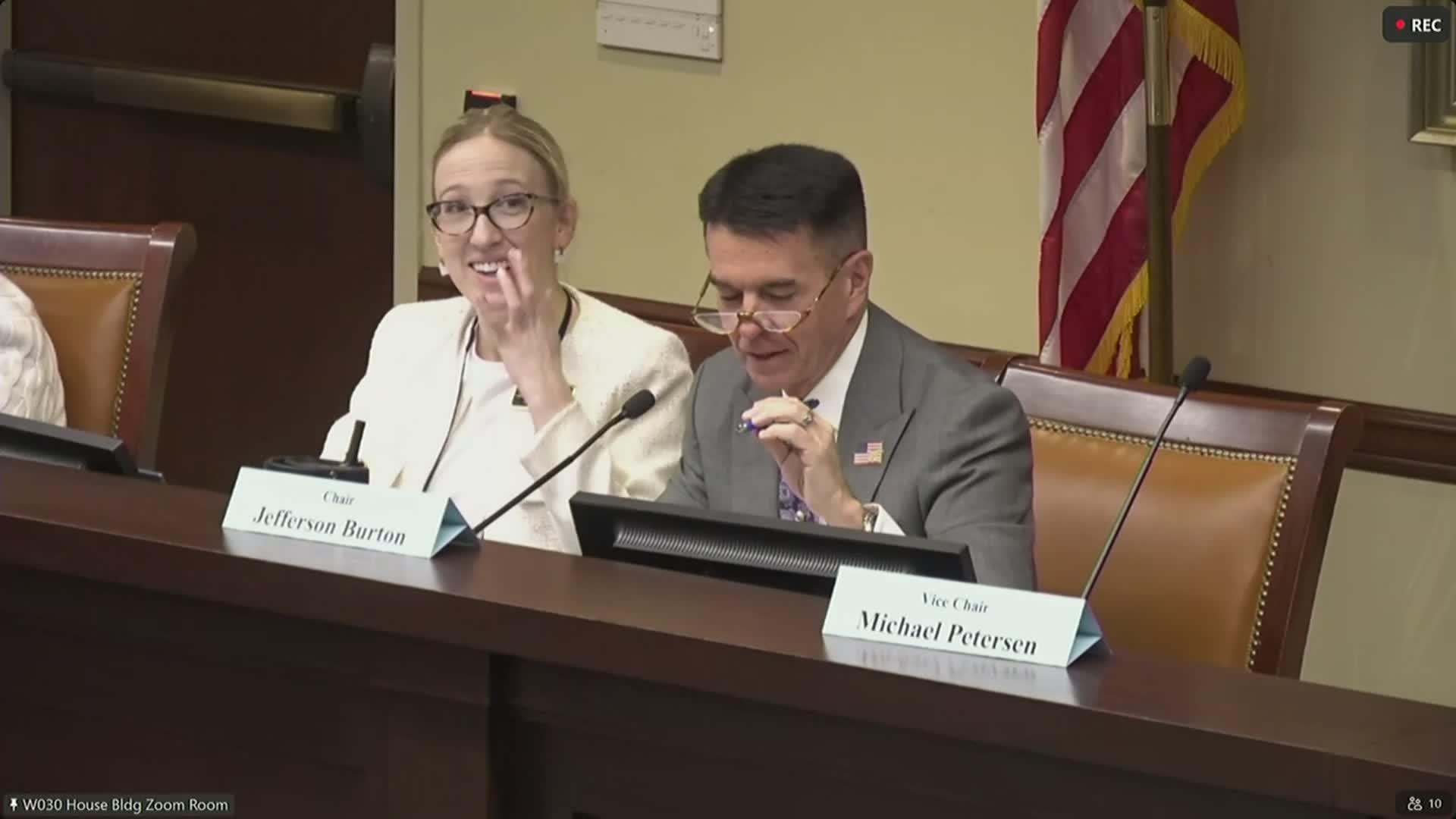
Representative Ivory presented House Bill 405 to create a state purchasing reserve funded by a small fee (0.5%) applied to certain state procurement contracts. Ivory argued that persistent inflation and declining purchasing power for recurring goods (fuel, office furniture, rock salt) justify a strategic reserve so the state can preserve buying power for long-term contracts.
"What the House Bill 405 does is very simple ... take a very small percentage, one half of one percent on the purchasing contracts, put that in a restricted account in gold that preserves purchasing power for the goods that we know we're gonna purchase as a state," Representative Ivory said, framing the reserve as a hedge against long-term inflation.
Kent Beers, former director of state purchasing, testified on procurement mechanics and vendor behavior. Beers said the purchasing cooperative model has historically been fee-based and that survey evidence showed small administrative fees did not raise prices to the state: "The fees are paid 100% by the vendors," he said, adding vendors accept such fees because they save money by avoiding separate procurements for each public entity.
Committee members raised economic and policy concerns. Representative Keltner suggested the fee could be perceived as a tax and asked why the treasurer could not manage monetary hedging centrally. Beers and Representative Ivory responded that centralized state purchasing already exists and that vendor surveys and tiered fee systems mitigate the risk of increased costs passing through to public entities.
Public comment included Mary Anne Christensen, who said she favored moving toward precious-metal hedging and supported the bill. The committee then moved to a motion by Representative McPherson to favorably recommend HB405 as substituted. A roll-call vote recorded 7 in favor and 2 opposed; Representatives Cutler and Stoddard voted no. The committee's recommendation advances the substitute bill to the House floor.
The bill proposes process and administrative changes to state purchasing and does not, per testimony, allocate immediate general-fund dollars; proponents described a multi-year build-up of the reserve and recommended a tiered approach so the fee would not apply to some very small or community-service contracts.
"What the House Bill 405 does is very simple ... take a very small percentage, one half of one percent on the purchasing contracts, put that in a restricted account in gold that preserves purchasing power for the goods that we know we're gonna purchase as a state," Representative Ivory said, framing the reserve as a hedge against long-term inflation.
Kent Beers, former director of state purchasing, testified on procurement mechanics and vendor behavior. Beers said the purchasing cooperative model has historically been fee-based and that survey evidence showed small administrative fees did not raise prices to the state: "The fees are paid 100% by the vendors," he said, adding vendors accept such fees because they save money by avoiding separate procurements for each public entity.
Committee members raised economic and policy concerns. Representative Keltner suggested the fee could be perceived as a tax and asked why the treasurer could not manage monetary hedging centrally. Beers and Representative Ivory responded that centralized state purchasing already exists and that vendor surveys and tiered fee systems mitigate the risk of increased costs passing through to public entities.
Public comment included Mary Anne Christensen, who said she favored moving toward precious-metal hedging and supported the bill. The committee then moved to a motion by Representative McPherson to favorably recommend HB405 as substituted. A roll-call vote recorded 7 in favor and 2 opposed; Representatives Cutler and Stoddard voted no. The committee's recommendation advances the substitute bill to the House floor.
The bill proposes process and administrative changes to state purchasing and does not, per testimony, allocate immediate general-fund dollars; proponents described a multi-year build-up of the reserve and recommended a tiered approach so the fee would not apply to some very small or community-service contracts.
View the Full Meeting & All Its Details
This article offers just a summary. Unlock complete video, transcripts, and insights as a Founder Member.
✓
Watch full, unedited meeting videos
✓
Search every word spoken in unlimited transcripts
✓
AI summaries & real-time alerts (all government levels)
✓
Permanent access to expanding government content
30-day money-back guarantee
