Committee advances measure to give voters wider role filling legislative vacancies
February 12, 2026 | 2026 Utah Legislature, Utah Legislature, Utah Legislative Branch, Utah
This article was created by AI summarizing key points discussed. AI makes mistakes, so for full details and context, please refer to the video of the full meeting. Please report any errors so we can fix them. Report an error »
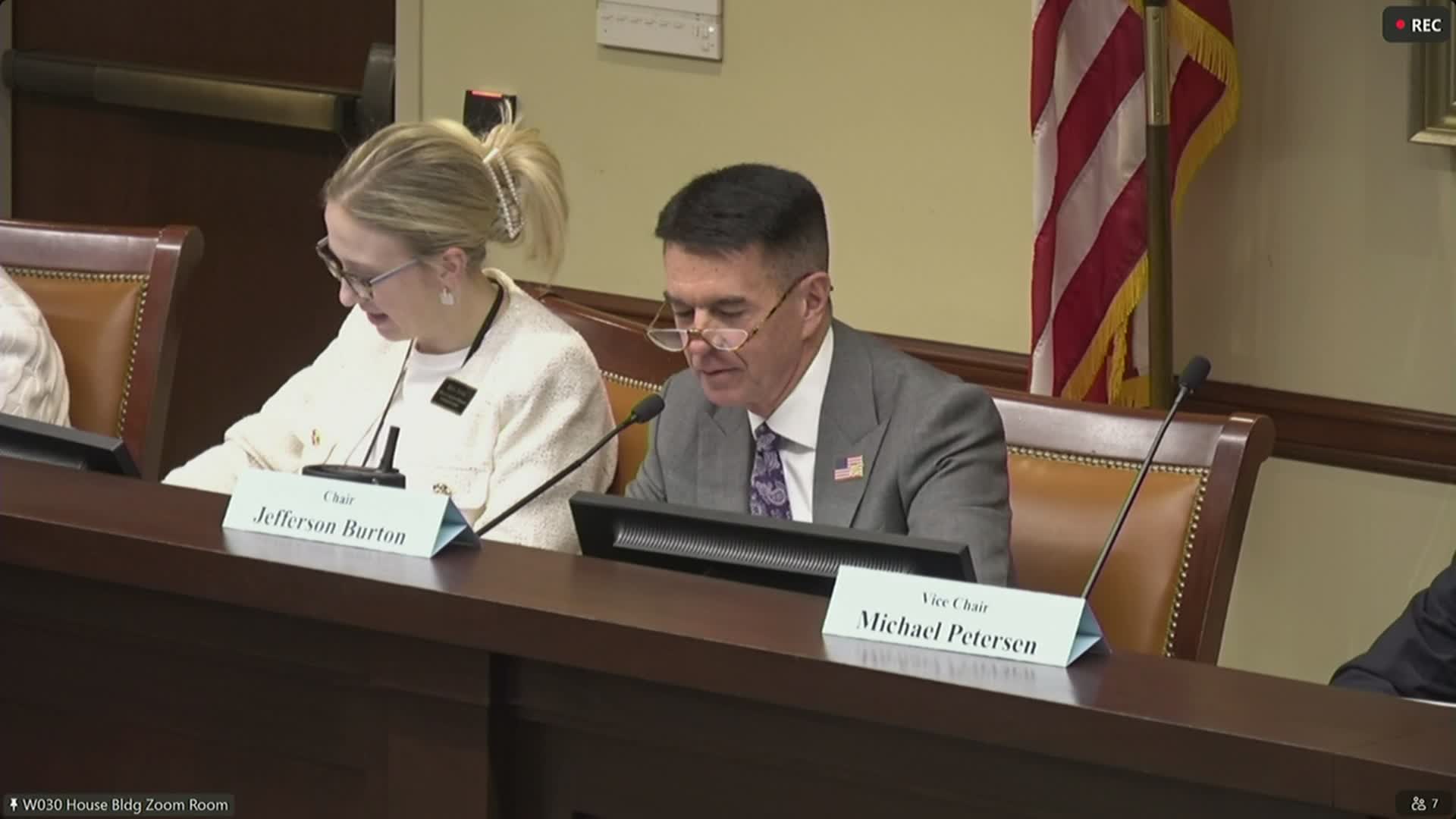
Representative Stoddard presented House Bill 443, proposing to change how midterm legislative vacancies are filled by enabling special elections or aligning vacancy fills with existing election dates. Stoddard cited data—28% of current senators and 21% of representatives were initially appointed midterm—and argued the current process gives a small group of delegates outsized influence and an incumbency advantage.
"These seats belong to the voters," said Michelle Quist of the Forward Party of Utah in online public comment, urging the committee to move the measure forward. Helen Moser of the League of Women Voters testified that the bill would strengthen representative democracy, increase transparency and provide predictable timelines for filling vacancies.
Committee members repeatedly focused on logistics and cost. Representative McPherson asked about fiscal consequences for special elections; Stoddard said the bill does not automatically appropriate funds and that the legislature would need to appropriate money if a special election were called. Philip Boileau, a Forward Party communications director, supplied a county-clerk cost estimate around $2.50 per voter for a mail-based election and argued many other states already require elections to fill vacancies.
Members also discussed timing scenarios—vacancies close to session start, the governor’s role in calling special elections, and whether signature-gathering would be permitted. Representative Walton and others said the bill addresses "stacking the deck" by small delegate groups; Representative Keltner and others raised concerns about the legislature’s role in appropriating funds and potential strategic decisions to delay elections.
Representative Hayes moved to pass HB443 out favorably without substitute amendments. The motion carried on a roll-call vote, 7-3, with Representatives Burton, Vice Chair Peterson and Malloy voting no. Supporters said passage from committee would allow the full House to refine timing, fiscal details and other logistics in subsequent debate.
"These seats belong to the voters," said Michelle Quist of the Forward Party of Utah in online public comment, urging the committee to move the measure forward. Helen Moser of the League of Women Voters testified that the bill would strengthen representative democracy, increase transparency and provide predictable timelines for filling vacancies.
Committee members repeatedly focused on logistics and cost. Representative McPherson asked about fiscal consequences for special elections; Stoddard said the bill does not automatically appropriate funds and that the legislature would need to appropriate money if a special election were called. Philip Boileau, a Forward Party communications director, supplied a county-clerk cost estimate around $2.50 per voter for a mail-based election and argued many other states already require elections to fill vacancies.
Members also discussed timing scenarios—vacancies close to session start, the governor’s role in calling special elections, and whether signature-gathering would be permitted. Representative Walton and others said the bill addresses "stacking the deck" by small delegate groups; Representative Keltner and others raised concerns about the legislature’s role in appropriating funds and potential strategic decisions to delay elections.
Representative Hayes moved to pass HB443 out favorably without substitute amendments. The motion carried on a roll-call vote, 7-3, with Representatives Burton, Vice Chair Peterson and Malloy voting no. Supporters said passage from committee would allow the full House to refine timing, fiscal details and other logistics in subsequent debate.
View the Full Meeting & All Its Details
This article offers just a summary. Unlock complete video, transcripts, and insights as a Founder Member.
✓
Watch full, unedited meeting videos
✓
Search every word spoken in unlimited transcripts
✓
AI summaries & real-time alerts (all government levels)
✓
Permanent access to expanding government content
30-day money-back guarantee
