Committee backs substitute allowing city-triggered feasibility studies for county splits
February 12, 2026 | 2026 Utah Legislature, Utah Legislature, Utah Legislative Branch, Utah
This article was created by AI summarizing key points discussed. AI makes mistakes, so for full details and context, please refer to the video of the full meeting. Please report any errors so we can fix them. Report an error »
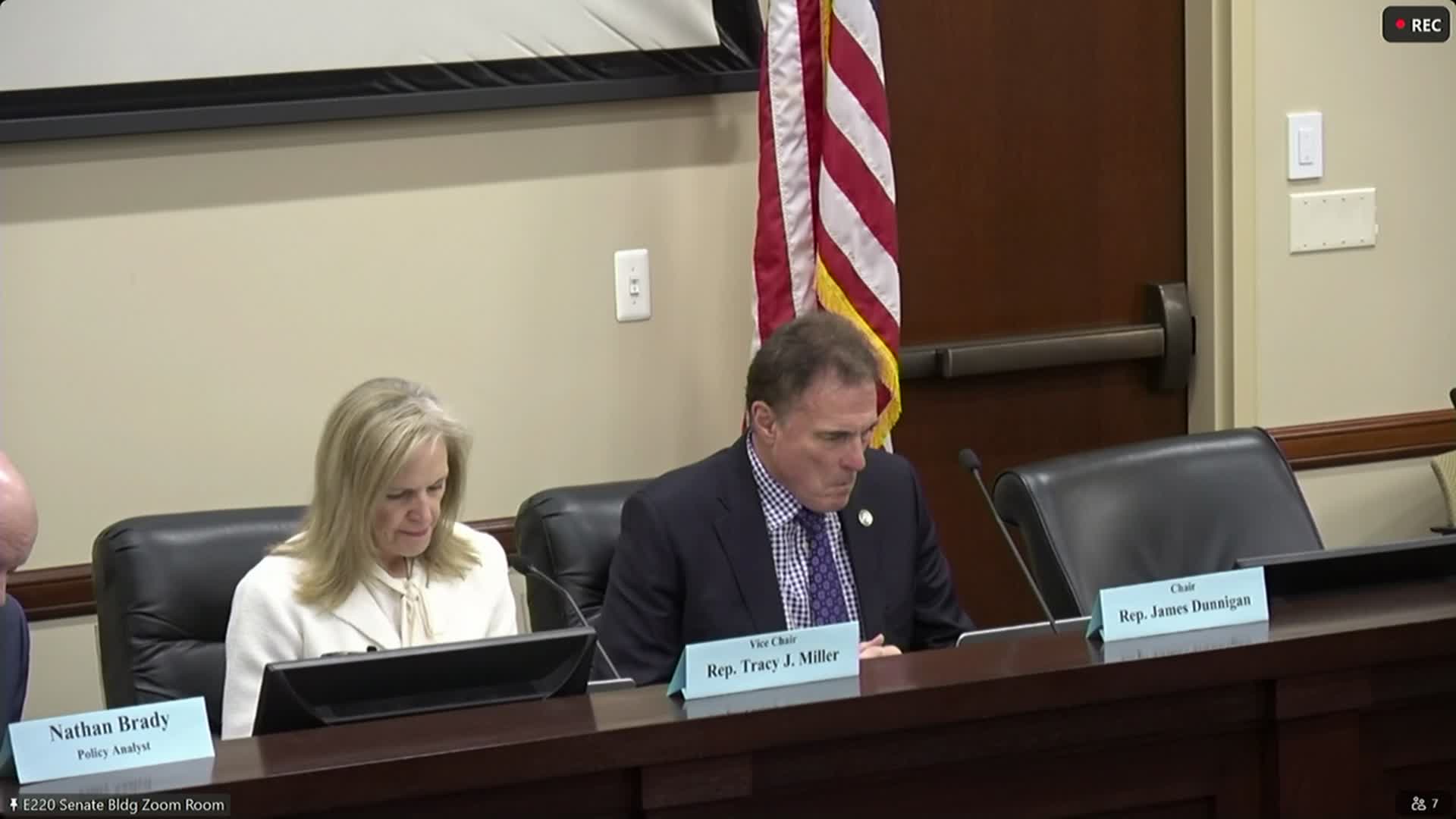
Representative Tesher introduced HB 2 12 as an alternate route to split very large counties, saying the current petition route — signatures from one-fourth of a county’s registered voters — is impractical in counties like Salt Lake County. Under the first substitute the committee recommended, counties with populations over 1,000,000 could be the subject of a county split process initiated when petitioning municipalities that together represent at least one-third of the county’s population adopt triggering resolutions within the same calendar year.
The substitute requires those petitioning cities to fund a feasibility study that outlines likely costs, service impacts, and bond implications before the question is placed on a countywide ballot. Tesher said the study ensures voters have relevant fiscal information when deciding whether to split a county. He told the committee that Salt Lake County officials were consulted and the county is neutral on the bill.
Members pressed the sponsor on mechanics and safeguards. Representative Ward asked whether a split could produce more than two counties; Tesher said the statute contemplates a single split but a county could be split again later. Representative Dunnegan and others raised concerns about duplicated county offices and the fiscal effect on the remaining county, including how jail costs would be apportioned; Dunnegan said Salt Lake County’s jail costs are about $120,000,000 per year.
Committee members also asked about the treatment of existing bonded indebtedness and how obligations would be divided between successor counties. Tesher and supporters said the substitute triggers a feasibility study that would address bond division and other financial questions that the current petition pathway does not require. Representative Walter asked to consult municipal financial advisers before supporting a final floor recommendation.
After discussion, a committee member moved to adopt the first substitute; the committee approved the motion and then took a roll-call vote. The committee gave HB 2 12 (first substitute) a favorable recommendation by roll call, 8 to 4; the clerk recorded the no votes as Donegan, Fotisimanu, Walter, and Ward. The committee’s recommendation sends the bill to the next stage with sponsor and committee agreement that additional work on bond and indebtedness questions can continue before floor action.
The next procedural step is floor consideration; proponents and opponents signaled a willingness to continue refining bond-division language before that vote.
The substitute requires those petitioning cities to fund a feasibility study that outlines likely costs, service impacts, and bond implications before the question is placed on a countywide ballot. Tesher said the study ensures voters have relevant fiscal information when deciding whether to split a county. He told the committee that Salt Lake County officials were consulted and the county is neutral on the bill.
Members pressed the sponsor on mechanics and safeguards. Representative Ward asked whether a split could produce more than two counties; Tesher said the statute contemplates a single split but a county could be split again later. Representative Dunnegan and others raised concerns about duplicated county offices and the fiscal effect on the remaining county, including how jail costs would be apportioned; Dunnegan said Salt Lake County’s jail costs are about $120,000,000 per year.
Committee members also asked about the treatment of existing bonded indebtedness and how obligations would be divided between successor counties. Tesher and supporters said the substitute triggers a feasibility study that would address bond division and other financial questions that the current petition pathway does not require. Representative Walter asked to consult municipal financial advisers before supporting a final floor recommendation.
After discussion, a committee member moved to adopt the first substitute; the committee approved the motion and then took a roll-call vote. The committee gave HB 2 12 (first substitute) a favorable recommendation by roll call, 8 to 4; the clerk recorded the no votes as Donegan, Fotisimanu, Walter, and Ward. The committee’s recommendation sends the bill to the next stage with sponsor and committee agreement that additional work on bond and indebtedness questions can continue before floor action.
The next procedural step is floor consideration; proponents and opponents signaled a willingness to continue refining bond-division language before that vote.
View the Full Meeting & All Its Details
This article offers just a summary. Unlock complete video, transcripts, and insights as a Founder Member.
✓
Watch full, unedited meeting videos
✓
Search every word spoken in unlimited transcripts
✓
AI summaries & real-time alerts (all government levels)
✓
Permanent access to expanding government content
30-day money-back guarantee
