Committee reworks homelessness bill language on hotels, case management and coordinated entry
February 13, 2026 | Human Services, HOUSE OF REPRESENTATIVES, Committees, Legislative , Vermont
This article was created by AI summarizing key points discussed. AI makes mistakes, so for full details and context, please refer to the video of the full meeting. Please report any errors so we can fix them. Report an error »
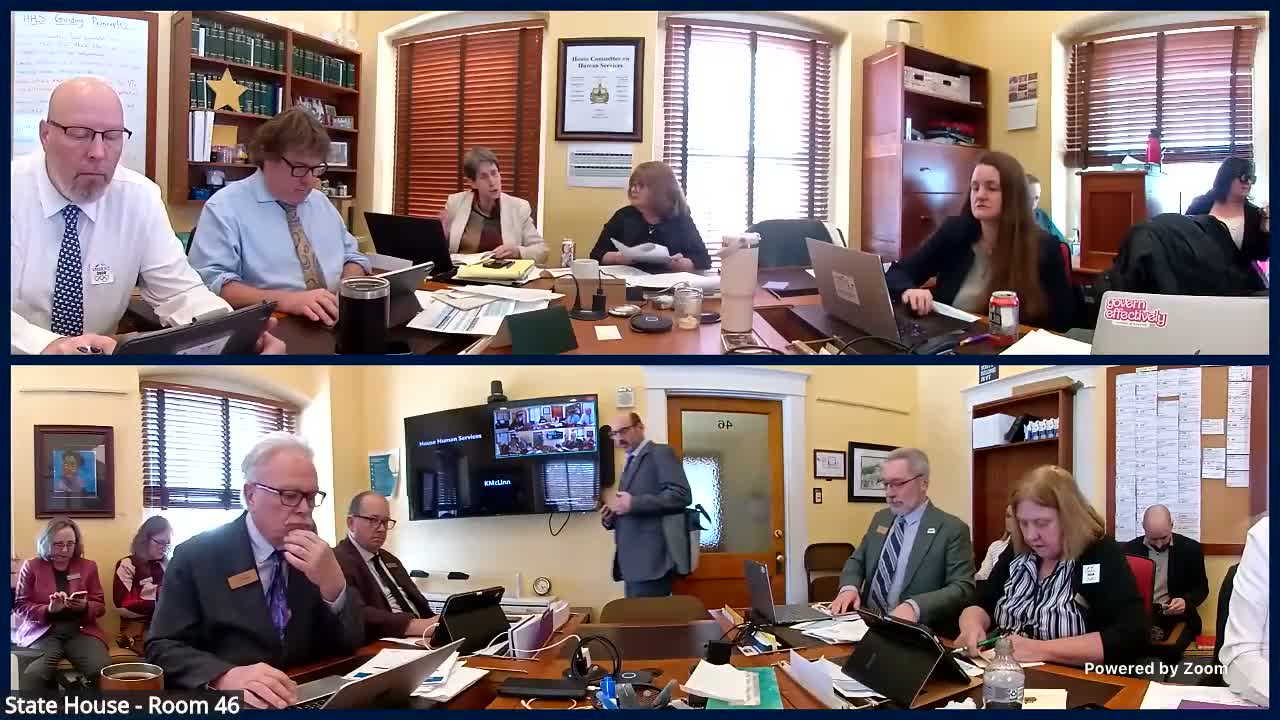
A legislative committee reviewing a draft homelessness bill spent several hours clarifying how hotels and motels with supportive services would be authorized, how case management would be defined and assigned, and how coordinated entry and disability accommodations should operate.
Committee members said the bill’s current draft (page 13) was unclear about whether the Department or a community partner should enter agreements with hotels and motels. Lawmakers asked that the lead concept be restructured so a single approach applies across related sections rather than inserting words that create inconsistent obligations. One member noted the department’s original proposal referenced 21 staff positions, “12 of which would be stationed out in and around hotels,” and asked whether those functions should instead be provided by community providers or designated agencies.
The group agreed to separate case management into its own statutory subsection. Staff read draft language for a lead case management entity (section 2210) that would provide individualized supports informed by household acuity and coordinate access to public assistance, health care, employment and permanent housing. Members debated whether the statute should require a participant’s active engagement or only require that providers offer case-management services; they requested clearer wording to avoid implying that a household could automatically be removed from shelter for failing to participate without due process.
Chen Simmons, a representative involved in housing and homelessness coordination, urged aligning statutory definitions with existing HUD coordinated-entry language to prevent competing systems: “it’s really important to tie any definitions or programmatic guidance towards the existing definitions of the whole data industry and other, defined processes,” Chen said. Several members recommended using HUD’s operational meaning for coordinated entry in the bill without cross-referencing federal rulemaking.
Lawmakers also focused on disability accommodations. The draft used the phrase “head of household” in one exemption; members advised changing that to “member of the eligible household” so that accommodations cover situations where a family member’s needs prevent a caregiver from participating in assessments or case planning.
On enforcement and appeals, committee members asked staff to preserve an appeals mechanism modeled on the Human Services Board and to include protections for households awaiting available permanent housing (for example, documenting that a participant is waiting for a voucher or unit rather than being inactive). The committee indicated many implementation details (timelines, training, coordinated-entry procedures) are better addressed in rulemaking and asked for progress reports during the transition period.
The committee also discussed intake or “first-touch” approaches that would collect limited information at first shelter entry and allow a short window to complete the full coordinated-entry assessment so people in crisis are not blocked from emergency shelter. Members requested further drafting to reflect that concept without forcing a full assessment at intake.
The committee agreed to continue work, circulate a revised draft and requested the department return to testify the following day. The chair asked staff to add sustainability language and to pause most new grant requests for one year, while preserving four ongoing exceptions.
Next steps: staff will circulate a revised draft reflecting the separate case-management and coordinated-entry sections, disability-language edits, and proposed rulemaking/reporting language for committee review.
Committee members said the bill’s current draft (page 13) was unclear about whether the Department or a community partner should enter agreements with hotels and motels. Lawmakers asked that the lead concept be restructured so a single approach applies across related sections rather than inserting words that create inconsistent obligations. One member noted the department’s original proposal referenced 21 staff positions, “12 of which would be stationed out in and around hotels,” and asked whether those functions should instead be provided by community providers or designated agencies.
The group agreed to separate case management into its own statutory subsection. Staff read draft language for a lead case management entity (section 2210) that would provide individualized supports informed by household acuity and coordinate access to public assistance, health care, employment and permanent housing. Members debated whether the statute should require a participant’s active engagement or only require that providers offer case-management services; they requested clearer wording to avoid implying that a household could automatically be removed from shelter for failing to participate without due process.
Chen Simmons, a representative involved in housing and homelessness coordination, urged aligning statutory definitions with existing HUD coordinated-entry language to prevent competing systems: “it’s really important to tie any definitions or programmatic guidance towards the existing definitions of the whole data industry and other, defined processes,” Chen said. Several members recommended using HUD’s operational meaning for coordinated entry in the bill without cross-referencing federal rulemaking.
Lawmakers also focused on disability accommodations. The draft used the phrase “head of household” in one exemption; members advised changing that to “member of the eligible household” so that accommodations cover situations where a family member’s needs prevent a caregiver from participating in assessments or case planning.
On enforcement and appeals, committee members asked staff to preserve an appeals mechanism modeled on the Human Services Board and to include protections for households awaiting available permanent housing (for example, documenting that a participant is waiting for a voucher or unit rather than being inactive). The committee indicated many implementation details (timelines, training, coordinated-entry procedures) are better addressed in rulemaking and asked for progress reports during the transition period.
The committee also discussed intake or “first-touch” approaches that would collect limited information at first shelter entry and allow a short window to complete the full coordinated-entry assessment so people in crisis are not blocked from emergency shelter. Members requested further drafting to reflect that concept without forcing a full assessment at intake.
The committee agreed to continue work, circulate a revised draft and requested the department return to testify the following day. The chair asked staff to add sustainability language and to pause most new grant requests for one year, while preserving four ongoing exceptions.
Next steps: staff will circulate a revised draft reflecting the separate case-management and coordinated-entry sections, disability-language edits, and proposed rulemaking/reporting language for committee review.
View the Full Meeting & All Its Details
This article offers just a summary. Unlock complete video, transcripts, and insights as a Founder Member.
✓
Watch full, unedited meeting videos
✓
Search every word spoken in unlimited transcripts
✓
AI summaries & real-time alerts (all government levels)
✓
Permanent access to expanding government content
30-day money-back guarantee
