Committee narrows opioid‑settlement and rural‑health allocations, directs prevention funds for selected programs
February 13, 2026 | Human Services, HOUSE OF REPRESENTATIVES, Committees, Legislative , Vermont
This article was created by AI summarizing key points discussed. AI makes mistakes, so for full details and context, please refer to the video of the full meeting. Please report any errors so we can fix them. Report an error »
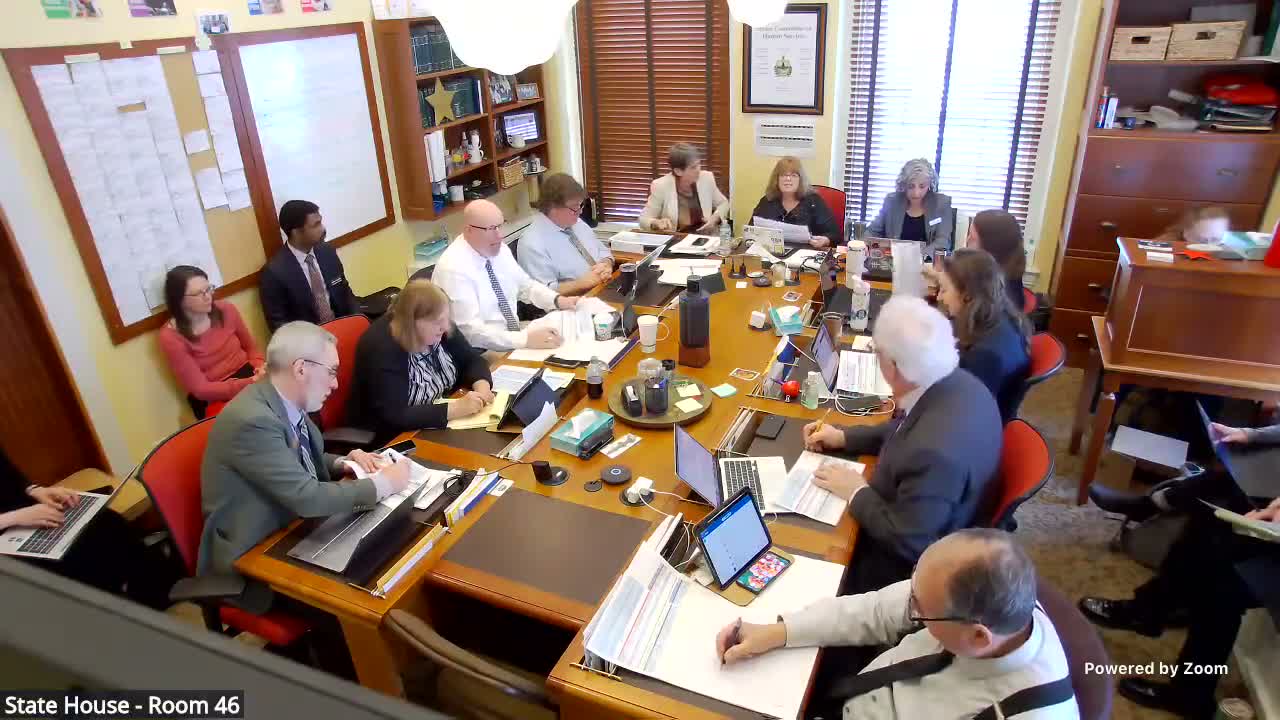
Members of the Joint Fiscal Committee debated how best to allocate opioid settlement and rural health transformation funding for recovery residences, peer recovery services and prevention programs, ultimately approving a set of directions to staff and the Department of Health while deferring some decisions for later review.
The committee spent most of the session reviewing a memo from Veil Livingston that linked rural health transformation grant priorities to several line items in the committee’s packet. Livingston’s memo, circulated to members, recommended coordinating allocations so that related requests — notably two items tied to recovery residences — would be managed through a single process, a staff member said.
Committee members pressed for documentation and a spreadsheet showing prior spending. One member said a $200,000 allocation from last year had produced only $23,000 in expenditures, prompting calls for clearer accounting before increasing any line item. “I asked for the breakdown of the 200,000 from last year, and they said they only spent 23,000,” a member said during the meeting.
On ongoing operational funding for recovery residences, the committee heard from staff that three new certified residences came online in the last fiscal year and three more in the current year, and that operators were scaling up. A staff summary cited a $1.7 million request to support those additional homes; members discussed whether a compromise appropriation should be set and whether the state should transition recurring costs into the base budget before settlement funds run out. “We’re not just going to shut down the recovery residences,” a member said, urging that successful programs be put into the governor’s base budget so services do not end when settlement dollars expire.
The committee also discussed a Department of Corrections proposal for peer recovery coaching services inside correctional facilities. Members reduced an original request to $1.1 million in committee deliberations after noting a 10% indirect administrative fee could otherwise reduce the amount available for direct services. Members asked for language that would ensure funds go to front‑line recovery coaching rather than being taken as overhead.
Emergency shelter funding and potential overlap with Medicaid and housing initiatives drew another round of clarification. Staff said the emergency shelter allocation is limited to services and supplies not covered by Medicaid and does not duplicate the housing initiative line that funds a recovery‑oriented shelter in Burlington operated by CVOEO.
On prevention spending, members noted approximately $3 million in prevention funds derived from the cannabis excise tax is budgeted in the Health Department and suggested directing those prevention dollars toward several prevention‑oriented line items in this packet. The chair summarized the committee’s decision to fund the Community Care Network item (item 9), keep item 13 neutral for further clarification, and direct the Department to use prevention funds for items 10, 11, 12 and 15 rather than drawing from settlement funds for those requests.
The committee also agreed to combine related line items (6 and 14) into a single allocation process to reduce duplication, while asking staff to preserve geographic distribution and service‑level distinctions so that funds do not concentrate in one area. Members emphasized adding clear language about sustainability and geographic fairness in the committee memo.
No final roll‑call vote was recorded on the full package during the excerpted session; the committee scheduled additional testimony and follow‑up work. The chair said the committee would hear the City of Burlington and BCJR, the contractor for the overdose prevention center, at 11:15 and paused to allow that testimony.
What happens next: staff were asked to produce clarifying language for committee direction, provide supporting spreadsheets showing prior obligations and expenditures, and add sustainability language so that services supported by one‑time settlement funds have a path to base‑budget support where appropriate.
The committee spent most of the session reviewing a memo from Veil Livingston that linked rural health transformation grant priorities to several line items in the committee’s packet. Livingston’s memo, circulated to members, recommended coordinating allocations so that related requests — notably two items tied to recovery residences — would be managed through a single process, a staff member said.
Committee members pressed for documentation and a spreadsheet showing prior spending. One member said a $200,000 allocation from last year had produced only $23,000 in expenditures, prompting calls for clearer accounting before increasing any line item. “I asked for the breakdown of the 200,000 from last year, and they said they only spent 23,000,” a member said during the meeting.
On ongoing operational funding for recovery residences, the committee heard from staff that three new certified residences came online in the last fiscal year and three more in the current year, and that operators were scaling up. A staff summary cited a $1.7 million request to support those additional homes; members discussed whether a compromise appropriation should be set and whether the state should transition recurring costs into the base budget before settlement funds run out. “We’re not just going to shut down the recovery residences,” a member said, urging that successful programs be put into the governor’s base budget so services do not end when settlement dollars expire.
The committee also discussed a Department of Corrections proposal for peer recovery coaching services inside correctional facilities. Members reduced an original request to $1.1 million in committee deliberations after noting a 10% indirect administrative fee could otherwise reduce the amount available for direct services. Members asked for language that would ensure funds go to front‑line recovery coaching rather than being taken as overhead.
Emergency shelter funding and potential overlap with Medicaid and housing initiatives drew another round of clarification. Staff said the emergency shelter allocation is limited to services and supplies not covered by Medicaid and does not duplicate the housing initiative line that funds a recovery‑oriented shelter in Burlington operated by CVOEO.
On prevention spending, members noted approximately $3 million in prevention funds derived from the cannabis excise tax is budgeted in the Health Department and suggested directing those prevention dollars toward several prevention‑oriented line items in this packet. The chair summarized the committee’s decision to fund the Community Care Network item (item 9), keep item 13 neutral for further clarification, and direct the Department to use prevention funds for items 10, 11, 12 and 15 rather than drawing from settlement funds for those requests.
The committee also agreed to combine related line items (6 and 14) into a single allocation process to reduce duplication, while asking staff to preserve geographic distribution and service‑level distinctions so that funds do not concentrate in one area. Members emphasized adding clear language about sustainability and geographic fairness in the committee memo.
No final roll‑call vote was recorded on the full package during the excerpted session; the committee scheduled additional testimony and follow‑up work. The chair said the committee would hear the City of Burlington and BCJR, the contractor for the overdose prevention center, at 11:15 and paused to allow that testimony.
What happens next: staff were asked to produce clarifying language for committee direction, provide supporting spreadsheets showing prior obligations and expenditures, and add sustainability language so that services supported by one‑time settlement funds have a path to base‑budget support where appropriate.
Don't Miss a Word: See the Full Meeting!
Go beyond summaries. Unlock every video, transcript, and key insight with a Founder Membership.
✓
Get instant access to full meeting videos
✓
Search and clip any phrase from complete transcripts
✓
Receive AI-powered summaries & custom alerts
✓
Enjoy lifetime, unrestricted access to government data
30-day money-back guarantee
