City's public art office details expedited stadium-gate designs, eyes larger mural to tell neighborhood history
February 13, 2026 | Chattanooga City, Hamilton County, Tennessee
This article was created by AI summarizing key points discussed. AI makes mistakes, so for full details and context, please refer to the video of the full meeting. Please report any errors so we can fix them. Report an error »
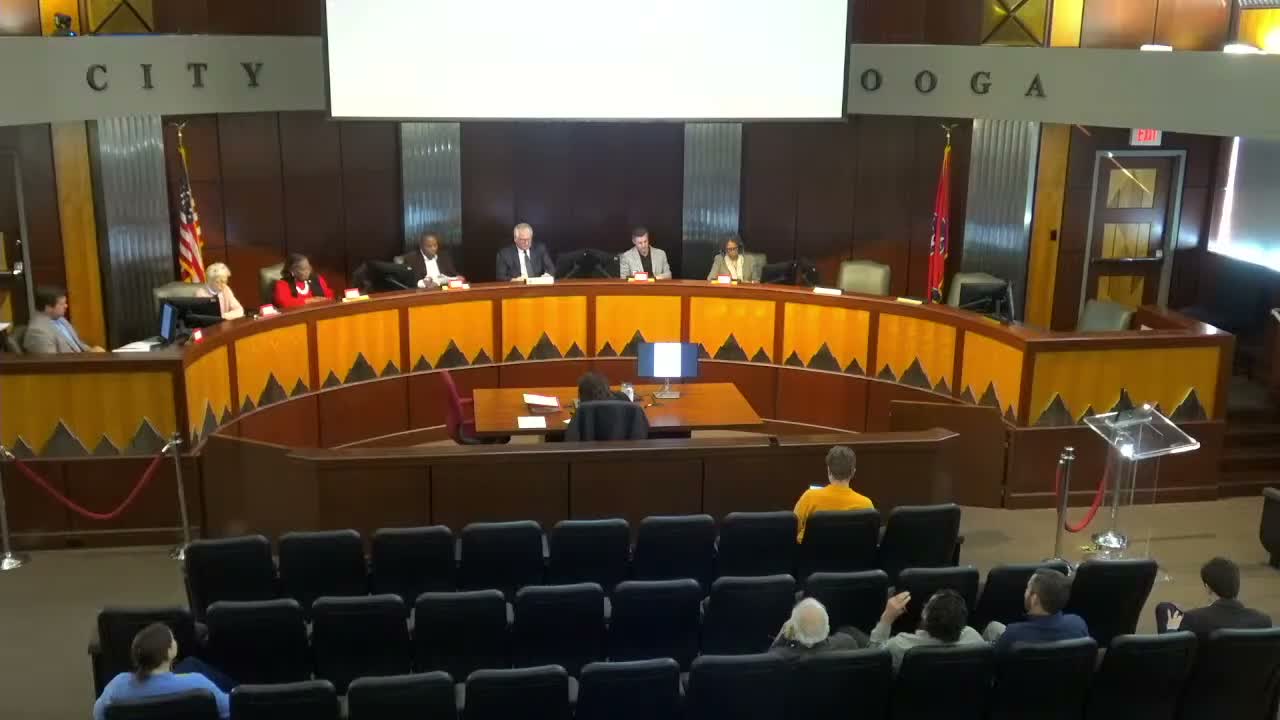
Kate Kearney, manager of Public Art Chattanooga in the city's office of arts, culture and creative economy, presented the authority with public-art plans for the South Broad stadium district and described two projects moving forward.
Kearney said the mayor and city council allocated just over $344,000 in fiscal-year 2026 public-art capital funds for the stadium. The first project, expedited to align with construction, used an invitational call to 12 local artists; a selection panel recommended two finalists and the Public Art Commission approved an initial design. Kearney identified the selected local artist as Tommy Bronx, a visual artist and muralist who developed digital designs for laser-cut Corten steel gate panels. Kearney said the city leveraged existing gate/fence fabrication work so artist design and sketches could be incorporated efficiently and fabrication allowances accounted for more complex panels.
Kearney said the gates’ designs draw on Chattanooga imagery — industrial motifs tied to the foundry and factory past, the Tennessee River, native plants and wildlife — and will be treated as city-owned artworks governed by an artwork license agreement between the Sports Authority and the team (the Lookouts). The agreement will address artist copyright and any future reproduction or commercial use of the design.
A second project under consideration is a larger post-completion wall artwork visible from the highway: Kearney described the highly visible portion as just over 6,000 square feet and said the city typically budgets artists at about $35 per square foot. Because that project occurs after construction, Kearney said the office will pursue a more robust community‑engagement and selection process, and use signage and interpretive elements to convey history.
Several meeting participants urged stronger emphasis on African American history from the nearby neighborhood, noting that some histories were not well documented and should be sourced from local residents and matriarchs/patriarchs with lived knowledge. Kearney and other staff acknowledged that community representation on the selection panel and interpretive materials will be important; she said the mural project will include broader outreach and that the public-art office will try to recruit community representatives with local knowledge.
Kearney said other small projects were identified but currently lack funding; one lower‑cost option she cited was a $45,000 mural on a powerhouse building to honor baseball legends. Kearney said the public-art commission and selection panel will oversee approvals and coordinate with city procurement for calls to artists and contracting.
Next steps: Kearney said the city will finalize the gate fabrication agreements, execute an artwork license agreement that clarifies ownership and artist protections, and plan a wider engagement process for the larger wall mural if funding is secured.
Kearney said the mayor and city council allocated just over $344,000 in fiscal-year 2026 public-art capital funds for the stadium. The first project, expedited to align with construction, used an invitational call to 12 local artists; a selection panel recommended two finalists and the Public Art Commission approved an initial design. Kearney identified the selected local artist as Tommy Bronx, a visual artist and muralist who developed digital designs for laser-cut Corten steel gate panels. Kearney said the city leveraged existing gate/fence fabrication work so artist design and sketches could be incorporated efficiently and fabrication allowances accounted for more complex panels.
Kearney said the gates’ designs draw on Chattanooga imagery — industrial motifs tied to the foundry and factory past, the Tennessee River, native plants and wildlife — and will be treated as city-owned artworks governed by an artwork license agreement between the Sports Authority and the team (the Lookouts). The agreement will address artist copyright and any future reproduction or commercial use of the design.
A second project under consideration is a larger post-completion wall artwork visible from the highway: Kearney described the highly visible portion as just over 6,000 square feet and said the city typically budgets artists at about $35 per square foot. Because that project occurs after construction, Kearney said the office will pursue a more robust community‑engagement and selection process, and use signage and interpretive elements to convey history.
Several meeting participants urged stronger emphasis on African American history from the nearby neighborhood, noting that some histories were not well documented and should be sourced from local residents and matriarchs/patriarchs with lived knowledge. Kearney and other staff acknowledged that community representation on the selection panel and interpretive materials will be important; she said the mural project will include broader outreach and that the public-art office will try to recruit community representatives with local knowledge.
Kearney said other small projects were identified but currently lack funding; one lower‑cost option she cited was a $45,000 mural on a powerhouse building to honor baseball legends. Kearney said the public-art commission and selection panel will oversee approvals and coordinate with city procurement for calls to artists and contracting.
Next steps: Kearney said the city will finalize the gate fabrication agreements, execute an artwork license agreement that clarifies ownership and artist protections, and plan a wider engagement process for the larger wall mural if funding is secured.
View the Full Meeting & All Its Details
This article offers just a summary. Unlock complete video, transcripts, and insights as a Founder Member.
✓
Watch full, unedited meeting videos
✓
Search every word spoken in unlimited transcripts
✓
AI summaries & real-time alerts (all government levels)
✓
Permanent access to expanding government content
30-day money-back guarantee
