Vermont private colleges tell House committee they are vital to workforce but face enrollment and housing pressures
February 12, 2026 | Commerce & Economic Development, HOUSE OF REPRESENTATIVES, Committees, Legislative , Vermont
This article was created by AI summarizing key points discussed. AI makes mistakes, so for full details and context, please refer to the video of the full meeting. Please report any errors so we can fix them. Report an error »
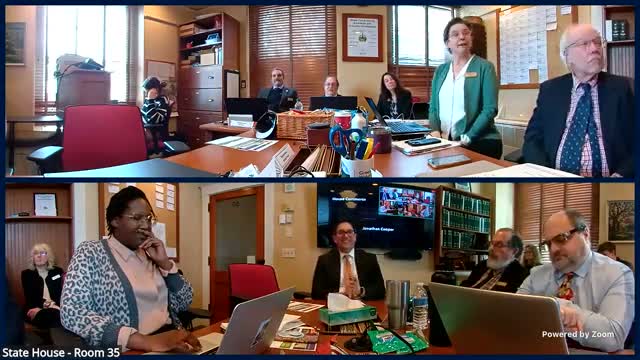
Kimberly Jessup, executive director of the Association of Vermont Independent Colleges, told the Vermont House Committee on Commerce & Economic Development on Feb. 11 that the state’s 11 private nonprofit colleges enroll about 13,400 students and bring roughly 11,300 young adults into Vermont, support more than $300 million in institutional aid and employ over 6,200 people across the state.
Jessup said those colleges generate about $317 million in wages and roughly $728 million in direct expenditures, not including multipliers. She told the committee that one member, Sterling College, is scheduled to close in August and described the closure as “orderly.” She confirmed the Vermont College of Fine Arts is still operating and has partnered with the California Institute of the Arts for administrative services.
Jessup highlighted workforce programs tied to private institutions, including an updated figure of about 164 students participating in the Green Mountain Job and Retention Program, a program she said was initially funded by federal stimulus and offers a $5,000 loan incentive in return for two years of full-time work and residency in Vermont. She also said private colleges enrolled about 600 international students in 2025, with Canada the largest sending country.
On transfers, Jessup outlined a philanthropic Vermont Transfer Guarantee with the Community College of Vermont (CCV). She said CCV students who complete an associate degree and meet the GPA threshold described in testimony are guaranteed admission at Saint Michael’s College, Norwich University and Champlain College; the program launched in a soft phase in 2024 and had about 30 students at the time of testimony.
Alex Hernandez, president of Champlain College, described Champlain’s focus on accelerating workforce readiness through early major coursework, a Leahy Center for Cybersecurity that engages roughly 100 students in real cybersecurity work, co-op programs that allow full-time paid work for academic credit, and Vermont CyberStart, a dual-enrollment cybersecurity pathway for high school students that enrolled about 38 students in its first cohort. Hernandez said 96% of Champlain’s cybersecurity graduates are employed in the field.
Hernandez discussed the likely effects of artificial intelligence on entry-level work, arguing that AI will change job content and increase the importance of professional, interpersonal skills. He said Champlain is designing two AI majors (one technical and one broader) with curricular design expected by the end of the spring, pending faculty-senate approval.
Nia Williams, provost and dean of the faculty at Norwich University, emphasized Norwich’s contributions in nursing, cybersecurity, engineering and criminal justice. She said Norwich educates a substantial share of nursing students who are Vermont residents and that many graduates become licensed to practice in Vermont. Norwich completed phase 1 of a new nursing teaching and simulation center funded by congressionally directed spending from Senator Bernie Sanders (FY23) and reported a phase 2 request of $557,000 that testimony said was recently supported.
Williams said Norwich submitted a substantive change proposal to “NECI” for a doctorate of nursing practice program; she reported it was approved “without qualification.” She also described a Cyber Fusion Research and Development Center that broke ground in 2025 and is expected to open in 2026, and noted recent National Science Foundation awards including a $2 million engineering STEM award launched in 2025.
Committee members asked about enrollment and recruitment. Speakers said enrollment has declined for many small colleges since the pandemic (Norwich cited an approximate 20% decline) and that the FAFSA timing changes and shifts in national research funding affected enrollment patterns. Panelists identified housing availability and affordability as primary barriers to recruiting faculty, staff and graduates to remain in Vermont.
The witnesses asked the committee to consider partnerships to grow workforce pipelines and to support programs that retain graduates in Vermont. The hearing paused for a brief technical break and was scheduled to continue with additional witnesses after adjournment for the short recess.
Jessup said those colleges generate about $317 million in wages and roughly $728 million in direct expenditures, not including multipliers. She told the committee that one member, Sterling College, is scheduled to close in August and described the closure as “orderly.” She confirmed the Vermont College of Fine Arts is still operating and has partnered with the California Institute of the Arts for administrative services.
Jessup highlighted workforce programs tied to private institutions, including an updated figure of about 164 students participating in the Green Mountain Job and Retention Program, a program she said was initially funded by federal stimulus and offers a $5,000 loan incentive in return for two years of full-time work and residency in Vermont. She also said private colleges enrolled about 600 international students in 2025, with Canada the largest sending country.
On transfers, Jessup outlined a philanthropic Vermont Transfer Guarantee with the Community College of Vermont (CCV). She said CCV students who complete an associate degree and meet the GPA threshold described in testimony are guaranteed admission at Saint Michael’s College, Norwich University and Champlain College; the program launched in a soft phase in 2024 and had about 30 students at the time of testimony.
Alex Hernandez, president of Champlain College, described Champlain’s focus on accelerating workforce readiness through early major coursework, a Leahy Center for Cybersecurity that engages roughly 100 students in real cybersecurity work, co-op programs that allow full-time paid work for academic credit, and Vermont CyberStart, a dual-enrollment cybersecurity pathway for high school students that enrolled about 38 students in its first cohort. Hernandez said 96% of Champlain’s cybersecurity graduates are employed in the field.
Hernandez discussed the likely effects of artificial intelligence on entry-level work, arguing that AI will change job content and increase the importance of professional, interpersonal skills. He said Champlain is designing two AI majors (one technical and one broader) with curricular design expected by the end of the spring, pending faculty-senate approval.
Nia Williams, provost and dean of the faculty at Norwich University, emphasized Norwich’s contributions in nursing, cybersecurity, engineering and criminal justice. She said Norwich educates a substantial share of nursing students who are Vermont residents and that many graduates become licensed to practice in Vermont. Norwich completed phase 1 of a new nursing teaching and simulation center funded by congressionally directed spending from Senator Bernie Sanders (FY23) and reported a phase 2 request of $557,000 that testimony said was recently supported.
Williams said Norwich submitted a substantive change proposal to “NECI” for a doctorate of nursing practice program; she reported it was approved “without qualification.” She also described a Cyber Fusion Research and Development Center that broke ground in 2025 and is expected to open in 2026, and noted recent National Science Foundation awards including a $2 million engineering STEM award launched in 2025.
Committee members asked about enrollment and recruitment. Speakers said enrollment has declined for many small colleges since the pandemic (Norwich cited an approximate 20% decline) and that the FAFSA timing changes and shifts in national research funding affected enrollment patterns. Panelists identified housing availability and affordability as primary barriers to recruiting faculty, staff and graduates to remain in Vermont.
The witnesses asked the committee to consider partnerships to grow workforce pipelines and to support programs that retain graduates in Vermont. The hearing paused for a brief technical break and was scheduled to continue with additional witnesses after adjournment for the short recess.
View the Full Meeting & All Its Details
This article offers just a summary. Unlock complete video, transcripts, and insights as a Founder Member.
✓
Watch full, unedited meeting videos
✓
Search every word spoken in unlimited transcripts
✓
AI summaries & real-time alerts (all government levels)
✓
Permanent access to expanding government content
30-day money-back guarantee
