Neighbors press Missoula officials on Midtown Commons plan, park size and public engagement
February 12, 2026 | Missoula, Missoula County, Montana
This article was created by AI summarizing key points discussed. AI makes mistakes, so for full details and context, please refer to the video of the full meeting. Please report any errors so we can fix them. Report an error »
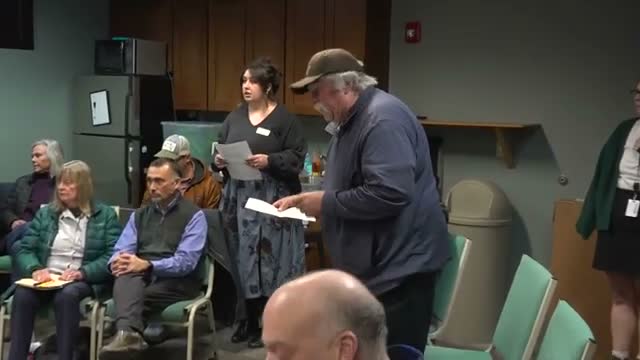
Missoula officials and Redevelopment Agency staff described early plans for Midtown Commons and faced sustained neighborhood concern about park size, public engagement and housing affordability.
Dale Bickel, the city’s chief administrative officer, said the city acquired the former sawmill site to implement the Midtown Master Plan and partnered with Miramonte companies as a developer. "I am the chief administrative officer for the city of Missoula," Bickel said while outlining the purchase, the developer vetting process and a preliminary concept that includes townhomes, a neighborhood park and a multifamily phase of roughly 100 units.
Residents pressed for a larger park and clearer opportunities to weigh in. "We were told this is an underparked area," said Mary, a resident representing a citizens group, describing earlier public planning and asking why the city’s August announcement naming Miramonte did not include more direct opportunity to comment on the developer proposal.
Why it matters: neighbors and advocates framed Midtown Commons as a test of how the city will use public land acquired with redevelopment funds — balancing parkland, affordable ownership opportunities and private development that must be economically feasible. City staff and MRA officials said they are trying to align market feasibility with Midtown Master Plan goals while preserving public amenities.
What officials said: Ellen Buchanan, director of the Missoula Redevelopment Agency, confirmed that MRA provided funding to buy the property and has been involved in planning and financing infrastructure. Bickel said the city and the Missoula Economic Partnership screened firms and selected Miramonte because of its ability to deliver mixed uses; he said final unit counts, tenure (rental vs. ownership) and many cost details remain in engineering and market analysis.
On park size and design, residents cited earlier planning materials calling for multi-acre parks; staff said changing market realities and construction costs make very large parks harder to fund within a private-development model. Bickel announced a park charrette scheduled for February 26 to develop the park concept and incorporate amenities. "Parks has developed a formula...to actually create those charrettes and then find the amenities," he said.
Housing and finance: housing advocates asked whether Miramonte would deliver cross-subsidized affordable units or whether the city would retain land for affordable housing. John Woolverton, a volunteer with Pro Housing Missoula, urged urgency: "We are in a housing crisis." City staff replied that Miramonte lacks a deep track record in capital‑affordable projects but that proceeds from any land sale could be reinvested in the Affordable Housing Trust Fund and other subsidies citywide; staff cited city targets in roughly the 60–120% area‑median income range for workforce housing.
Traffic and parking: multiple residents warned about existing congestion on Reserve and U.S. 93 and questioned whether the plan adequately addresses parking and ingress/egress. Council President Mike Nugent said state legislation has limited municipalities' ability to require minimum parking and stressed that any property sale and development agreement would require council approval. "The developer can't do anything until he owns the property," Nugent said, noting that the mayor must bring a formal proposal to council for public consideration.
Environment and site work: residents asked about contamination. MRA staff said Phase I and Phase II environmental assessments were completed during due diligence; the principal legacy issue identified was sawdust behind Bob Ward's presenting geotechnical concerns rather than pollutant contamination.
Process and next steps: residents repeatedly requested clearer, ongoing communication and opportunities for substantive dialogue beyond council public-comment slots. Staff pointed to Engage Missoula (the project's public webpage), the upcoming park charrette and future MRA or council hearings once a mayoral proposal is ready. Kalina Pritchard, a neighborhood specialist, reminded attendees that "there's no action to be taken tonight" and provided neighborhood contact information.
The meeting adjourned without a vote. Officials said further design work, public charrettes and a mayoral proposal to city council would precede any property sale or formal development agreement.
Dale Bickel, the city’s chief administrative officer, said the city acquired the former sawmill site to implement the Midtown Master Plan and partnered with Miramonte companies as a developer. "I am the chief administrative officer for the city of Missoula," Bickel said while outlining the purchase, the developer vetting process and a preliminary concept that includes townhomes, a neighborhood park and a multifamily phase of roughly 100 units.
Residents pressed for a larger park and clearer opportunities to weigh in. "We were told this is an underparked area," said Mary, a resident representing a citizens group, describing earlier public planning and asking why the city’s August announcement naming Miramonte did not include more direct opportunity to comment on the developer proposal.
Why it matters: neighbors and advocates framed Midtown Commons as a test of how the city will use public land acquired with redevelopment funds — balancing parkland, affordable ownership opportunities and private development that must be economically feasible. City staff and MRA officials said they are trying to align market feasibility with Midtown Master Plan goals while preserving public amenities.
What officials said: Ellen Buchanan, director of the Missoula Redevelopment Agency, confirmed that MRA provided funding to buy the property and has been involved in planning and financing infrastructure. Bickel said the city and the Missoula Economic Partnership screened firms and selected Miramonte because of its ability to deliver mixed uses; he said final unit counts, tenure (rental vs. ownership) and many cost details remain in engineering and market analysis.
On park size and design, residents cited earlier planning materials calling for multi-acre parks; staff said changing market realities and construction costs make very large parks harder to fund within a private-development model. Bickel announced a park charrette scheduled for February 26 to develop the park concept and incorporate amenities. "Parks has developed a formula...to actually create those charrettes and then find the amenities," he said.
Housing and finance: housing advocates asked whether Miramonte would deliver cross-subsidized affordable units or whether the city would retain land for affordable housing. John Woolverton, a volunteer with Pro Housing Missoula, urged urgency: "We are in a housing crisis." City staff replied that Miramonte lacks a deep track record in capital‑affordable projects but that proceeds from any land sale could be reinvested in the Affordable Housing Trust Fund and other subsidies citywide; staff cited city targets in roughly the 60–120% area‑median income range for workforce housing.
Traffic and parking: multiple residents warned about existing congestion on Reserve and U.S. 93 and questioned whether the plan adequately addresses parking and ingress/egress. Council President Mike Nugent said state legislation has limited municipalities' ability to require minimum parking and stressed that any property sale and development agreement would require council approval. "The developer can't do anything until he owns the property," Nugent said, noting that the mayor must bring a formal proposal to council for public consideration.
Environment and site work: residents asked about contamination. MRA staff said Phase I and Phase II environmental assessments were completed during due diligence; the principal legacy issue identified was sawdust behind Bob Ward's presenting geotechnical concerns rather than pollutant contamination.
Process and next steps: residents repeatedly requested clearer, ongoing communication and opportunities for substantive dialogue beyond council public-comment slots. Staff pointed to Engage Missoula (the project's public webpage), the upcoming park charrette and future MRA or council hearings once a mayoral proposal is ready. Kalina Pritchard, a neighborhood specialist, reminded attendees that "there's no action to be taken tonight" and provided neighborhood contact information.
The meeting adjourned without a vote. Officials said further design work, public charrettes and a mayoral proposal to city council would precede any property sale or formal development agreement.
Don't Miss a Word: See the Full Meeting!
Go beyond summaries. Unlock every video, transcript, and key insight with a Founder Membership.
✓
Get instant access to full meeting videos
✓
Search and clip any phrase from complete transcripts
✓
Receive AI-powered summaries & custom alerts
✓
Enjoy lifetime, unrestricted access to government data
30-day money-back guarantee
