Agency proposes making farm water-training optional, expanding oversight of field-applied waste and updating unit-pricing rules
February 12, 2026 | Agriculture, Food Resiliency, & Forestry, HOUSE OF REPRESENTATIVES, Committees, Legislative , Vermont
This article was created by AI summarizing key points discussed. AI makes mistakes, so for full details and context, please refer to the video of the full meeting. Please report any errors so we can fix them. Report an error »
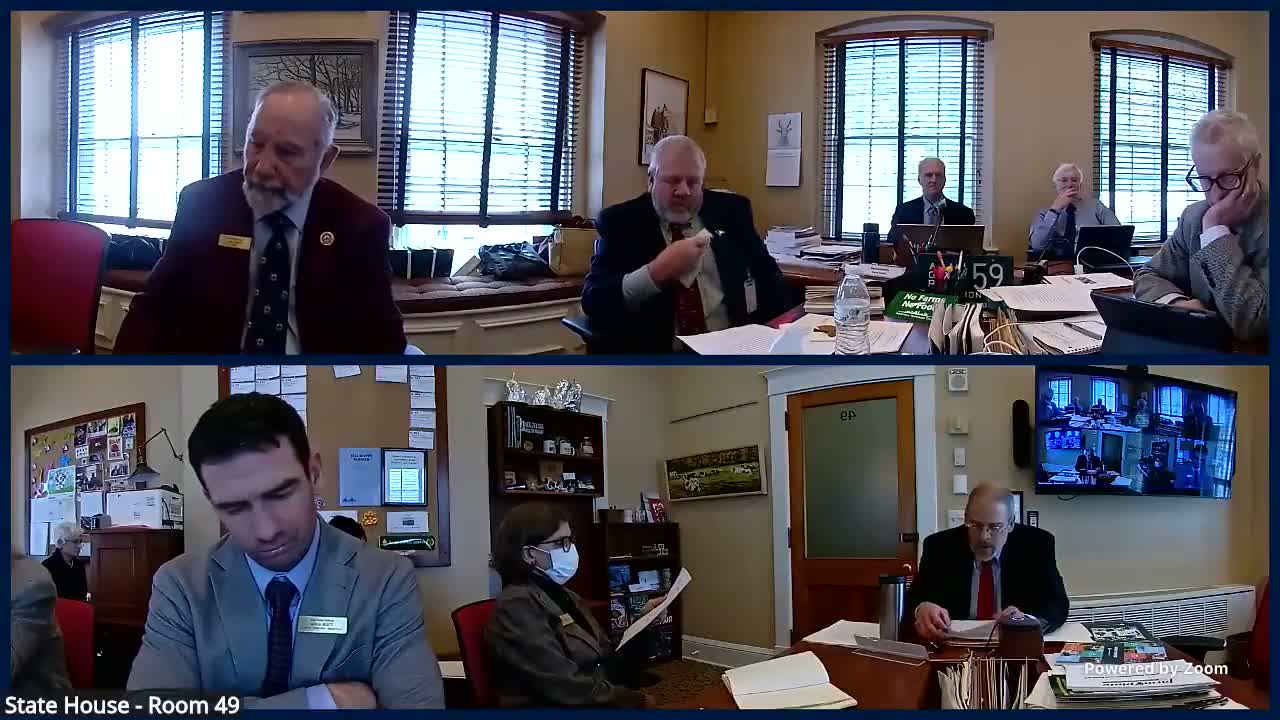
Steve Collier, representing the Agency of Agriculture, Food and Markets, told a legislative committee the agency is proposing a three-part bill that would make mandatory water‑quality training optional, extend oversight over certain non‑sewage wastes land‑applied to farm fields, and update state unit‑pricing and retail‑pricing rules to reflect modern electronic shelf labels and national standards.
The changes to water‑quality training would remove the current statutory language requiring certified small, medium and large farms to complete four hours of training every five years. Collier said the training requirement was adopted after Act 64 in 2015 and that the agency has run more than 1,000 events with over 32,000 attendees. "We just don't think that education on what the RAPs are is necessary anymore," Collier said, while adding the agency still wants to offer and expand voluntary training on best‑management and innovative practices and retain authority to require training for farms found out of compliance.
Why it matters: The required agricultural practices (RAPs) regime was a major post‑Act 64 response to water‑quality concerns. Turning the statutory training mandate into discretionary authority would shift the state from a universal refresher model to a more targeted enforcement and educational approach. Proponents say it reduces administrative burden and allows training to focus on innovation; critics on the committee asked how new or relocating farmers would be brought up to speed and how inspections would capture training needs.
On non‑sewage waste, Collier described a gap the agency wants to close. Current law and ANR (the Agency of Natural Resources) regulate some routed waste when it is deposited into manure pits or digesters; the proposed language would give the agriculture agency authority to require testing and approvals for organic materials being land‑applied directly to fields—materials that can include food residuals, depackaged slurry and other organic byproducts. Collier warned such materials can contain contaminants — including microplastics and PFAS in some out‑of‑state cases — and said the proposal is intended to provide farmers with better information and to prevent soil damage or long‑term contamination.
The retail‑pricing portion seeks to modernize the unit‑pricing statute (originally adopted in 1971 and last amended in 2003) by adopting national standards, broadening the definition of "consumer commodity," and defining terms such as "electronic shelf label" and "made‑to‑order food." The draft prohibits retail establishments from increasing electronic shelf prices while the store is open except to correct documented pricing errors (with in‑store notification required). It also requires total selling price and unit price to be displayed adjacent to the commodity or as close as practicable, and to be visible at checkout. Schulman, legislative counsel, noted the bill grants the secretary discretion to exempt classes of retail establishments and lists exemptions for small stores, seasonal or clearance items, alcoholic beverages and other categories.
Committee members asked whether the retail pricing language covers fuel pumps and online retailers; Schulman and agency staff said the bill is narrowly tailored to in‑person retail spaces and shelf/display labeling, and that separate statutes or executive actions typically address emergency price‑gouging.
What comes next: Legislative counsel and agency staff said they are coordinating further with ANR and other technical staff to refine non‑sewage waste language and to square retail‑pricing definitions with national standards. The committee did not take formal votes in this session; staff indicated they will return with more detailed drafting during follow‑up meetings.
The changes to water‑quality training would remove the current statutory language requiring certified small, medium and large farms to complete four hours of training every five years. Collier said the training requirement was adopted after Act 64 in 2015 and that the agency has run more than 1,000 events with over 32,000 attendees. "We just don't think that education on what the RAPs are is necessary anymore," Collier said, while adding the agency still wants to offer and expand voluntary training on best‑management and innovative practices and retain authority to require training for farms found out of compliance.
Why it matters: The required agricultural practices (RAPs) regime was a major post‑Act 64 response to water‑quality concerns. Turning the statutory training mandate into discretionary authority would shift the state from a universal refresher model to a more targeted enforcement and educational approach. Proponents say it reduces administrative burden and allows training to focus on innovation; critics on the committee asked how new or relocating farmers would be brought up to speed and how inspections would capture training needs.
On non‑sewage waste, Collier described a gap the agency wants to close. Current law and ANR (the Agency of Natural Resources) regulate some routed waste when it is deposited into manure pits or digesters; the proposed language would give the agriculture agency authority to require testing and approvals for organic materials being land‑applied directly to fields—materials that can include food residuals, depackaged slurry and other organic byproducts. Collier warned such materials can contain contaminants — including microplastics and PFAS in some out‑of‑state cases — and said the proposal is intended to provide farmers with better information and to prevent soil damage or long‑term contamination.
The retail‑pricing portion seeks to modernize the unit‑pricing statute (originally adopted in 1971 and last amended in 2003) by adopting national standards, broadening the definition of "consumer commodity," and defining terms such as "electronic shelf label" and "made‑to‑order food." The draft prohibits retail establishments from increasing electronic shelf prices while the store is open except to correct documented pricing errors (with in‑store notification required). It also requires total selling price and unit price to be displayed adjacent to the commodity or as close as practicable, and to be visible at checkout. Schulman, legislative counsel, noted the bill grants the secretary discretion to exempt classes of retail establishments and lists exemptions for small stores, seasonal or clearance items, alcoholic beverages and other categories.
Committee members asked whether the retail pricing language covers fuel pumps and online retailers; Schulman and agency staff said the bill is narrowly tailored to in‑person retail spaces and shelf/display labeling, and that separate statutes or executive actions typically address emergency price‑gouging.
What comes next: Legislative counsel and agency staff said they are coordinating further with ANR and other technical staff to refine non‑sewage waste language and to square retail‑pricing definitions with national standards. The committee did not take formal votes in this session; staff indicated they will return with more detailed drafting during follow‑up meetings.
View the Full Meeting & All Its Details
This article offers just a summary. Unlock complete video, transcripts, and insights as a Founder Member.
✓
Watch full, unedited meeting videos
✓
Search every word spoken in unlimited transcripts
✓
AI summaries & real-time alerts (all government levels)
✓
Permanent access to expanding government content
30-day money-back guarantee
