House Bill 578 would expand animal‑cruelty definitions and speed seizure and forfeiture procedures for animals, including livestock in some cases
February 12, 2026 | Agriculture, Food Resiliency, & Forestry, HOUSE OF REPRESENTATIVES, Committees, Legislative , Vermont
This article was created by AI summarizing key points discussed. AI makes mistakes, so for full details and context, please refer to the video of the full meeting. Please report any errors so we can fix them. Report an error »
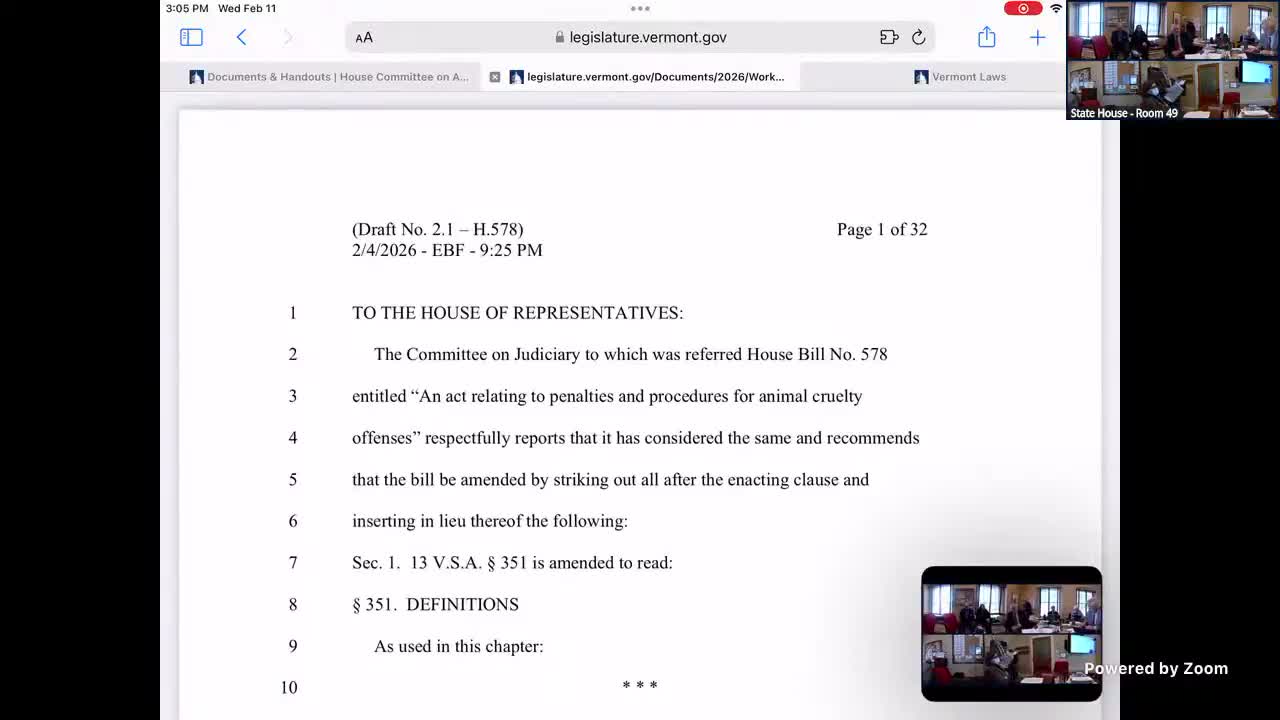
The committee heard an overview of House Bill 578 from Eric Fitzpatrick of the Office of Legislative Council. Fitzpatrick said the bill consolidates existing animal statutes, expands the definition of cruel conduct (including instances that involve minors and the possession of obscene images), and preserves the court's range of non‑criminal sanctions — such as forfeiture of animals, limits on future ownership, counseling and unannounced inspections — while clarifying how those sanctions apply to livestock and poultry.
Fitzpatrick explained that, under current law, courts may forfeit animals or impose future‑ownership restrictions but statutes historically protected livestock and poultry from blanket forfeiture unless those species were themselves the subject of abuse. "That was carved out, and it is carved out under existing law," Fitzpatrick said, and the draft keeps that exception but clarifies the language so the intent is explicit.
A central change in H.578 addresses seizure and post‑seizure procedures. Fitzpatrick said humane officers or law enforcement may seize animals without a warrant when they witness life‑threatening abuse or when exigent circumstances exist. The bill would expedite forfeiture proceedings and set specific procedural deadlines: an owner must be given notice and has 14 days after seizure to object and request a hearing; if the owner elects to contest the forfeiture and care costs accrue, the statute would require the owner to post security for those care costs unless they demonstrate financial incapacity.
Why it matters: Committee members expressed concern about the pace and cost of existing forfeiture proceedings — extended timelines can impose substantial care costs on animal shelters and municipalities. Fitzpatrick said expedited procedures aim to limit mounting costs and to clarify notice methods (including posting notice at the property when no owner can be located). The bill also strengthens penalties (with differentiated schemes for first, second and repeat offenses) and explicitly increases penalties if the abuse involves a minor.
What comes next: Committee members indicated they will take additional input from agency veterinarians and humane‑care organizations; the agency plans to provide the state veterinarian's views in the next session. No formal actions were taken during this briefing.
Fitzpatrick explained that, under current law, courts may forfeit animals or impose future‑ownership restrictions but statutes historically protected livestock and poultry from blanket forfeiture unless those species were themselves the subject of abuse. "That was carved out, and it is carved out under existing law," Fitzpatrick said, and the draft keeps that exception but clarifies the language so the intent is explicit.
A central change in H.578 addresses seizure and post‑seizure procedures. Fitzpatrick said humane officers or law enforcement may seize animals without a warrant when they witness life‑threatening abuse or when exigent circumstances exist. The bill would expedite forfeiture proceedings and set specific procedural deadlines: an owner must be given notice and has 14 days after seizure to object and request a hearing; if the owner elects to contest the forfeiture and care costs accrue, the statute would require the owner to post security for those care costs unless they demonstrate financial incapacity.
Why it matters: Committee members expressed concern about the pace and cost of existing forfeiture proceedings — extended timelines can impose substantial care costs on animal shelters and municipalities. Fitzpatrick said expedited procedures aim to limit mounting costs and to clarify notice methods (including posting notice at the property when no owner can be located). The bill also strengthens penalties (with differentiated schemes for first, second and repeat offenses) and explicitly increases penalties if the abuse involves a minor.
What comes next: Committee members indicated they will take additional input from agency veterinarians and humane‑care organizations; the agency plans to provide the state veterinarian's views in the next session. No formal actions were taken during this briefing.
Don't Miss a Word: See the Full Meeting!
Go beyond summaries. Unlock every video, transcript, and key insight with a Founder Membership.
✓
Get instant access to full meeting videos
✓
Search and clip any phrase from complete transcripts
✓
Receive AI-powered summaries & custom alerts
✓
Enjoy lifetime, unrestricted access to government data
30-day money-back guarantee
