Representative recalls Ferguson reforms as witness outlines legal standard for police use of force
February 12, 2026 | Oversight Committee Democrats, Oversight and Reform: House Committee, Standing Committees - House & Senate, Congressional Hearings Compilation, Legislative, Federal
This article was created by AI summarizing key points discussed. AI makes mistakes, so for full details and context, please refer to the video of the full meeting. Please report any errors so we can fix them. Report an error »
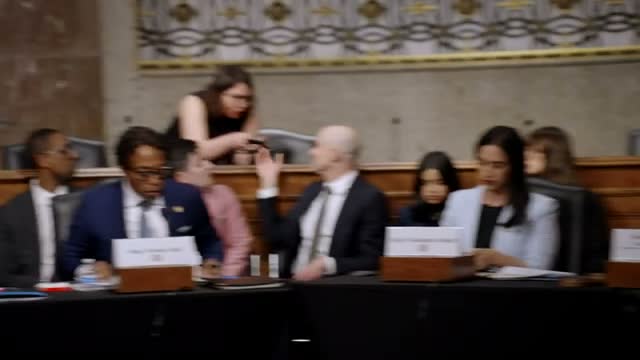
The representative told the panel that routine municipal services — "as soon as that trash was picked up, as soon as that pothole was filled" — helped restore goodwill toward law enforcement, but warned that "a bad interaction with law enforcement doesn't go away so easily." He cited two recent shootings, naming Renee Goode and Alex Prady, saying they occurred "less than 2 miles from each other just 3 weeks apart," and described seeing "one step forward and 2 steps back" when officers act in ways that undermine local reforms.
The representative asked Mr. Stout, a witness on the panel, to explain how use-of-force decisions are judged and what duties officers have to render aid after an encounter. Mr. Stout replied that officers may use force "in the performance of their legitimate duties" to meet actual threats, and said the framework commonly used to assess responses is the force continuum. He told the panel the governing legal test comes from the 1989 Supreme Court case Graham v. Connor, which requires that force be "objectively reasonable" and proportional to the threat.
"The idea of the force continuum is essentially just a way of demonstrating the relationship between the nature and the severity of the threat presented by someone's actions, and the nature and severity of the force that the officer gets to use in response," Mr. Stout said. He added that proportionality is the key concept courts evaluate when reviewing use-of-force incidents.
The representative pressed the point with an analogy: "you can't use an AK if the threat is a flyswatter," to underscore his argument that responses must match the level of danger faced by officers. Mr. Stout agreed with the analogy, and the exchange concluded after the representative noted time constraints.
No formal votes or motions were recorded in the transcript. The hearing focused on legal standards and local reform experiences rather than on adopting new policy during the session; panel members did not announce any immediate next steps in the provided excerpt.
View the Full Meeting & All Its Details
This article offers just a summary. Unlock complete video, transcripts, and insights as a Founder Member.
30-day money-back guarantee
