State report finds Vermont’s rural technical assistance fragmented; advocates ask for $500,000 to fund coordinated teams
February 12, 2026 | Commerce & Economic Development, HOUSE OF REPRESENTATIVES, Committees, Legislative , Vermont
This article was created by AI summarizing key points discussed. AI makes mistakes, so for full details and context, please refer to the video of the full meeting. Please report any errors so we can fix them. Report an error »
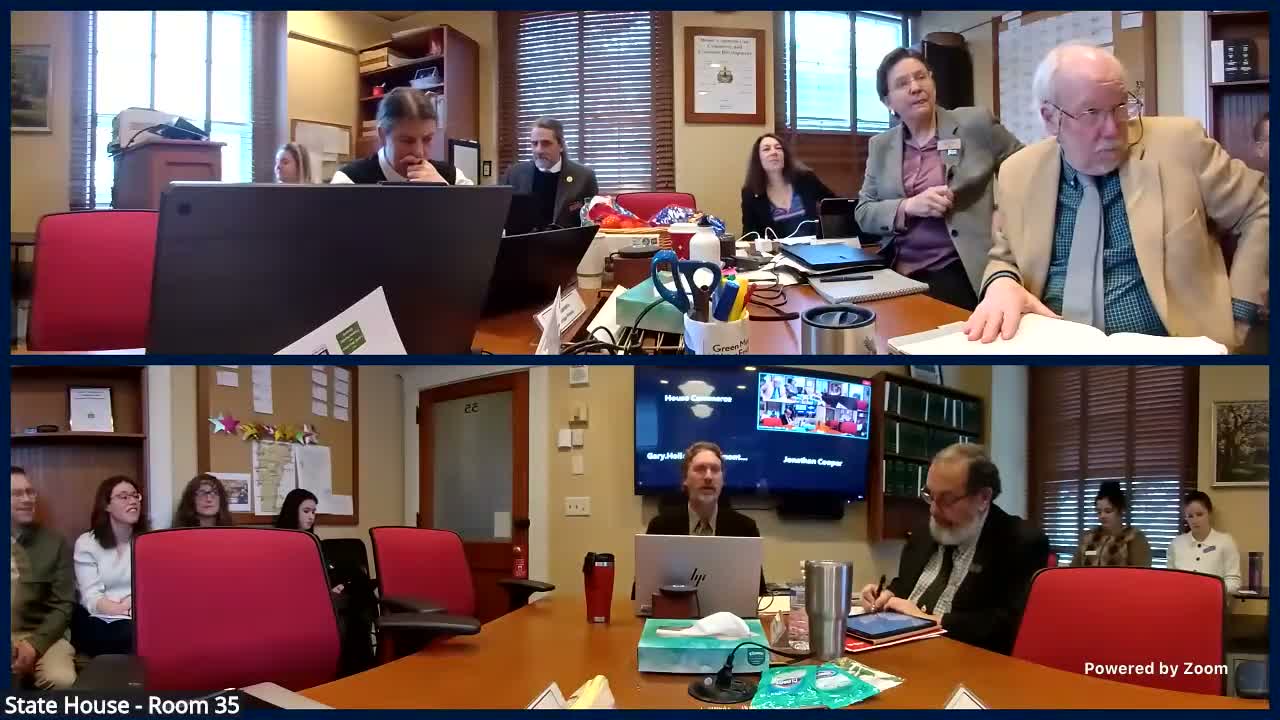
The Vermont Evaluation of Rural Technical Assistance (VERDA) found that technical assistance for small towns is plentiful but fragmented, making it difficult for volunteer-led municipalities to navigate complex funding and implementation challenges, Gary Holloway, downtown program manager at the Department of Housing and Community Development, told the House Commerce & Economic Development committee on Feb. 11.
"Technical assistance, it exists, but it's fragmented," Holloway said, summarizing a year-long effort that combined listening sessions, a 195-respondent survey, interviews with five states and research in 13 others. The project also convened a fall summit attended by about 125 people to ground recommendations in local experience.
The steering committee distilled four priority areas: 1) increase state agency participation and create a municipal service coordination hub to simplify navigation; 2) advance municipal and regional shared-service tools, including standardized templates and procurement guidance; 3) bolster volunteer leadership through training, matchmaking and toolkits; and 4) expand flexible funding targeted to communities that are ready to implement projects such as housing, child care and water/wastewater improvements.
Ryan Ope of the Vermont Housing and Conservation Board described the REDI (Rural Economic Development Initiative) program as one example of a TA tool that helps communities access large, complex grant programs. REDI provides modest grants—"usually up to about $7,500 for professional consulting support," Ope said—and has grown from an initial appropriation of roughly $75,000 to using about $1.2 million in investments to support community projects. He said REDI has helped more than 100 projects secure roughly $35,500,000 in external grants, largely federal awards from sources such as the Northern Border Regional Commission, USDA programs and CDBG disaster recovery funds.
Denise Smith and Jess Savage of the Vermont Council on Rural Development (VCRD), which served on the VERDA steering committee, told the committee that many communities already convene local coalitions and that state coordination should build on—not replace—those local efforts. "We're not creating a new organization," Savage said. "The proposal would provide backbone and administrative support to design and implement a technical assistance and funding program that directly benefits our underserved rural towns."
VCRD asked the committee to consider a $500,000 appropriation in the FY27 budget to fund backbone administrative support and grants for community-selected resource teams that would provide tailored technical assistance for projects such as housing, infrastructure and child care. The VCRD request is positioned as an implementation step to move VERDA recommendations beyond report form.
Committee members asked for additional detail on how the REDI and other programs leveraged federal versus state funds. Ope said he did not have exact percentages on hand but that the largest awards have been federal in origin and cited a recent figure of about $7 million in CDBG disaster recovery grants supported by REDI assistance. Members also asked whether VERDA’s recommendations account for small, locally convened coalitions; presenters said the research was designed to capture and build on local leadership and existing visiting-team models such as VCRD community visits.
The presenters offered to share their resource spreadsheet of TA providers and to return to the committee with more detail. The committee thanked the presenters and signaled it would invite them back for more focused follow-up about implementation and funding questions.
The committee did not take any formal votes on the funding request during the Feb. 11 hearing; presenters were asked to supply more data and examples to inform next steps.
"Technical assistance, it exists, but it's fragmented," Holloway said, summarizing a year-long effort that combined listening sessions, a 195-respondent survey, interviews with five states and research in 13 others. The project also convened a fall summit attended by about 125 people to ground recommendations in local experience.
The steering committee distilled four priority areas: 1) increase state agency participation and create a municipal service coordination hub to simplify navigation; 2) advance municipal and regional shared-service tools, including standardized templates and procurement guidance; 3) bolster volunteer leadership through training, matchmaking and toolkits; and 4) expand flexible funding targeted to communities that are ready to implement projects such as housing, child care and water/wastewater improvements.
Ryan Ope of the Vermont Housing and Conservation Board described the REDI (Rural Economic Development Initiative) program as one example of a TA tool that helps communities access large, complex grant programs. REDI provides modest grants—"usually up to about $7,500 for professional consulting support," Ope said—and has grown from an initial appropriation of roughly $75,000 to using about $1.2 million in investments to support community projects. He said REDI has helped more than 100 projects secure roughly $35,500,000 in external grants, largely federal awards from sources such as the Northern Border Regional Commission, USDA programs and CDBG disaster recovery funds.
Denise Smith and Jess Savage of the Vermont Council on Rural Development (VCRD), which served on the VERDA steering committee, told the committee that many communities already convene local coalitions and that state coordination should build on—not replace—those local efforts. "We're not creating a new organization," Savage said. "The proposal would provide backbone and administrative support to design and implement a technical assistance and funding program that directly benefits our underserved rural towns."
VCRD asked the committee to consider a $500,000 appropriation in the FY27 budget to fund backbone administrative support and grants for community-selected resource teams that would provide tailored technical assistance for projects such as housing, infrastructure and child care. The VCRD request is positioned as an implementation step to move VERDA recommendations beyond report form.
Committee members asked for additional detail on how the REDI and other programs leveraged federal versus state funds. Ope said he did not have exact percentages on hand but that the largest awards have been federal in origin and cited a recent figure of about $7 million in CDBG disaster recovery grants supported by REDI assistance. Members also asked whether VERDA’s recommendations account for small, locally convened coalitions; presenters said the research was designed to capture and build on local leadership and existing visiting-team models such as VCRD community visits.
The presenters offered to share their resource spreadsheet of TA providers and to return to the committee with more detail. The committee thanked the presenters and signaled it would invite them back for more focused follow-up about implementation and funding questions.
The committee did not take any formal votes on the funding request during the Feb. 11 hearing; presenters were asked to supply more data and examples to inform next steps.
View the Full Meeting & All Its Details
This article offers just a summary. Unlock complete video, transcripts, and insights as a Founder Member.
✓
Watch full, unedited meeting videos
✓
Search every word spoken in unlimited transcripts
✓
AI summaries & real-time alerts (all government levels)
✓
Permanent access to expanding government content
30-day money-back guarantee
