Committee tables LD 2054 after wide-ranging debate over lodge permits, swaps and enforcement
February 12, 2026 | 2026 Legislature ME, Maine
This article was created by AI summarizing key points discussed. AI makes mistakes, so for full details and context, please refer to the video of the full meeting. Please report any errors so we can fix them. Report an error »
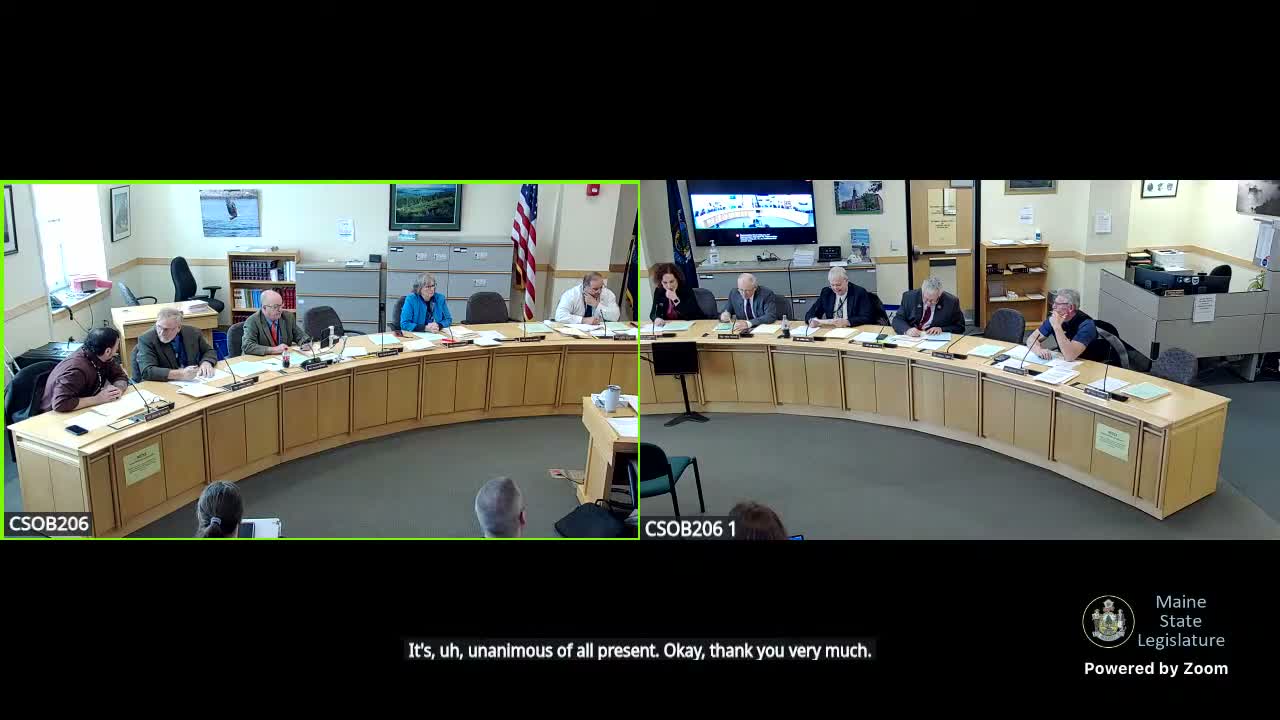
Lawmakers at an Inland Fisheries and Wildlife Committee work session delayed action on LD 2054, a bill aimed at clarifying rules for moose hunting permits issued to hunting outfitters, after a multi-hour discussion that laid out competing policy goals: preserving hunting opportunity for nonresident lottery applicants, preventing commercialized resale of lodge permits, and protecting the economic value outfitters say the permits generate for rural Maine.
The bill, sponsored by Representative Rick Mason, would amend Title 12 §11,154 (subsection 14) on hunting-lodge permits. Department staff and the sponsor circulated competing amendments. Department witnesses, including Colonel Dan Scott of the Warden Service and Director Nate Webb, said the program—created around 2013 to support sporting camps after wildlife declines—has grown beyond its original intent. Colonel Scott described a resale market that has valued permits at "anywhere from $10 to $14,000," and said applicants now include motels, private residences and other entities that may not provide moose-guiding services year-round. Director Webb explained that lodge permits are drawn from the nonresident pool (about 2% of total permits) and that the department's amendment would cut a per‑district cap (currently 10% of a district’s permits) to 5% to preserve nonresident access in specific wildlife management districts.
Members pressed the department on enforcement and eligibility. Testimony showed that the state relies on a DHS licensing scheme for sporting camps (Title 22), which focuses on health and safety and can leave eligibility gaps. The department described a recent audit and field interviews that led it to remove or invalidate several applications. Colonel Scott said the department and prosecutors concluded some business arrangements are inconsistent with the law as written but that proving violations can require on-site vetting.
Industry witnesses—lodge owners and associations including Nathan Theriault (Eagle Lake Inn / OMM Outfitters), Jason House (sporting camp owner) and James Cody (Maine Professional Guides Association)—urged clarity that can be administered without excessive new regulation. Jared Bornstein, a guide and outfitter, argued the program delivers substantial rural economic benefits, estimating lodge-permit hunts currently channel roughly "$20,000 to $30,000" per permit into local economies and warning that overly strict limits on swaps or transfers could reduce that income.
Key points of dispute included whether the department should be given explicit statutory authority to determine outfitter eligibility or whether the Legislature should set a tighter definition or a registry; whether lodge permits may be swapped into the general lottery; and whether medical deferments should be limited to hunters (the department’s preference) or available to outfitters in some circumstances. The committee discussed LD 1737 (a 2025 bill that included a sporting-camp definition) as a possible drafting reference.
Rather than vote on final language, committee members moved to table LD 2054 to give stakeholders and staff time to negotiate specific statutory language. Representative Tiffany Roberts volunteered to help convene parties for additional drafting and the department agreed to provide more-detailed, administrable criteria for eligibility and appealable determinations.
Next steps: the committee will pursue language review and stakeholder meetings before reconvening on LD 2054; Representative Roberts said she will help coordinate follow-up talks. The committee also moved on to several language reviews of unrelated bills during the same session.
The bill, sponsored by Representative Rick Mason, would amend Title 12 §11,154 (subsection 14) on hunting-lodge permits. Department staff and the sponsor circulated competing amendments. Department witnesses, including Colonel Dan Scott of the Warden Service and Director Nate Webb, said the program—created around 2013 to support sporting camps after wildlife declines—has grown beyond its original intent. Colonel Scott described a resale market that has valued permits at "anywhere from $10 to $14,000," and said applicants now include motels, private residences and other entities that may not provide moose-guiding services year-round. Director Webb explained that lodge permits are drawn from the nonresident pool (about 2% of total permits) and that the department's amendment would cut a per‑district cap (currently 10% of a district’s permits) to 5% to preserve nonresident access in specific wildlife management districts.
Members pressed the department on enforcement and eligibility. Testimony showed that the state relies on a DHS licensing scheme for sporting camps (Title 22), which focuses on health and safety and can leave eligibility gaps. The department described a recent audit and field interviews that led it to remove or invalidate several applications. Colonel Scott said the department and prosecutors concluded some business arrangements are inconsistent with the law as written but that proving violations can require on-site vetting.
Industry witnesses—lodge owners and associations including Nathan Theriault (Eagle Lake Inn / OMM Outfitters), Jason House (sporting camp owner) and James Cody (Maine Professional Guides Association)—urged clarity that can be administered without excessive new regulation. Jared Bornstein, a guide and outfitter, argued the program delivers substantial rural economic benefits, estimating lodge-permit hunts currently channel roughly "$20,000 to $30,000" per permit into local economies and warning that overly strict limits on swaps or transfers could reduce that income.
Key points of dispute included whether the department should be given explicit statutory authority to determine outfitter eligibility or whether the Legislature should set a tighter definition or a registry; whether lodge permits may be swapped into the general lottery; and whether medical deferments should be limited to hunters (the department’s preference) or available to outfitters in some circumstances. The committee discussed LD 1737 (a 2025 bill that included a sporting-camp definition) as a possible drafting reference.
Rather than vote on final language, committee members moved to table LD 2054 to give stakeholders and staff time to negotiate specific statutory language. Representative Tiffany Roberts volunteered to help convene parties for additional drafting and the department agreed to provide more-detailed, administrable criteria for eligibility and appealable determinations.
Next steps: the committee will pursue language review and stakeholder meetings before reconvening on LD 2054; Representative Roberts said she will help coordinate follow-up talks. The committee also moved on to several language reviews of unrelated bills during the same session.
View the Full Meeting & All Its Details
This article offers just a summary. Unlock complete video, transcripts, and insights as a Founder Member.
✓
Watch full, unedited meeting videos
✓
Search every word spoken in unlimited transcripts
✓
AI summaries & real-time alerts (all government levels)
✓
Permanent access to expanding government content
30-day money-back guarantee
