Committee debates sublease limits, AMI caps and tax valuation in manufactured-home limited‑equity cooperative bill
February 12, 2026 | General & Housing, HOUSE OF REPRESENTATIVES, Committees, Legislative , Vermont
This article was created by AI summarizing key points discussed. AI makes mistakes, so for full details and context, please refer to the video of the full meeting. Please report any errors so we can fix them. Report an error »
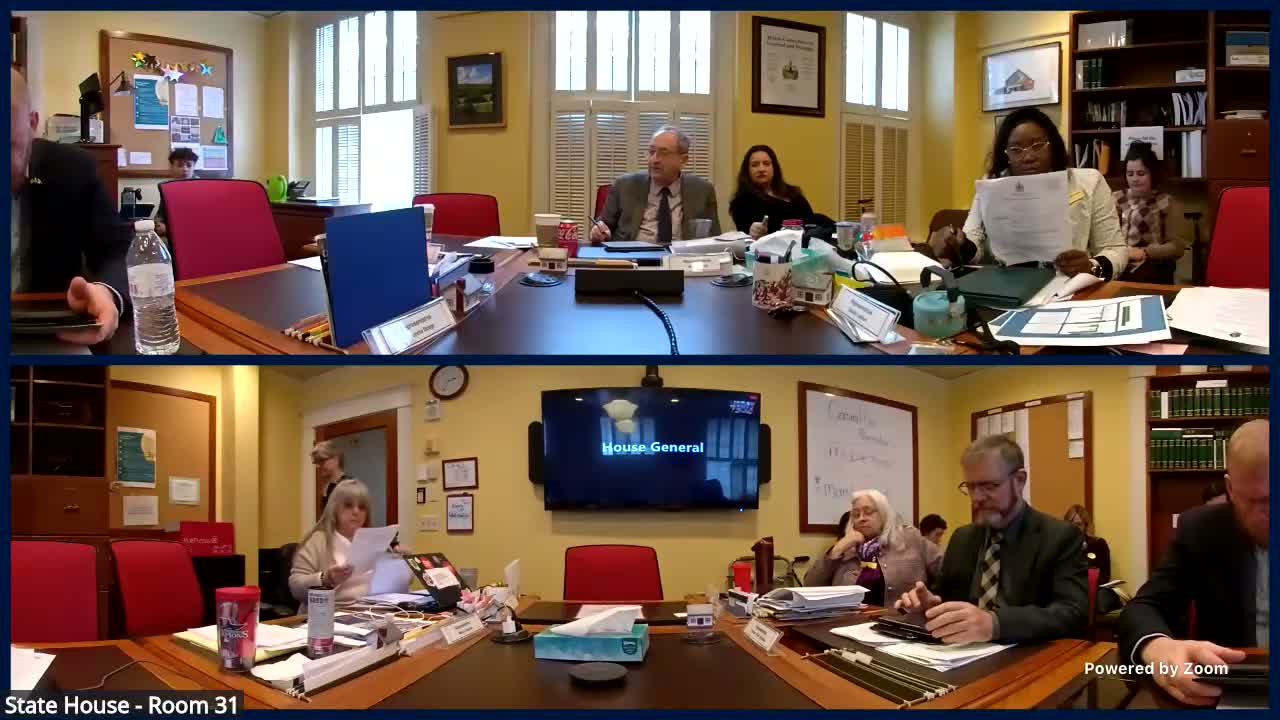
The House General & Housing committee resumed markup on a bill addressing manufactured-home communities and limited-equity cooperatives (LECs) on Feb. 11, focusing on how to treat subleasing and property-tax assessments.
Committee members revisited a provision that currently grandfathered existing LECs on subleasing but otherwise prohibited new LECs from subleasing. Member Gail proposed allowing subletting under a documented hardship, with a cap tied to affordability standards rather than full market rates. "You could only charge ... 50% AMI," one member summarized as a starting point for discussion, while others suggested HUD fair market rent (FMR) or tying allowed rent to the owner’s actual costs (lot rent plus mortgage and taxes).
Cameron Wood of the Office of Legislative Council explained statutory background from the Cooperative Housing Ownership Act and noted that limited-equity cooperatives are intended for low- and moderate-income households (defined in the bill as 80% and 100% of area median income, respectively). Wood also reminded members that current law caps sublease payments at 110% of the proprietary lease payment in LECs — a limit that can leave owners who both pay lot rent and mortgage payments unable to fully cover costs when subleasing.
Members debated trade-offs: some prioritized preventing profiteering and protecting renters (keeping sublease recipients low- or moderate-income), while others stressed that hardship subletting should allow an owner to avoid eviction by covering lot rent and mortgage costs. Several members said the committee lacked precise data on how LECs are assessed and suggested a Tax Department inventory and report to inform consistent statewide treatment.
The committee directed Legislative Council to redraft the bill to reconcile competing goals (protecting affordability, preventing profiteering and enabling hardship relief) and discussed asking the Tax Department for a report, with members proposing a target deadline of Nov. 15 to avoid producing a report during the legislative session. Staff indicated a draft 3.1 of the amendment would be posted for committee review.
No final vote was taken; the committee gave staff direction and agreed to continue consideration at a later date.
Committee members revisited a provision that currently grandfathered existing LECs on subleasing but otherwise prohibited new LECs from subleasing. Member Gail proposed allowing subletting under a documented hardship, with a cap tied to affordability standards rather than full market rates. "You could only charge ... 50% AMI," one member summarized as a starting point for discussion, while others suggested HUD fair market rent (FMR) or tying allowed rent to the owner’s actual costs (lot rent plus mortgage and taxes).
Cameron Wood of the Office of Legislative Council explained statutory background from the Cooperative Housing Ownership Act and noted that limited-equity cooperatives are intended for low- and moderate-income households (defined in the bill as 80% and 100% of area median income, respectively). Wood also reminded members that current law caps sublease payments at 110% of the proprietary lease payment in LECs — a limit that can leave owners who both pay lot rent and mortgage payments unable to fully cover costs when subleasing.
Members debated trade-offs: some prioritized preventing profiteering and protecting renters (keeping sublease recipients low- or moderate-income), while others stressed that hardship subletting should allow an owner to avoid eviction by covering lot rent and mortgage costs. Several members said the committee lacked precise data on how LECs are assessed and suggested a Tax Department inventory and report to inform consistent statewide treatment.
The committee directed Legislative Council to redraft the bill to reconcile competing goals (protecting affordability, preventing profiteering and enabling hardship relief) and discussed asking the Tax Department for a report, with members proposing a target deadline of Nov. 15 to avoid producing a report during the legislative session. Staff indicated a draft 3.1 of the amendment would be posted for committee review.
No final vote was taken; the committee gave staff direction and agreed to continue consideration at a later date.
View the Full Meeting & All Its Details
This article offers just a summary. Unlock complete video, transcripts, and insights as a Founder Member.
✓
Watch full, unedited meeting videos
✓
Search every word spoken in unlimited transcripts
✓
AI summaries & real-time alerts (all government levels)
✓
Permanent access to expanding government content
30-day money-back guarantee
