Butte-Silver Bow presents drought management plan, recommends advisory committee and expanded metering
February 12, 2026 | Silver Bow County, Montana
This article was created by AI summarizing key points discussed. AI makes mistakes, so for full details and context, please refer to the video of the full meeting. Please report any errors so we can fix them. Report an error »
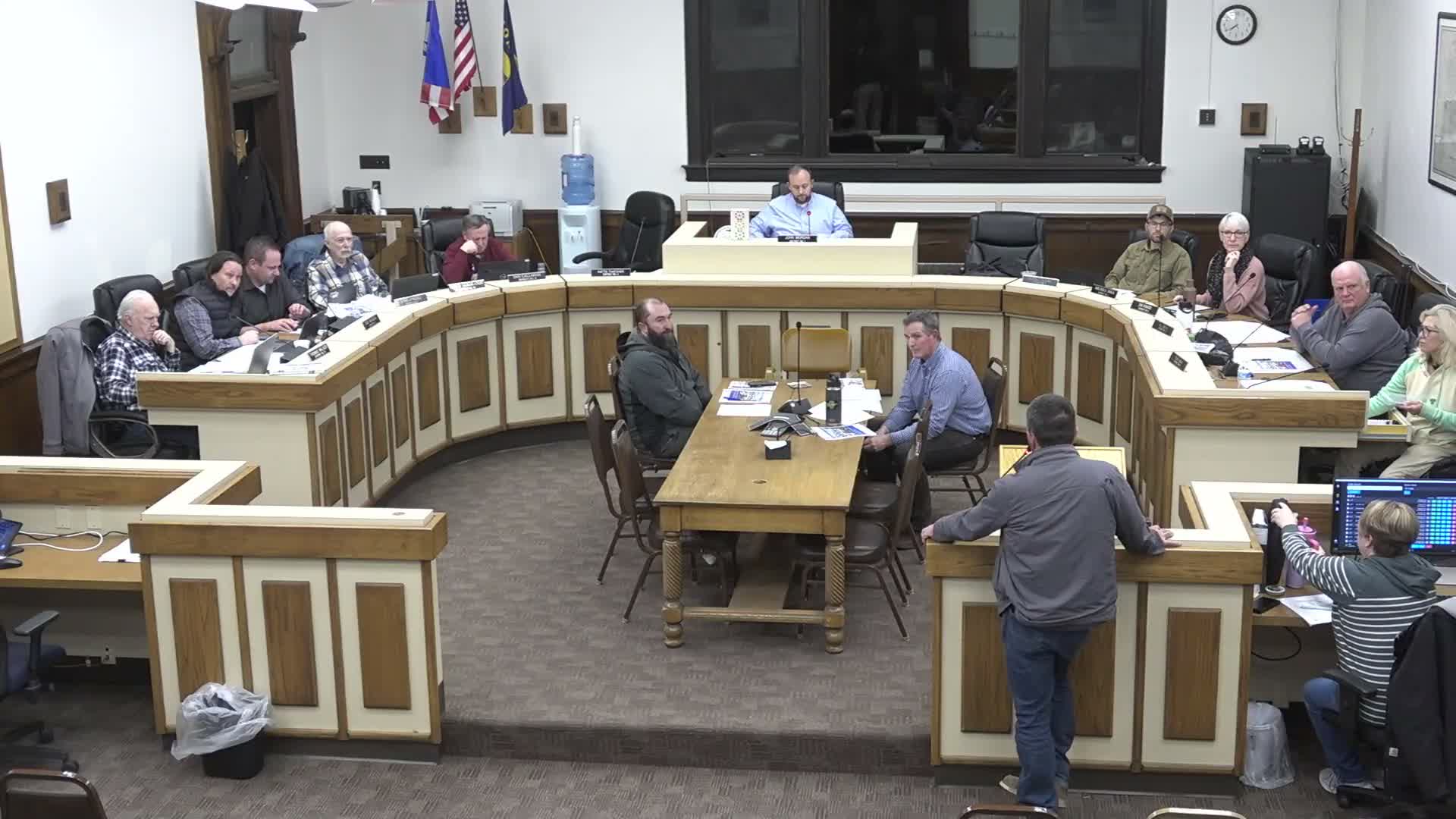
Butte, Mont. — Public Works Director Mark Neary and county staff presented a draft drought management plan to the Butte-Silver Bow Council of Commissioners on Feb. 11, outlining steps to better monitor and respond to local drought conditions.
The plan, funded in part by a grant from the Montana Department of Natural Resources and Conservation (DNRC RDG program), recommends formalizing a Drought Advisory Committee of hydrologists, engineers and public-works staff, expanding metering toward near-100% coverage, increasing reservoir and stream gauging capacity and adopting a tiered enforcement framework tied to revised rate structures and ordinances that would require council approval.
"We want to enhance drought monitoring at the local level and provide indicators that professionals can use to inform the community of what needs to happen," one presenter said, describing the plan’s purpose as improving awareness, maximizing resources and promoting equitable outcomes.
Presenters reviewed water-production data showing Basin Creek supplies the majority of Butte-Silver Bow’s water after the Basin Creek treatment plant came online, with the Big Hole watershed supplying more during summer months. The plan uses multiple indicators — reservoir storage, streamflow, snowmelt and snow-water equivalent — and maps from the U.S. Drought Mitigation Center to emphasize drought variability and the need for continuous monitoring.
In question-and-answer, staff and presenters said roughly two-thirds of users are currently metered and that the county has received grant funds to accelerate metering through a two-year program; staff estimated the county is still "shy about 4,000" users to reach universal metering. Commissioners pressed for clarity on historical drops in use between 2017 and 2019; staff attributed that to unusually wet years and shifts in commercial usage during the COVID period.
The presentation closed with staff asking the council to consider forming the advisory committee and supporting the plan’s recommendations as the county works to finalize procedures and integrate the plan into existing ordinances. The council thanked the presenters and said it looks forward to next steps for putting the plan in place.
The plan, funded in part by a grant from the Montana Department of Natural Resources and Conservation (DNRC RDG program), recommends formalizing a Drought Advisory Committee of hydrologists, engineers and public-works staff, expanding metering toward near-100% coverage, increasing reservoir and stream gauging capacity and adopting a tiered enforcement framework tied to revised rate structures and ordinances that would require council approval.
"We want to enhance drought monitoring at the local level and provide indicators that professionals can use to inform the community of what needs to happen," one presenter said, describing the plan’s purpose as improving awareness, maximizing resources and promoting equitable outcomes.
Presenters reviewed water-production data showing Basin Creek supplies the majority of Butte-Silver Bow’s water after the Basin Creek treatment plant came online, with the Big Hole watershed supplying more during summer months. The plan uses multiple indicators — reservoir storage, streamflow, snowmelt and snow-water equivalent — and maps from the U.S. Drought Mitigation Center to emphasize drought variability and the need for continuous monitoring.
In question-and-answer, staff and presenters said roughly two-thirds of users are currently metered and that the county has received grant funds to accelerate metering through a two-year program; staff estimated the county is still "shy about 4,000" users to reach universal metering. Commissioners pressed for clarity on historical drops in use between 2017 and 2019; staff attributed that to unusually wet years and shifts in commercial usage during the COVID period.
The presentation closed with staff asking the council to consider forming the advisory committee and supporting the plan’s recommendations as the county works to finalize procedures and integrate the plan into existing ordinances. The council thanked the presenters and said it looks forward to next steps for putting the plan in place.
Don't Miss a Word: See the Full Meeting!
Go beyond summaries. Unlock every video, transcript, and key insight with a Founder Membership.
✓
Get instant access to full meeting videos
✓
Search and clip any phrase from complete transcripts
✓
Receive AI-powered summaries & custom alerts
✓
Enjoy lifetime, unrestricted access to government data
30-day money-back guarantee
