University of Tennessee Institute for Public Service briefs committee on programs, opioid-settlement assistance and reported $2.7 billion impact
February 12, 2026 | 2026 Legislature TN, Tennessee
This article was created by AI summarizing key points discussed. AI makes mistakes, so for full details and context, please refer to the video of the full meeting. Please report any errors so we can fix them. Report an error »
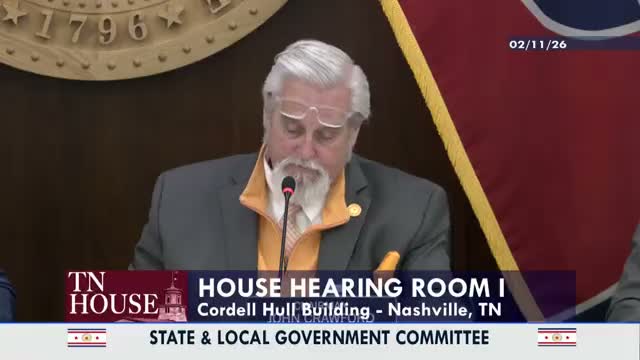
The University of Tennessee Institute for Public Service gave a presentation to the committee on Feb. 11 outlining agency programs the university provides to local governments across Tennessee.
Herb Bird, vice president of the Institute for Public Service, told members the Institute reports customer-reported economic impact of about $2.7 billion for the prior year while operating on roughly $28–29 million in state funding. Bird reviewed a range of agency activities, including AI training for manufacturers with the Center for Industrial Services, a solid waste certificate program through CTAS, leadership and municipal capacity programs through MTAS, and a certified public manager program.
Josh Suddath, executive director of the Center for Local Planning, said his office will provide technical assistance on planning and zoning, mapping and GIS, and help local governments comply with new or existing legislative requirements. He described a balance between rural preservation, housing attainability and private property rights as central to the office’s mission.
Dr. Jennifer Tourville, director of SMART (Substance Misuse and Addiction Resource for Tennessee), described work to assist counties with opioid settlement funds. "So there's about $1,200,000,000 coming into the state of Tennessee and a large portion of that is going down to the local level," she said, and SMART has worked with 87 of 95 counties to help plan appropriate spending. Tourville said SMART will focus in 2026 on recovery-to-work programming, including an Appalachian Regional Commission grant for assessments in five rural counties.
The presentation concluded with Bird thanking legislators and framing the Institute’s mission as public service. Committee members asked no substantive follow-ups in session and returned to committee business.
Herb Bird, vice president of the Institute for Public Service, told members the Institute reports customer-reported economic impact of about $2.7 billion for the prior year while operating on roughly $28–29 million in state funding. Bird reviewed a range of agency activities, including AI training for manufacturers with the Center for Industrial Services, a solid waste certificate program through CTAS, leadership and municipal capacity programs through MTAS, and a certified public manager program.
Josh Suddath, executive director of the Center for Local Planning, said his office will provide technical assistance on planning and zoning, mapping and GIS, and help local governments comply with new or existing legislative requirements. He described a balance between rural preservation, housing attainability and private property rights as central to the office’s mission.
Dr. Jennifer Tourville, director of SMART (Substance Misuse and Addiction Resource for Tennessee), described work to assist counties with opioid settlement funds. "So there's about $1,200,000,000 coming into the state of Tennessee and a large portion of that is going down to the local level," she said, and SMART has worked with 87 of 95 counties to help plan appropriate spending. Tourville said SMART will focus in 2026 on recovery-to-work programming, including an Appalachian Regional Commission grant for assessments in five rural counties.
The presentation concluded with Bird thanking legislators and framing the Institute’s mission as public service. Committee members asked no substantive follow-ups in session and returned to committee business.
View the Full Meeting & All Its Details
This article offers just a summary. Unlock complete video, transcripts, and insights as a Founder Member.
✓
Watch full, unedited meeting videos
✓
Search every word spoken in unlimited transcripts
✓
AI summaries & real-time alerts (all government levels)
✓
Permanent access to expanding government content
30-day money-back guarantee
