Public Utility Commission warns FY27 reserves will be drawn down as utility-fee revenue lags
February 12, 2026 | Appropriations, HOUSE OF REPRESENTATIVES, Committees, Legislative , Vermont
This article was created by AI summarizing key points discussed. AI makes mistakes, so for full details and context, please refer to the video of the full meeting. Please report any errors so we can fix them. Report an error »
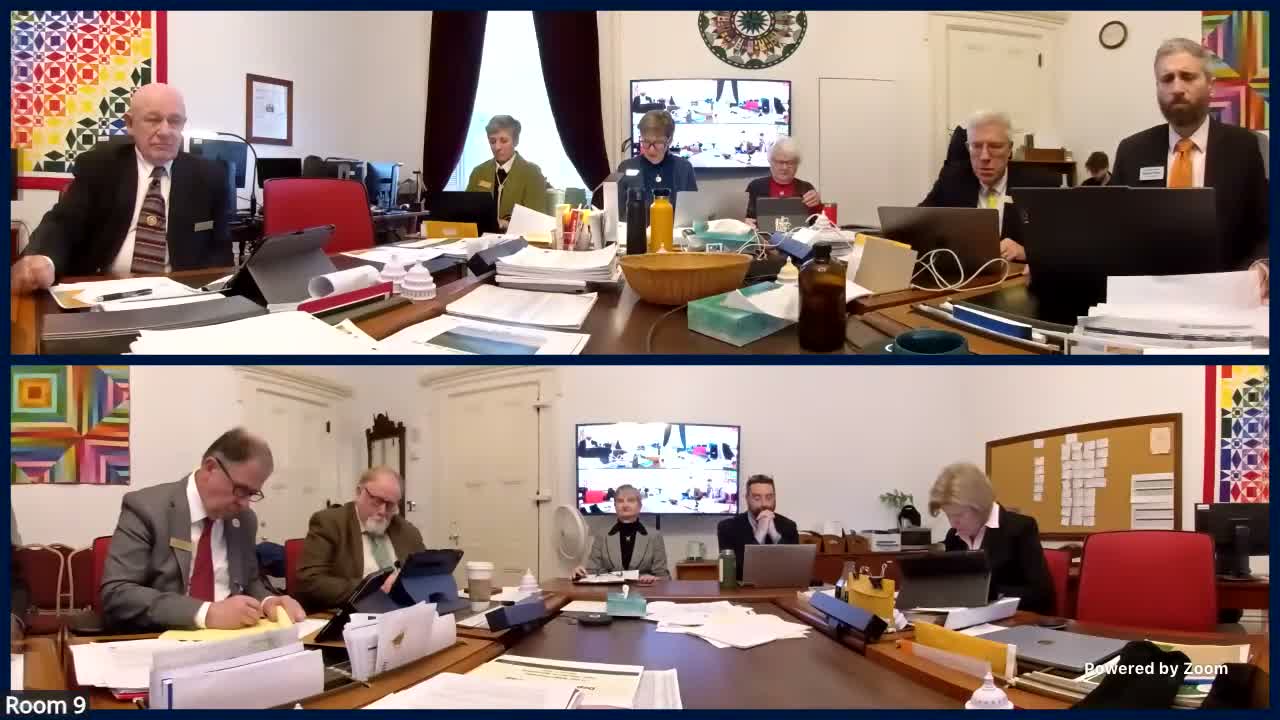
The Public Utility Commission told the House Appropriations Committee on Feb. 11 that its proposed FY27 budget of roughly $5.3 million will rely on reserves to cover a shortfall because the agency receives no general-fund support.
"It's important to recognize, we get 0 general funds," said Ed McNamara, chair of the Public Utility Commission, describing the commission as ‘‘100 percent special funded’’ and saying "96% of our funding comes from the gross receipts tax" paid by regulated utilities. He said application fees make up the remaining roughly 4 percent.
The PUC said salaries and benefits make up more than 87 percent of its budget and that projected revenues will not fully cover FY27 spending, so reserves — currently about $3.5 million — will be tapped. McNamara said the commission projects about a $900,000 drawdown this year and estimated reserves could be insufficient in about three years without intervention.
"We have to either increase revenues or decrease services," McNamara said, noting both choices are difficult. The commission said it was not seeking a general-fund increase in this budget cycle but is considering a mix of options to rebalance funding and workload.
Staff described the commission's workload in 2025 as heavy: more than 2,200 new cases filed, more than 12,300 filings in its online case-management system and roughly 1,800 net-metering Certificates of Public Good registrations. Anne Bishop, PUC operations director, said case timeframes vary by complexity: "net metering registrations are trending down. I would say it's down maybe 20%" and a simple registration can be processed in about 15 days while a large contested project can take a year and a half or longer.
The PUC highlighted a structural funding gap tied to merchant generation (for-profit solar and other developers) that do not pay the gross receipts tax. Application fees for merchant projects do not cover the commission's review costs, the staff said: examples included a $100 net-metering registration fee (the commission receives $40 of that) and amendment fees of $25 (the commission receives $10). For a large project, a per-kW fee can produce larger sums — McNamara cited a 20-megawatt project that paid $100,000, of which the commission received $40,000 — but variability in intervention and case complexity makes fee revenue an imprecise match for workload.
The PUC also noted recent legislative directives and reports have added to workload at a time when reserves are declining. Staff said they may decline to volunteer for additional legislative work without specific appropriations or fee adjustments.
Committee members asked about forecasting and the impact of electrification and rooftop solar on gross receipts tax revenue. PUC staff said modeling is under way with the Department of Public Service to understand the timing and scale of revenue changes tied to electric vehicles and heat pumps, but that short-term weather and seasonality continue to cause year-to-year volatility.
The presentation concluded with staff urging lawmakers to consider policy options — including fee increases or statutory reassignments of merchant-generation fee collections — to better align funding with the PUC's workload. The committee recessed for a transition to the legislative budget briefing.
"It's important to recognize, we get 0 general funds," said Ed McNamara, chair of the Public Utility Commission, describing the commission as ‘‘100 percent special funded’’ and saying "96% of our funding comes from the gross receipts tax" paid by regulated utilities. He said application fees make up the remaining roughly 4 percent.
The PUC said salaries and benefits make up more than 87 percent of its budget and that projected revenues will not fully cover FY27 spending, so reserves — currently about $3.5 million — will be tapped. McNamara said the commission projects about a $900,000 drawdown this year and estimated reserves could be insufficient in about three years without intervention.
"We have to either increase revenues or decrease services," McNamara said, noting both choices are difficult. The commission said it was not seeking a general-fund increase in this budget cycle but is considering a mix of options to rebalance funding and workload.
Staff described the commission's workload in 2025 as heavy: more than 2,200 new cases filed, more than 12,300 filings in its online case-management system and roughly 1,800 net-metering Certificates of Public Good registrations. Anne Bishop, PUC operations director, said case timeframes vary by complexity: "net metering registrations are trending down. I would say it's down maybe 20%" and a simple registration can be processed in about 15 days while a large contested project can take a year and a half or longer.
The PUC highlighted a structural funding gap tied to merchant generation (for-profit solar and other developers) that do not pay the gross receipts tax. Application fees for merchant projects do not cover the commission's review costs, the staff said: examples included a $100 net-metering registration fee (the commission receives $40 of that) and amendment fees of $25 (the commission receives $10). For a large project, a per-kW fee can produce larger sums — McNamara cited a 20-megawatt project that paid $100,000, of which the commission received $40,000 — but variability in intervention and case complexity makes fee revenue an imprecise match for workload.
The PUC also noted recent legislative directives and reports have added to workload at a time when reserves are declining. Staff said they may decline to volunteer for additional legislative work without specific appropriations or fee adjustments.
Committee members asked about forecasting and the impact of electrification and rooftop solar on gross receipts tax revenue. PUC staff said modeling is under way with the Department of Public Service to understand the timing and scale of revenue changes tied to electric vehicles and heat pumps, but that short-term weather and seasonality continue to cause year-to-year volatility.
The presentation concluded with staff urging lawmakers to consider policy options — including fee increases or statutory reassignments of merchant-generation fee collections — to better align funding with the PUC's workload. The committee recessed for a transition to the legislative budget briefing.
View the Full Meeting & All Its Details
This article offers just a summary. Unlock complete video, transcripts, and insights as a Founder Member.
✓
Watch full, unedited meeting videos
✓
Search every word spoken in unlimited transcripts
✓
AI summaries & real-time alerts (all government levels)
✓
Permanent access to expanding government content
30-day money-back guarantee
