Advocates tell House Judiciary Committee to 'write disability rights into every bill,' urge parental protections and community supports
February 12, 2026 | Judiciary, HOUSE OF REPRESENTATIVES, Committees, Legislative , Vermont
This article was created by AI summarizing key points discussed. AI makes mistakes, so for full details and context, please refer to the video of the full meeting. Please report any errors so we can fix them. Report an error »
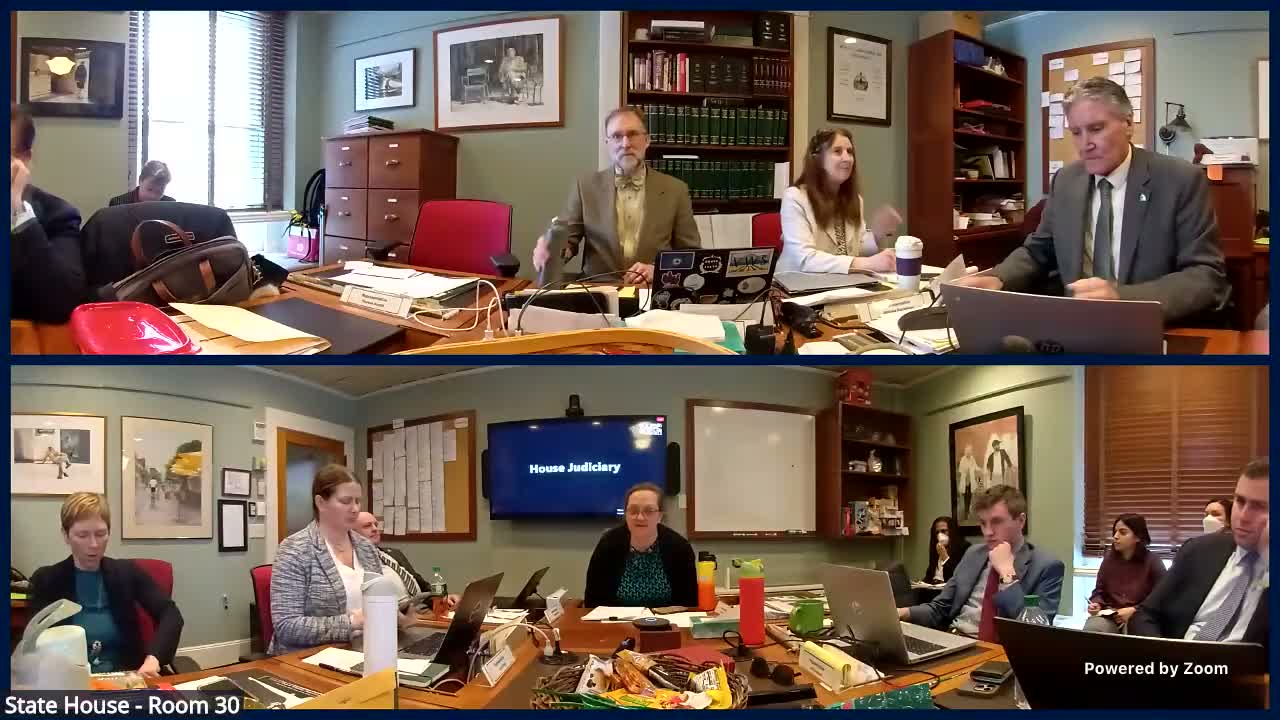
Lindsay Saint Amore, executive director of Disability Rights Vermont, and Wilda White, founder of Mad Freedom, told the House Judiciary Committee during Disability Advocacy Day that lawmakers should build disability rights review into the legislative process and strengthen protections for parents with disabilities.
Saint Amore described Disability Rights Vermont’s role as the state’s protection-and-advocacy agency and mental-health-care ombudsman, noting its federal access authority to enter inpatient, correctional, and community treatment settings. She said the organization is largely federally funded and routinely investigates rights violations, including restraint and seclusion practices. "We have a unique federal access authority that allows us to go into any place that people are receiving treatment," she said.
Testimony focused on parental-rights protections and the real-world harms advocates say can follow from insufficient accommodations. Saint Amore recounted a case in which a young woman with an intellectual disability who had been sexually assaulted became pregnant; she said Department for Children and Families (DCF) staff took custody actions that left the mother without her child and, in her view, derailed the young woman’s ability to parent. Saint Amore argued the parental-rights bill discussed in testimony (referred to in the record as "age 3 15") would add explicit protections, ensure access to specialized legal advocacy, and require reasonable accommodations so parents can keep their families together.
Both witnesses cautioned against expanding highly restrictive settings without first exhausting less-restrictive alternatives. Saint Amore said proposals to create an additional forensic facility should be treated as a last resort and invoked the Olmstead decision and the Americans with Disabilities Act as legal and policy constraints on unnecessary institutionalization. She said the state recently expanded the use of restraint, seclusion, and involuntary medication in a River Valley therapeutic unit in 2024 to manage people who did not meet acute inpatient criteria, and warned that building more segregated placements risks "warehousing a population of folks with certain disabilities." "Before the state can really justify those types of expenditures... we really have to understand the gaps better in our system," she said.
Witnesses and members discussed orders of nonhospitalization, limited community supports, and workforce shortages. Committee members asked whether appeals or third-party expert opinions could help when hands-on providers and the state department disagree; Saint Amore recommended better access to expert opinions and advocacy by counsel or mental-health-law projects, alongside investment in community-based staff and services.
White emphasized that disability review must be substantive: "Before a bill leaves this room, it should survive a disability rights review, just like it should survive a constitutional review, a fiscal review, and a reality check," she told the committee. She added that budget decisions matter to rights enforcement, singling out the Vermont Human Rights Commission as a critical but underfunded office whose delays can leave discrimination complaints unresolved.
Both witnesses offered practical supports for lawmakers: Saint Amore said she would provide the committee with the Vermont Coalition for Disability Rights’ statement of principles, and members discussed adapting an equity-impact or legislative-lens tool so committees consistently ask whether a bill could harm people with psychiatric, cognitive, or neurological disabilities.
No formal votes or committee actions occurred during the testimony; members asked for written statements and follow-up materials. The hearing continued with additional witnesses on the day’s advocacy agenda.
Saint Amore described Disability Rights Vermont’s role as the state’s protection-and-advocacy agency and mental-health-care ombudsman, noting its federal access authority to enter inpatient, correctional, and community treatment settings. She said the organization is largely federally funded and routinely investigates rights violations, including restraint and seclusion practices. "We have a unique federal access authority that allows us to go into any place that people are receiving treatment," she said.
Testimony focused on parental-rights protections and the real-world harms advocates say can follow from insufficient accommodations. Saint Amore recounted a case in which a young woman with an intellectual disability who had been sexually assaulted became pregnant; she said Department for Children and Families (DCF) staff took custody actions that left the mother without her child and, in her view, derailed the young woman’s ability to parent. Saint Amore argued the parental-rights bill discussed in testimony (referred to in the record as "age 3 15") would add explicit protections, ensure access to specialized legal advocacy, and require reasonable accommodations so parents can keep their families together.
Both witnesses cautioned against expanding highly restrictive settings without first exhausting less-restrictive alternatives. Saint Amore said proposals to create an additional forensic facility should be treated as a last resort and invoked the Olmstead decision and the Americans with Disabilities Act as legal and policy constraints on unnecessary institutionalization. She said the state recently expanded the use of restraint, seclusion, and involuntary medication in a River Valley therapeutic unit in 2024 to manage people who did not meet acute inpatient criteria, and warned that building more segregated placements risks "warehousing a population of folks with certain disabilities." "Before the state can really justify those types of expenditures... we really have to understand the gaps better in our system," she said.
Witnesses and members discussed orders of nonhospitalization, limited community supports, and workforce shortages. Committee members asked whether appeals or third-party expert opinions could help when hands-on providers and the state department disagree; Saint Amore recommended better access to expert opinions and advocacy by counsel or mental-health-law projects, alongside investment in community-based staff and services.
White emphasized that disability review must be substantive: "Before a bill leaves this room, it should survive a disability rights review, just like it should survive a constitutional review, a fiscal review, and a reality check," she told the committee. She added that budget decisions matter to rights enforcement, singling out the Vermont Human Rights Commission as a critical but underfunded office whose delays can leave discrimination complaints unresolved.
Both witnesses offered practical supports for lawmakers: Saint Amore said she would provide the committee with the Vermont Coalition for Disability Rights’ statement of principles, and members discussed adapting an equity-impact or legislative-lens tool so committees consistently ask whether a bill could harm people with psychiatric, cognitive, or neurological disabilities.
No formal votes or committee actions occurred during the testimony; members asked for written statements and follow-up materials. The hearing continued with additional witnesses on the day’s advocacy agenda.
Don't Miss a Word: See the Full Meeting!
Go beyond summaries. Unlock every video, transcript, and key insight with a Founder Membership.
✓
Get instant access to full meeting videos
✓
Search and clip any phrase from complete transcripts
✓
Receive AI-powered summaries & custom alerts
✓
Enjoy lifetime, unrestricted access to government data
30-day money-back guarantee
