Vermont pilot ‘accountability docket’ cleared backlog and linked defendants to treatment, officials say
February 12, 2026 | Judiciary, HOUSE OF REPRESENTATIVES, Committees, Legislative , Vermont
This article was created by AI summarizing key points discussed. AI makes mistakes, so for full details and context, please refer to the video of the full meeting. Please report any errors so we can fix them. Report an error »
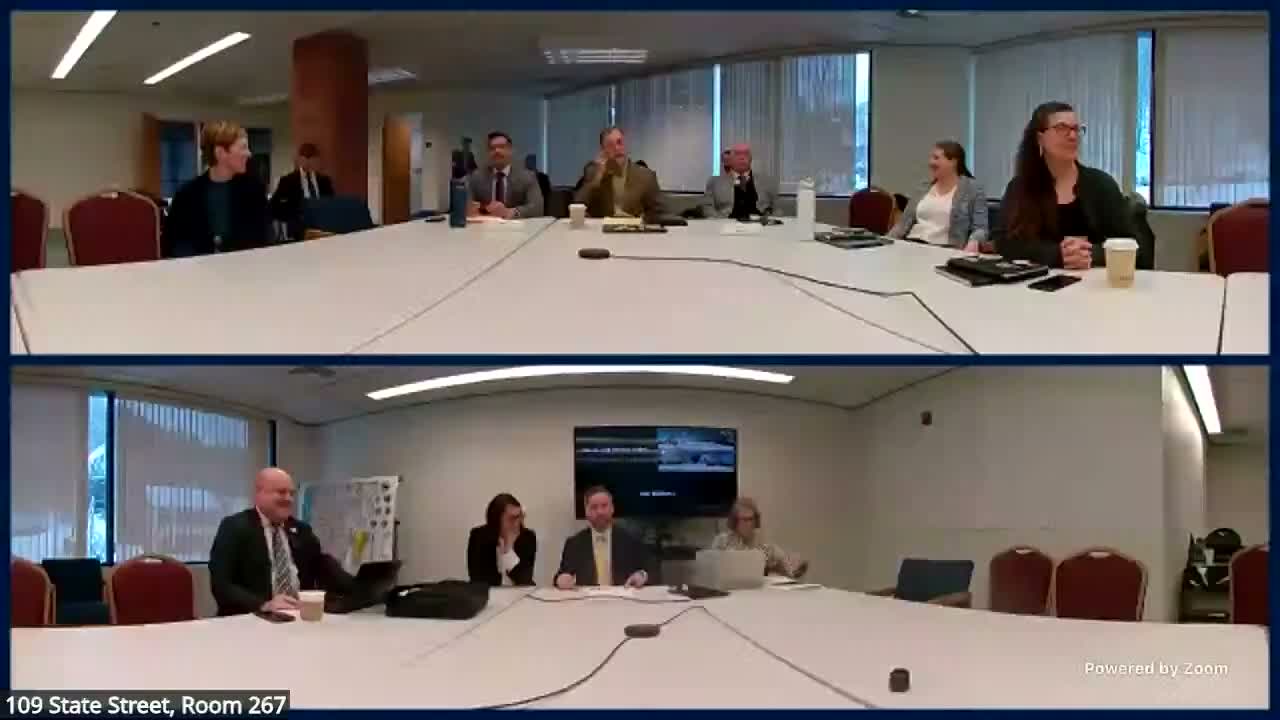
Kate McManus, with the Department of State’s Attorneys and Sheriffs, told the House and Senate Judiciary committees on Feb. 11 that the Chittenden County accountability docket aimed to speed case resolution and improve access to treatment for people with multiple pending dockets.
The pilot began after Governor Scott convened stakeholders in response to community concern and court strain in Chittenden County. Zach Waite, the governor’s special prosecutor on the project, said he was appointed on Oct. 16, 2025, and that “day 1 of the Chittenden County accountability court was 10/20/2025.” Waite and other panelists told lawmakers the court targeted people with five or more pending dockets who consumed a disproportionate share of court resources.
Why it mattered: prosecutors and the governor’s office said the pilot aimed to clear backlog and reduce pressure on regular dockets so prosecutors could focus on serious felonies. Waite said people with three or more pending dockets accounted for about 43% of the caseload and that concentrating resources on repeat defendants could speed resolution and link people to services.
How it worked: officials described three core elements that produced the most progress. Waite said a dedicated judge and regular court time allowed rapid scheduling; service providers, Agency of Human Services staff and Department of Corrections (DOC) representatives were present in court to perform assessments and accept referrals; and a single universal release allowed defense counsel, prosecutors and providers to share otherwise confidential information in weekly care-team meetings. Waite described the in-court coordination as a “warm handoff” that let providers sign people up for Medicaid, arrange treatment placements and complete assessments on the day of a hearing rather than leaving defendants to navigate referrals alone.
Outcomes and numbers: Waite said the project began with roughly 878 dockets representing about 103 people and that, by Feb. 6, 2026, 79 defendants’ cases had been resolved. Of those 79, officials reported 22 received prison sentences, 17 received straight probation, eight entered treatment court, three entered the Alternative Community Supervision (ACS) program, and several were given split-to-serve resolutions. Waite said the pilot also identified a small but troubling group — seven defendants found not competent — whose outcomes were limited by gaps in the mental-health system.
Limits and gaps: both prosecutors emphasized structural barriers that the pilot could not fix. Waite and Sarah George, the state's attorney for Chittenden County, told the committee that statutory and system constraints on competency evaluations and hospitalizations — and limited forensic capacity — left some defendants released with little oversight. George warned that clearing dockets did not address underlying shortages of housing and inpatient mental-health capacity: “housing, housing, housing,” she said when asked what would most help defendants engage in treatment.
Scalability and next steps: panelists said the framework — flexible scheduling, provider engagement, DOC participation and a universal release — could be adapted to other counties but that local resources vary. Sarah George said Chittenden would keep one courtroom open on Fridays for people with five or more dockets and that cases would be scheduled within two weeks to keep interventions timely. The committee scheduled a follow-up to discuss budget and staffing with deputy state's attorneys and the Department of State's Attorneys.
What remains unresolved: presenters urged clearer reporting channels between the Department of Mental Health and prosecutors or AAGs for missed appointments and noncompliance, and recommended more forensic restoration capacity and stable housing options to reduce repeat offending. Lawmakers asked for follow-up data on recidivism and community crime trends; prosecutors said they are collecting spreadsheets and will provide longer-term analysis but cautioned it will be difficult to isolate the pilot’s effect from seasonal and other factors.
The committee recessed and arranged a Friday briefing on budget and staffing to consider how to sustain or scale elements of the pilot.
The pilot began after Governor Scott convened stakeholders in response to community concern and court strain in Chittenden County. Zach Waite, the governor’s special prosecutor on the project, said he was appointed on Oct. 16, 2025, and that “day 1 of the Chittenden County accountability court was 10/20/2025.” Waite and other panelists told lawmakers the court targeted people with five or more pending dockets who consumed a disproportionate share of court resources.
Why it mattered: prosecutors and the governor’s office said the pilot aimed to clear backlog and reduce pressure on regular dockets so prosecutors could focus on serious felonies. Waite said people with three or more pending dockets accounted for about 43% of the caseload and that concentrating resources on repeat defendants could speed resolution and link people to services.
How it worked: officials described three core elements that produced the most progress. Waite said a dedicated judge and regular court time allowed rapid scheduling; service providers, Agency of Human Services staff and Department of Corrections (DOC) representatives were present in court to perform assessments and accept referrals; and a single universal release allowed defense counsel, prosecutors and providers to share otherwise confidential information in weekly care-team meetings. Waite described the in-court coordination as a “warm handoff” that let providers sign people up for Medicaid, arrange treatment placements and complete assessments on the day of a hearing rather than leaving defendants to navigate referrals alone.
Outcomes and numbers: Waite said the project began with roughly 878 dockets representing about 103 people and that, by Feb. 6, 2026, 79 defendants’ cases had been resolved. Of those 79, officials reported 22 received prison sentences, 17 received straight probation, eight entered treatment court, three entered the Alternative Community Supervision (ACS) program, and several were given split-to-serve resolutions. Waite said the pilot also identified a small but troubling group — seven defendants found not competent — whose outcomes were limited by gaps in the mental-health system.
Limits and gaps: both prosecutors emphasized structural barriers that the pilot could not fix. Waite and Sarah George, the state's attorney for Chittenden County, told the committee that statutory and system constraints on competency evaluations and hospitalizations — and limited forensic capacity — left some defendants released with little oversight. George warned that clearing dockets did not address underlying shortages of housing and inpatient mental-health capacity: “housing, housing, housing,” she said when asked what would most help defendants engage in treatment.
Scalability and next steps: panelists said the framework — flexible scheduling, provider engagement, DOC participation and a universal release — could be adapted to other counties but that local resources vary. Sarah George said Chittenden would keep one courtroom open on Fridays for people with five or more dockets and that cases would be scheduled within two weeks to keep interventions timely. The committee scheduled a follow-up to discuss budget and staffing with deputy state's attorneys and the Department of State's Attorneys.
What remains unresolved: presenters urged clearer reporting channels between the Department of Mental Health and prosecutors or AAGs for missed appointments and noncompliance, and recommended more forensic restoration capacity and stable housing options to reduce repeat offending. Lawmakers asked for follow-up data on recidivism and community crime trends; prosecutors said they are collecting spreadsheets and will provide longer-term analysis but cautioned it will be difficult to isolate the pilot’s effect from seasonal and other factors.
The committee recessed and arranged a Friday briefing on budget and staffing to consider how to sustain or scale elements of the pilot.
View the Full Meeting & All Its Details
This article offers just a summary. Unlock complete video, transcripts, and insights as a Founder Member.
✓
Watch full, unedited meeting videos
✓
Search every word spoken in unlimited transcripts
✓
AI summaries & real-time alerts (all government levels)
✓
Permanent access to expanding government content
30-day money-back guarantee
