Arvada police defend limited ALPR deployment, cite 30‑day retention and safeguards
February 12, 2026 | Arvada, Jefferson County, Colorado
This article was created by AI summarizing key points discussed. AI makes mistakes, so for full details and context, please refer to the video of the full meeting. Please report any errors so we can fix them. Report an error »
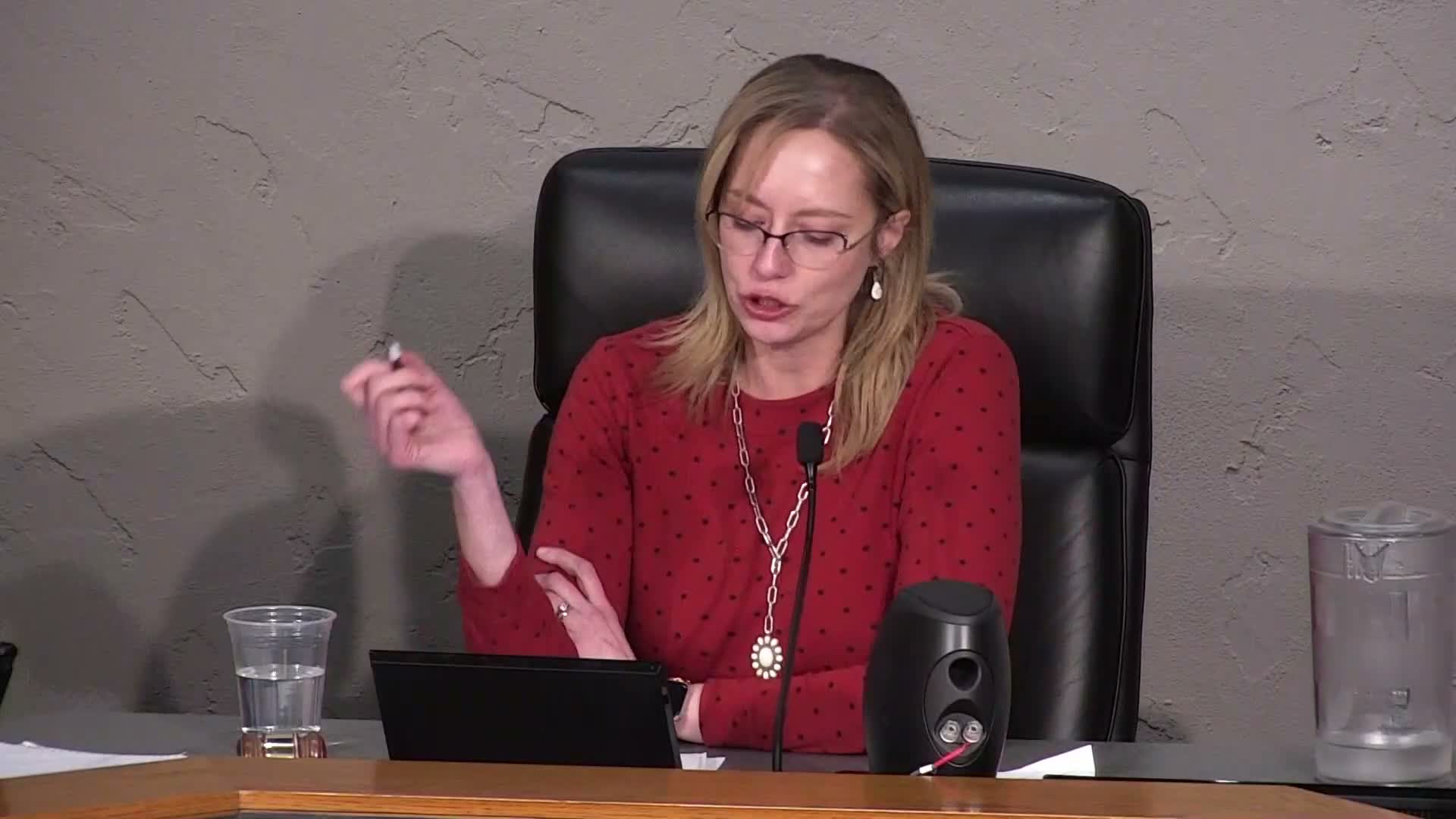
Deputy Chief Todd Reeves and Arvada Police Department staff presented the department’s use and policy for automatic license-plate readers (ALPRs) at the council’s Feb. 10 workshop, emphasizing investigative benefits, data controls and oversight.
Reeves described ALPRs as cameras that take still photos of vehicle license plates and said the city uses both stationary and mobile units. "Here in Arvada, we have a total of, 30, LPRs," he said, and listed manufacturers in use (Flock, Genetec, LSAG) and four devices used by Public Works.
The department framed ALPRs as an investigative tool that supplies leads rather than as definitive evidence. Reeves described several cases where ALPRs materially aided investigations, including a hit-and-run that investigators say they solved after matching surveillance footage to ALPR data, an attempted-murder investigation where ALPRs corrected a witness vehicle description, and a multijurisdictional mail-theft case in which ALPRs helped link suspects across cities and recover stolen property.
Reeves said the city controls access to ALPR data, limits sharing to organizations within Colorado when appropriate, and stores the data under Criminal Justice Information Services (CJIS) protections with training and password controls. On data retention, Reeves told council, "Our information is kept for 30 days. State law allows 2 years and federal law allows 5." He stated clearly that Arvada does not use ALPRs for immigration enforcement and noted a 2024 Colorado law that restricts local cooperation with immigration enforcement.
Council members asked about audit frequency, oversight and consequences for misuse. Reeves said auditing of access has been strengthened and is now more formalized as monthly reporting; improper access would trigger an internal affairs investigation and could lead to disciplinary action or criminal charges in serious cases. Chief Ed Bridal and City Manager Wick expressed confidence in the department’s policies, training and accreditation.
Several council members expressed support for using technology to increase efficiency, while others pressed for greater public education and transparency. Reeves said staff are cautious about hosting broad public education events while related state legislation (Senate Bills 70 and 71 and House Bill 1037) are pending to avoid the appearance of lobbying, but he committed to follow up with additional transparency improvements once the legislative context is clear.
The presentation closed with staff offering to answer follow-up questions and to provide more detailed reporting on use, audits and access logs.
Reeves described ALPRs as cameras that take still photos of vehicle license plates and said the city uses both stationary and mobile units. "Here in Arvada, we have a total of, 30, LPRs," he said, and listed manufacturers in use (Flock, Genetec, LSAG) and four devices used by Public Works.
The department framed ALPRs as an investigative tool that supplies leads rather than as definitive evidence. Reeves described several cases where ALPRs materially aided investigations, including a hit-and-run that investigators say they solved after matching surveillance footage to ALPR data, an attempted-murder investigation where ALPRs corrected a witness vehicle description, and a multijurisdictional mail-theft case in which ALPRs helped link suspects across cities and recover stolen property.
Reeves said the city controls access to ALPR data, limits sharing to organizations within Colorado when appropriate, and stores the data under Criminal Justice Information Services (CJIS) protections with training and password controls. On data retention, Reeves told council, "Our information is kept for 30 days. State law allows 2 years and federal law allows 5." He stated clearly that Arvada does not use ALPRs for immigration enforcement and noted a 2024 Colorado law that restricts local cooperation with immigration enforcement.
Council members asked about audit frequency, oversight and consequences for misuse. Reeves said auditing of access has been strengthened and is now more formalized as monthly reporting; improper access would trigger an internal affairs investigation and could lead to disciplinary action or criminal charges in serious cases. Chief Ed Bridal and City Manager Wick expressed confidence in the department’s policies, training and accreditation.
Several council members expressed support for using technology to increase efficiency, while others pressed for greater public education and transparency. Reeves said staff are cautious about hosting broad public education events while related state legislation (Senate Bills 70 and 71 and House Bill 1037) are pending to avoid the appearance of lobbying, but he committed to follow up with additional transparency improvements once the legislative context is clear.
The presentation closed with staff offering to answer follow-up questions and to provide more detailed reporting on use, audits and access logs.
Don't Miss a Word: See the Full Meeting!
Go beyond summaries. Unlock every video, transcript, and key insight with a Founder Membership.
✓
Get instant access to full meeting videos
✓
Search and clip any phrase from complete transcripts
✓
Receive AI-powered summaries & custom alerts
✓
Enjoy lifetime, unrestricted access to government data
30-day money-back guarantee
