Witnesses urge Vermont lawmakers to pass S.157 and renew funding for recovery centers and residences
February 12, 2026 | Human Services, HOUSE OF REPRESENTATIVES, Committees, Legislative , Vermont
This article was created by AI summarizing key points discussed. AI makes mistakes, so for full details and context, please refer to the video of the full meeting. Please report any errors so we can fix them. Report an error »
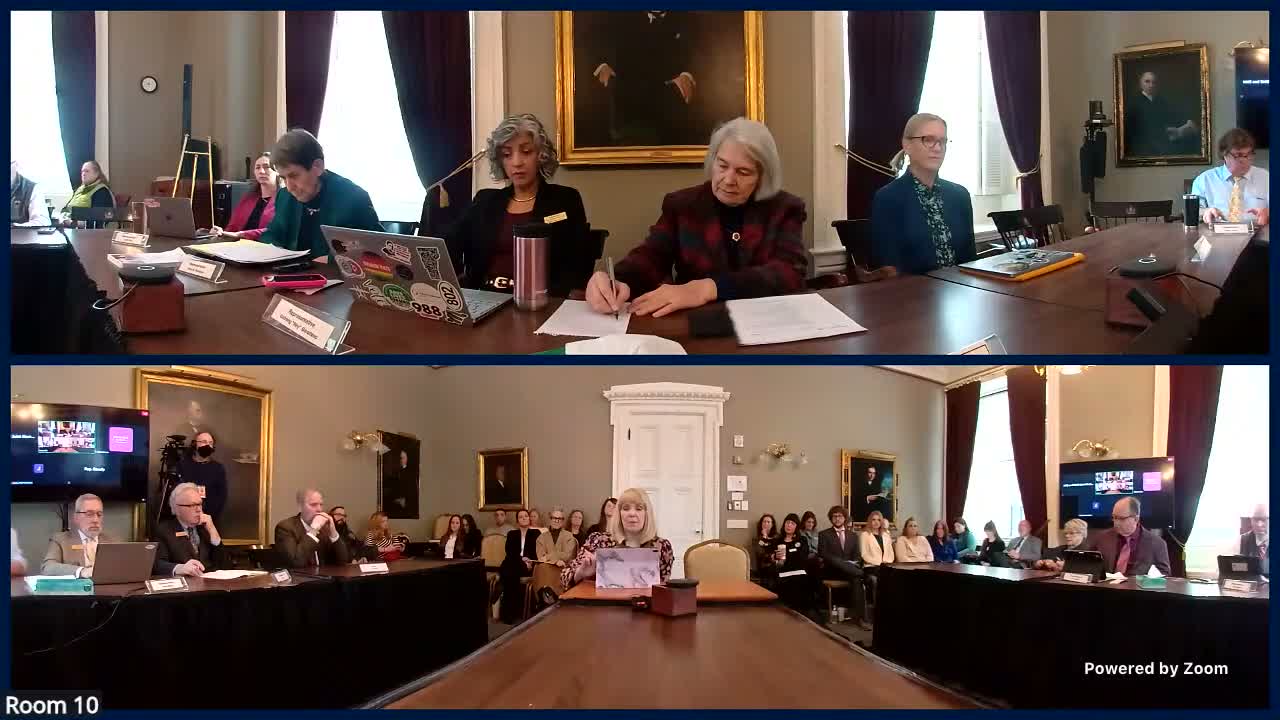
Sen. Ginny Lyons convened legislators and witnesses for Recovery Day testimony, where multiple recovery center leaders, operators and people in long-term recovery urged lawmakers to approve S.157 and to continue or expand state funding for recovery centers and certified recovery residences.
Testimony outlined two linked requests: statutory clarification through S.157 and renewed/expanded operating funds. A representative of Recovery Partners of Vermont described recovery centers, certified recovery residences and growing statewide capacity, and asked the legislature to renew $800,000 in prevention funding that recovery centers received in FY26, to appropriate $1,250,000 in FY27 opioid-abatement funds (per the Department of Health recommendation) for peer recovery coaching inside correctional facilities, and to provide opioid-abatement funds for certified recovery residences to cover ongoing operations and scholarship support for first-month and entry fees.
Why it matters: Witnesses said that recovery residences play a distinct role in the continuum of care — separate from clinical residential treatment — and that legal clarity and funding are needed to preserve housing that is substance-free, provides accountability and connects residents to treatment, work and community supports. ‘‘Recovery residences are not about punishment. They are about safety, accountability, and meeting people where they are while protecting the recovery of the entire community,’’ Danielle Wallace, president of her organization’s board and director of a Turning Point center, told the committee.
Speakers with lived experience described concrete effects. Ashley Brown said moving directly from treatment into a recovery home ‘‘was critical for me’’ because the home provided structure, daily meetings and requirements that helped her regain stability and employment. Nicole, a Jenna’s Promise resident, said, ‘‘Recovery is possible, and places like Jenna’s Promise are the reason why,’’ and several speakers credited embedded recovery coaching and 24/7 support lines with preventing relapse and reducing incarceration.
On S.157, multiple witnesses said the bill clarifies that certified recovery residences differ from typical rental housing and enables programs to respond when a resident’s behavior jeopardizes others’ safety. Gregory Tetrault, cofounder of Janus Promise, said the bill ‘‘gives places like Janus Promise lawful [authority], what we call compassion accountability,’’ arguing the change aligns law with the residences’ existing accountability practices.
Numbers and funding details cited in testimony: witnesses asked to renew $800,000 in prevention funds (FY26 level) for recovery centers; to appropriate $1,250,000 in FY27 opioid-abatement funds for peer recovery coaching in correctional facilities; and to provide opioid-abatement funding for recovery residences, including requests for approximately $1,750,000 for ongoing operational support and a scholarship pool to assist with first-month and entry fees. Testimony included one discrepancy on the scholarship amount (one witness cited $250,000; another cited $200,000). Committee staff or budget documents would be needed to reconcile that difference.
No formal committee action or vote on S.157 occurred during the testimony recorded here. Witnesses emphasized that certified residences do not provide clinical treatment and distinguished them from regulated residential treatment facilities. Several presenters also highlighted expanded capacity — for example, the Vermont Foundation of Recovery reported operating 79 recovery beds statewide, a roughly 40% increase in capacity since September 2024 — as part of the case for continued operational support.
The hearing featured numerous first-person accounts linking stable, structured recovery housing and coaching to reduced relapse, improved employment and family reunification. Committee leaders thanked witnesses for their testimony and noted time constraints as the session concluded; no vote or formal committee direction was recorded in the transcript.
Testimony outlined two linked requests: statutory clarification through S.157 and renewed/expanded operating funds. A representative of Recovery Partners of Vermont described recovery centers, certified recovery residences and growing statewide capacity, and asked the legislature to renew $800,000 in prevention funding that recovery centers received in FY26, to appropriate $1,250,000 in FY27 opioid-abatement funds (per the Department of Health recommendation) for peer recovery coaching inside correctional facilities, and to provide opioid-abatement funds for certified recovery residences to cover ongoing operations and scholarship support for first-month and entry fees.
Why it matters: Witnesses said that recovery residences play a distinct role in the continuum of care — separate from clinical residential treatment — and that legal clarity and funding are needed to preserve housing that is substance-free, provides accountability and connects residents to treatment, work and community supports. ‘‘Recovery residences are not about punishment. They are about safety, accountability, and meeting people where they are while protecting the recovery of the entire community,’’ Danielle Wallace, president of her organization’s board and director of a Turning Point center, told the committee.
Speakers with lived experience described concrete effects. Ashley Brown said moving directly from treatment into a recovery home ‘‘was critical for me’’ because the home provided structure, daily meetings and requirements that helped her regain stability and employment. Nicole, a Jenna’s Promise resident, said, ‘‘Recovery is possible, and places like Jenna’s Promise are the reason why,’’ and several speakers credited embedded recovery coaching and 24/7 support lines with preventing relapse and reducing incarceration.
On S.157, multiple witnesses said the bill clarifies that certified recovery residences differ from typical rental housing and enables programs to respond when a resident’s behavior jeopardizes others’ safety. Gregory Tetrault, cofounder of Janus Promise, said the bill ‘‘gives places like Janus Promise lawful [authority], what we call compassion accountability,’’ arguing the change aligns law with the residences’ existing accountability practices.
Numbers and funding details cited in testimony: witnesses asked to renew $800,000 in prevention funds (FY26 level) for recovery centers; to appropriate $1,250,000 in FY27 opioid-abatement funds for peer recovery coaching in correctional facilities; and to provide opioid-abatement funding for recovery residences, including requests for approximately $1,750,000 for ongoing operational support and a scholarship pool to assist with first-month and entry fees. Testimony included one discrepancy on the scholarship amount (one witness cited $250,000; another cited $200,000). Committee staff or budget documents would be needed to reconcile that difference.
No formal committee action or vote on S.157 occurred during the testimony recorded here. Witnesses emphasized that certified residences do not provide clinical treatment and distinguished them from regulated residential treatment facilities. Several presenters also highlighted expanded capacity — for example, the Vermont Foundation of Recovery reported operating 79 recovery beds statewide, a roughly 40% increase in capacity since September 2024 — as part of the case for continued operational support.
The hearing featured numerous first-person accounts linking stable, structured recovery housing and coaching to reduced relapse, improved employment and family reunification. Committee leaders thanked witnesses for their testimony and noted time constraints as the session concluded; no vote or formal committee direction was recorded in the transcript.
Don't Miss a Word: See the Full Meeting!
Go beyond summaries. Unlock every video, transcript, and key insight with a Founder Membership.
✓
Get instant access to full meeting videos
✓
Search and clip any phrase from complete transcripts
✓
Receive AI-powered summaries & custom alerts
✓
Enjoy lifetime, unrestricted access to government data
30-day money-back guarantee
