House committee advances bill to narrow immunity for platforms that facilitate illicit AI images
February 12, 2026 | House, Alabama Legislative Sessions, Alabama
This article was created by AI summarizing key points discussed. AI makes mistakes, so for full details and context, please refer to the video of the full meeting. Please report any errors so we can fix them. Report an error »
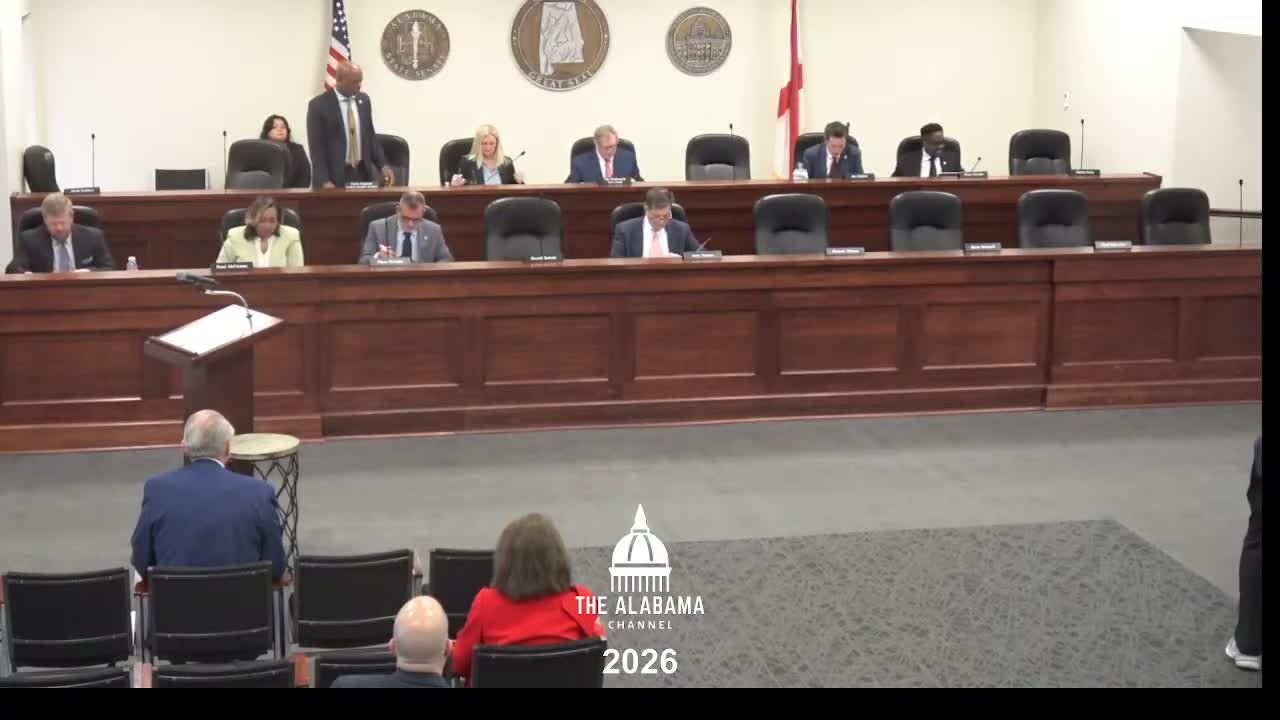
The House Judiciary Committee on Thursday advanced HB347, a bill aimed at closing what sponsors called an immunity loophole for platforms and developers that facilitate nonconsensual, AI-generated intimate images.
Representative Harrison, the bill’s sponsor, told the committee HB347 addresses “the proliferation of the AI notification programs and its inclusion on platforms” and seeks to limit protections for companies that go beyond being passive tools. “This bill adds an explicit statutory rule. A developer or provider fitting the carve out is deemed responsible for the creation or facilitation of the illicit material,” Harrison said.
An amendment inserted language changing a culpability standard and adding procedures for victims to request prompt removal of nonconsensual material. The amendment replaces the term “reckless” with “unreasonably” in key sections to define when a provider’s conduct is actionable and outlines processes for takedown requests and limited Internet service provider immunities for routine hosting.
Committee members asked whether the new standard would be easier to prove than ‘reckless’ conduct and discussed the scope of takedown procedures. Supporters said the change would make the rule clearer for courts and civil claims; questions focused on definitions and enforcement mechanisms. After debate, the committee adopted the amendment and gave HB347 a favor report.
The committee’s action was procedural only; HB347 will move forward to the next stage of the legislative process.
Representative Harrison, the bill’s sponsor, told the committee HB347 addresses “the proliferation of the AI notification programs and its inclusion on platforms” and seeks to limit protections for companies that go beyond being passive tools. “This bill adds an explicit statutory rule. A developer or provider fitting the carve out is deemed responsible for the creation or facilitation of the illicit material,” Harrison said.
An amendment inserted language changing a culpability standard and adding procedures for victims to request prompt removal of nonconsensual material. The amendment replaces the term “reckless” with “unreasonably” in key sections to define when a provider’s conduct is actionable and outlines processes for takedown requests and limited Internet service provider immunities for routine hosting.
Committee members asked whether the new standard would be easier to prove than ‘reckless’ conduct and discussed the scope of takedown procedures. Supporters said the change would make the rule clearer for courts and civil claims; questions focused on definitions and enforcement mechanisms. After debate, the committee adopted the amendment and gave HB347 a favor report.
The committee’s action was procedural only; HB347 will move forward to the next stage of the legislative process.
View the Full Meeting & All Its Details
This article offers just a summary. Unlock complete video, transcripts, and insights as a Founder Member.
✓
Watch full, unedited meeting videos
✓
Search every word spoken in unlimited transcripts
✓
AI summaries & real-time alerts (all government levels)
✓
Permanent access to expanding government content
30-day money-back guarantee
