Public hearing held on pairing district attorneys' retirement with judges; supporters and RSA raise concerns about salary averaging
February 12, 2026 | House, Alabama Legislative Sessions, Alabama
This article was created by AI summarizing key points discussed. AI makes mistakes, so for full details and context, please refer to the video of the full meeting. Please report any errors so we can fix them. Report an error »
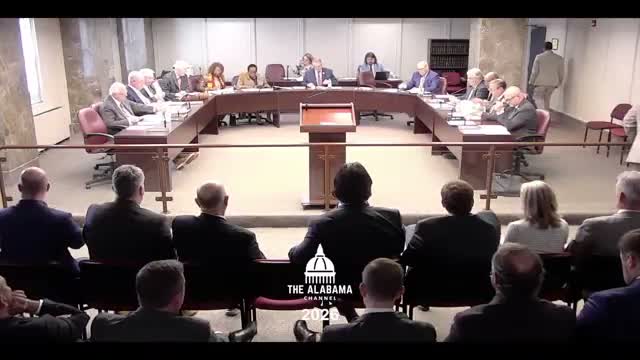
The committee opened a public hearing on House Bill 312 and did not take a committee vote. Trish Milberg summarized the proposal as the final step to align district attorneys' retirement with judges' retirement: raising the annual benefit multiplier from 3% to 4% and reducing the maximum allowable benefit from 80% to 75 to match the judges' plan.
"This would increase the multiplier of the district attorneys from 3% to 4%. However, it would decrease the maximum allowable benefit," Milberg told the committee, noting that district attorneys already pay an equal amount into retirement as judges. Proponent Rob Bessard, the district attorney in Madison County, told the committee the 4% multiplier is key to attracting qualified candidates and maintaining parity with judges; Bessard said he fears losing potential candidates without the increase.
Nia Scott, an RSA attorney speaking in opposition to parts of the bill, said RSA was not opposed to the multiplier increase but raised concerns about another change in the text: replacing the current highest five-year final average salary calculation with a one-year final average. Scott said that change would be out of step with other public pension systems and would increase the unfunded liability of the judicial plan by about $2,000,000 and raise employer contribution rates by roughly 1.38 percentage points.
Committee members asked clarifying questions about funding levels in the judicial plans. RSA explained the judges and clerks plan carries legacy, pre-2016 members and is about 60% funded, while the DA plan is reported at about 107% funded. Committee members did not vote on the bill at this meeting; the chair said further consideration is expected.
"This would increase the multiplier of the district attorneys from 3% to 4%. However, it would decrease the maximum allowable benefit," Milberg told the committee, noting that district attorneys already pay an equal amount into retirement as judges. Proponent Rob Bessard, the district attorney in Madison County, told the committee the 4% multiplier is key to attracting qualified candidates and maintaining parity with judges; Bessard said he fears losing potential candidates without the increase.
Nia Scott, an RSA attorney speaking in opposition to parts of the bill, said RSA was not opposed to the multiplier increase but raised concerns about another change in the text: replacing the current highest five-year final average salary calculation with a one-year final average. Scott said that change would be out of step with other public pension systems and would increase the unfunded liability of the judicial plan by about $2,000,000 and raise employer contribution rates by roughly 1.38 percentage points.
Committee members asked clarifying questions about funding levels in the judicial plans. RSA explained the judges and clerks plan carries legacy, pre-2016 members and is about 60% funded, while the DA plan is reported at about 107% funded. Committee members did not vote on the bill at this meeting; the chair said further consideration is expected.
View the Full Meeting & All Its Details
This article offers just a summary. Unlock complete video, transcripts, and insights as a Founder Member.
✓
Watch full, unedited meeting videos
✓
Search every word spoken in unlimited transcripts
✓
AI summaries & real-time alerts (all government levels)
✓
Permanent access to expanding government content
30-day money-back guarantee
