State Board members clash over bills on homeschooling during abuse investigations and reading policy
February 07, 2026 | Board of Education, Elected Officials, Organizations, Executive, Nebraska
This article was created by AI summarizing key points discussed. AI makes mistakes, so for full details and context, please refer to the video of the full meeting. Please report any errors so we can fix them. Report an error »
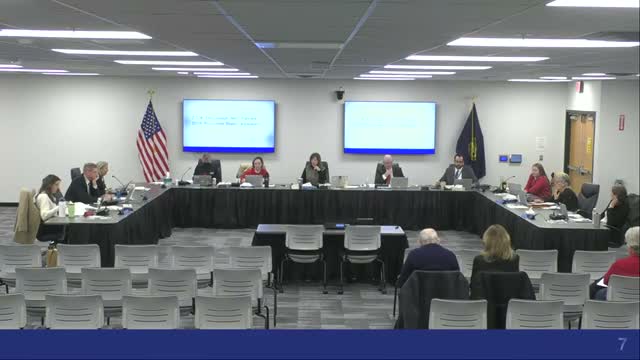
Board discussion on proposed 2026 legislation consumed a substantial portion of the Feb. 6 meeting as members weighed requests to revisit executive committee positions.
The committee review raised LB1224 (referred to in the meeting as the bill prohibiting certain individuals under child'abuse or neglect investigations from enrolling children in exempt schools or providing instruction at such schools). Some board members said the legislation was essential to prevent "passing the trash"—a phrase used to describe moving certificate holders with alleged child'abuse incidents between schools—so children remain under school oversight during an investigation. Others argued the bill'as written could sweep in low'level misdemeanors (for example, traffic stops that could be charged as a child'endangerment misdemeanor) and would create a presumption that harms families without due process.
Board member Deborah Neary asked that the full board consider positions individually rather than leaving the matter solely to the Executive Committee; other members replied that the committee had met and taken no official stance because it could not reach consensus. Several board members urged colleagues to contact legislators directly with concerns.
The board also discussed LB1050, described as proposed amendments to the Nebraska Reading Improvement Act that would affect grade'level advancement and retention policies. The commissioner and staff had recommended a neutral position with concerns; the executive committee sent a neutral letter citing reservations. Some board members said they supported the intent of stronger reading outcomes but feared unintended stigma and long'term harm from forced retention.
Public commenters earlier in the meeting raised related concerns: Loewen Eby urged greater transparency about certificate holders and expressed support for LB1241 to add disciplinary reporting; Rachel Pinkerton urged a board member recuse herself from a later vote because of a campaign donation connection.
No formal legislative position changes were adopted at the Feb. 6 meeting; board members asked staff to schedule future discussion and offered to do further homework before any board letter or testimony is drafted.
The committee review raised LB1224 (referred to in the meeting as the bill prohibiting certain individuals under child'abuse or neglect investigations from enrolling children in exempt schools or providing instruction at such schools). Some board members said the legislation was essential to prevent "passing the trash"—a phrase used to describe moving certificate holders with alleged child'abuse incidents between schools—so children remain under school oversight during an investigation. Others argued the bill'as written could sweep in low'level misdemeanors (for example, traffic stops that could be charged as a child'endangerment misdemeanor) and would create a presumption that harms families without due process.
Board member Deborah Neary asked that the full board consider positions individually rather than leaving the matter solely to the Executive Committee; other members replied that the committee had met and taken no official stance because it could not reach consensus. Several board members urged colleagues to contact legislators directly with concerns.
The board also discussed LB1050, described as proposed amendments to the Nebraska Reading Improvement Act that would affect grade'level advancement and retention policies. The commissioner and staff had recommended a neutral position with concerns; the executive committee sent a neutral letter citing reservations. Some board members said they supported the intent of stronger reading outcomes but feared unintended stigma and long'term harm from forced retention.
Public commenters earlier in the meeting raised related concerns: Loewen Eby urged greater transparency about certificate holders and expressed support for LB1241 to add disciplinary reporting; Rachel Pinkerton urged a board member recuse herself from a later vote because of a campaign donation connection.
No formal legislative position changes were adopted at the Feb. 6 meeting; board members asked staff to schedule future discussion and offered to do further homework before any board letter or testimony is drafted.
Don't Miss a Word: See the Full Meeting!
Go beyond summaries. Unlock every video, transcript, and key insight with a Founder Membership.
✓
Get instant access to full meeting videos
✓
Search and clip any phrase from complete transcripts
✓
Receive AI-powered summaries & custom alerts
✓
Enjoy lifetime, unrestricted access to government data
30-day money-back guarantee
