Lakeville zoning board continues Simmons Hill 40B hearing after developer revises plan; tribes and neighbors press for archaeology, water solutions
February 12, 2026 | Town of Lakeville, Plymouth County, Massachusetts
This article was created by AI summarizing key points discussed. AI makes mistakes, so for full details and context, please refer to the video of the full meeting. Please report any errors so we can fix them. Report an error »
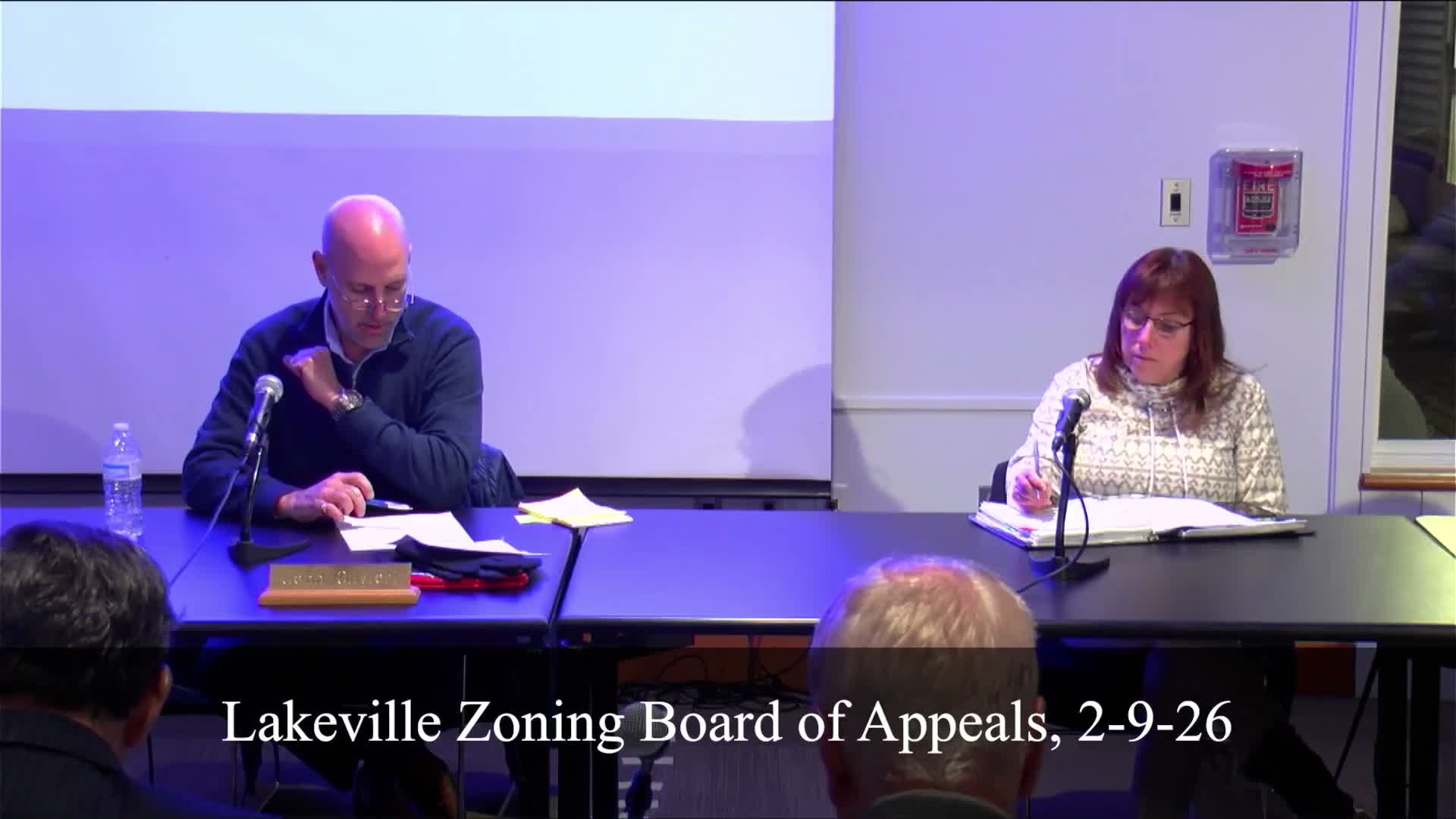
The Lakeville Zoning Board of Appeals on Feb. 11 continued a hearing on Simmons Hill LLC’s comprehensive permit under Mass. Gen. Law Chapter 40B after the developer presented a substantially revised plan and the public raised concerns about water, fire protection and cultural resources.
Attorney Robert Mather, representing the applicant, told the board the new submission replaces an earlier mixed proposal and would develop nearly the entire roughly 320‑acre parcel as 199 single‑family lots while preserving about 57% of the site as open space; an 8.8‑acre corner parcel would be held for possible commercial use. "The new proposal develops the entire site," Mather said, adding the mix will include 141 regular lots and 58 age‑restricted lots and that 25% of all units — roughly 50 homes — would be restricted as affordable.
Why it matters: the revised layout changes the scope of land disturbance and introduces new questions about infrastructure and cultural resources. Lakeville’s fire chief, Michael P. O’Brien, supplied a certified memo read into the record stating "no adequate and reliable fire protection water supply currently exists within approximately 3.5 miles of the site," and cautioning that without an engineered water solution the fire department could not approve occupancy or issue required certificates under state law and the Massachusetts Comprehensive Fire Safety Code (527 CMR).
Traffic, water and utilities: the developer said it would provide a third access onto County Street to reduce traffic at the Freetown Street intersection and has ordered a new traffic study that it expects to submit to the town within two weeks. Mohammed Itani, a member of the development team, said preliminary engineering indicates the County Street access will reduce traffic through the existing intersection; he said the final report will determine whether other modifications (for example, auxiliary lanes) would be appropriate. The developer said it prefers individual wells on lots rather than a community well but is willing to "participate" in a larger shared water‑line project with the town and neighboring property owners if timing and costs are feasible.
Septic and site engineering: Mather said the revised plan eliminates a centralized sewage treatment plant in favor of nine Presby septic systems, each serving about 18–19 dwellings and collectively expected to pump roughly 9,000 gallons per day; wells would be sited in front yards, with lot frontages and setbacks sized to accommodate systems and wells.
Archaeology and tribal concerns: members of Wampanoag communities and local tribal representatives urged the board to protect culturally sensitive areas on the parcel and requested fuller consultation and federal Section 106 review if there is a tribal interest in the site. "Any alteration to this place will be a devastating outcome," said Daryl Wicksen of the Wampanoag Nation. Attorney and Wampanoag member Karina Silva said the area is "one of the most culturally significant places for all of the Wampanoag communities" and said a more extensive archaeological and regulatory review is needed. The applicant said it would commission supplemental archaeological work with Public Archaeological Laboratories (PAL) to cover areas newly proposed for disturbance and agreed to coordinate site access with tribal representatives where appropriate.
Board direction and next steps: the zoning board emphasized that several outstanding technical items must be updated or completed — notably the traffic study, supplemental archaeological work and detailed engineering plans that incorporate ledge/bedrock information and fire‑protection system design — before further action. The board voted unanimously to continue the hearing to April 13 and asked the town’s traffic review engineer to peer‑review the developer’s forthcoming traffic report and to coordinate a joint presentation by both engineers at the April meeting.
Public participation and process notes: speakers at the public comment session raised a range of concerns including blasting and ledge removal, impacts to wetlands and the Long Pond watershed, potential effects on property values, and the town’s financial capacity to participate in shared infrastructure. Several residents urged the town to ensure tribal and conservation representatives are included in fieldwork; the developer said parts of the privately owned parcel are posted "no trespassing," but confirmed it would work with PAL and tribal representatives when arranging access for formal studies.
The board did not take final votes on permits or waivers. The hearing was continued to April 13 at 6:00 p.m. at the Lakeville library; the developer said it will submit the updated traffic study in the coming weeks for town review.
Attorney Robert Mather, representing the applicant, told the board the new submission replaces an earlier mixed proposal and would develop nearly the entire roughly 320‑acre parcel as 199 single‑family lots while preserving about 57% of the site as open space; an 8.8‑acre corner parcel would be held for possible commercial use. "The new proposal develops the entire site," Mather said, adding the mix will include 141 regular lots and 58 age‑restricted lots and that 25% of all units — roughly 50 homes — would be restricted as affordable.
Why it matters: the revised layout changes the scope of land disturbance and introduces new questions about infrastructure and cultural resources. Lakeville’s fire chief, Michael P. O’Brien, supplied a certified memo read into the record stating "no adequate and reliable fire protection water supply currently exists within approximately 3.5 miles of the site," and cautioning that without an engineered water solution the fire department could not approve occupancy or issue required certificates under state law and the Massachusetts Comprehensive Fire Safety Code (527 CMR).
Traffic, water and utilities: the developer said it would provide a third access onto County Street to reduce traffic at the Freetown Street intersection and has ordered a new traffic study that it expects to submit to the town within two weeks. Mohammed Itani, a member of the development team, said preliminary engineering indicates the County Street access will reduce traffic through the existing intersection; he said the final report will determine whether other modifications (for example, auxiliary lanes) would be appropriate. The developer said it prefers individual wells on lots rather than a community well but is willing to "participate" in a larger shared water‑line project with the town and neighboring property owners if timing and costs are feasible.
Septic and site engineering: Mather said the revised plan eliminates a centralized sewage treatment plant in favor of nine Presby septic systems, each serving about 18–19 dwellings and collectively expected to pump roughly 9,000 gallons per day; wells would be sited in front yards, with lot frontages and setbacks sized to accommodate systems and wells.
Archaeology and tribal concerns: members of Wampanoag communities and local tribal representatives urged the board to protect culturally sensitive areas on the parcel and requested fuller consultation and federal Section 106 review if there is a tribal interest in the site. "Any alteration to this place will be a devastating outcome," said Daryl Wicksen of the Wampanoag Nation. Attorney and Wampanoag member Karina Silva said the area is "one of the most culturally significant places for all of the Wampanoag communities" and said a more extensive archaeological and regulatory review is needed. The applicant said it would commission supplemental archaeological work with Public Archaeological Laboratories (PAL) to cover areas newly proposed for disturbance and agreed to coordinate site access with tribal representatives where appropriate.
Board direction and next steps: the zoning board emphasized that several outstanding technical items must be updated or completed — notably the traffic study, supplemental archaeological work and detailed engineering plans that incorporate ledge/bedrock information and fire‑protection system design — before further action. The board voted unanimously to continue the hearing to April 13 and asked the town’s traffic review engineer to peer‑review the developer’s forthcoming traffic report and to coordinate a joint presentation by both engineers at the April meeting.
Public participation and process notes: speakers at the public comment session raised a range of concerns including blasting and ledge removal, impacts to wetlands and the Long Pond watershed, potential effects on property values, and the town’s financial capacity to participate in shared infrastructure. Several residents urged the town to ensure tribal and conservation representatives are included in fieldwork; the developer said parts of the privately owned parcel are posted "no trespassing," but confirmed it would work with PAL and tribal representatives when arranging access for formal studies.
The board did not take final votes on permits or waivers. The hearing was continued to April 13 at 6:00 p.m. at the Lakeville library; the developer said it will submit the updated traffic study in the coming weeks for town review.
Don't Miss a Word: See the Full Meeting!
Go beyond summaries. Unlock every video, transcript, and key insight with a Founder Membership.
✓
Get instant access to full meeting videos
✓
Search and clip any phrase from complete transcripts
✓
Receive AI-powered summaries & custom alerts
✓
Enjoy lifetime, unrestricted access to government data
30-day money-back guarantee
