Skokie Appearance Commission approves four certificates of appropriateness, tables one
February 12, 2026 | Skokie, Cook County, Illinois
This article was created by AI summarizing key points discussed. AI makes mistakes, so for full details and context, please refer to the video of the full meeting. Please report any errors so we can fix them. Report an error »
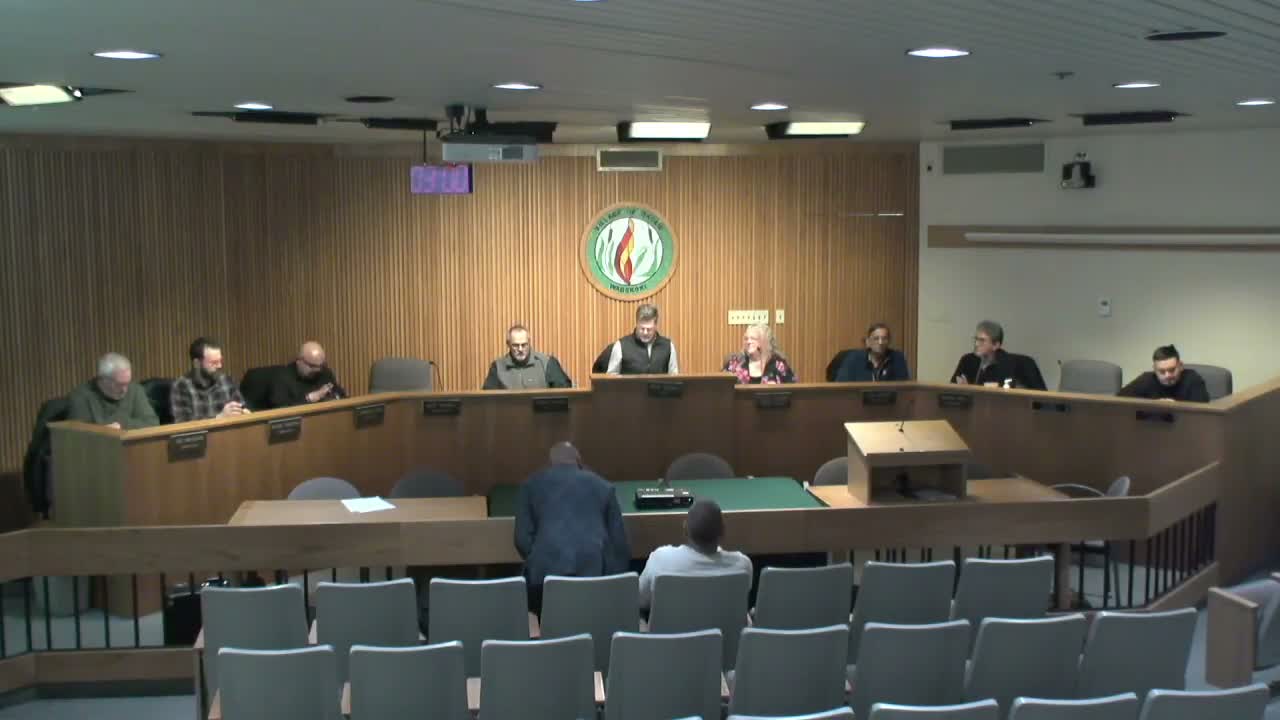
Skokie — The Skokie Appearance Commission on Feb. 11 reviewed five exterior design cases, approving certificates of appropriateness for four properties and tabling one project that lacked clarifying design information.
The commission approved a second-floor addition at 9617 Kildare Avenue (case 2026-003A). Architect Ramon Suterus presented a 585-square-foot addition that preserves existing masonry, adds a balcony and canopy, and matches exterior colors and details. Commissioners asked for brick to remain at the front entrance and for the second-floor windows to be the same size; the commission granted the certificate by roll call.
For case 2026-004A10014 (listed as Lamont/Lehman Avenue), homeowner Abdul Samju proposed a full second-floor addition covering the existing footprint (about 1,305 square feet) to be finished in vinyl siding. Commissioners pressed on the east-elevation gable window above the master bathroom and suggested an awning over the entry to help orient visitors to the front door. The commission approved the certificate with conditions that the east-elevation bathroom window be enlarged and that the owner consider an entry awning and window/door detailing.
The commission tabled case 2026-005A at 8041 Tripp Avenue after staff and members concluded there were too many unresolved technical questions and inconsistent drawings. Nathan Kriska, the architect, was absent for medical reasons; his son Jeremy Kriska attended and answered some procedural questions. Commissioners said the ridge lines and dormer offsets could not be resolved without the architect’s input and voted to postpone the item until the necessary clarifications are provided.
At 9537 Keeler Avenue (case 2026-006A) owner Mendel Slavatiski sought a full second-floor addition. Staff and commissioners discussed setback lines, whether the proposed addition aligned with existing rooflines, and whether to require additional masonry to meet the village’s 51% masonry preference. Commissioners agreed to grant a certificate of appropriateness on the condition that the second-floor siding be a vertical‑seam product that matches or closely approximates the existing siding, that the architect resubmit corrected drawings showing the proper second-floor orientation and details, and that staff review the revised plans. The commission agreed to waive the 51% masonry requirement in exchange for those conditions.
The commission spent the longest block of discussion on 5013–5019 Oakton Street (case 2026-007A), a commercial façade renovation proposed in part for a new Dewey Barbecue tenant. Design professional Anthony Rowe described new storefront windows, a metal canopy and glazed modular brick. Owner Robert Fitzpatrick said he wanted an exterior that reflected his family’s East Texas barbecue identity.
Commissioners debated whether to preserve and repair the existing limestone upper façade or replace it, and whether to place red glazed brick at street level or use Chicago common brick if the limestone proved unsound. Members also recommended larger storefront windows and considered operable openings for street activation. After discussion the commission approved a certificate of appropriateness that directs the owner to test the safety and soundness of the limestone; if the limestone is not salvageable, the approval allows replacement with Chicago common brick and requires larger storefront windows and the red glazed accent at street level.
Chair Mark Penning closed the meeting after no members of the public signed up for comment. The commission will reconvene next month for follow-up items and any resubmitted plans.
Quotes in this report are drawn from the meeting record: architect Ramon Suterus identifying himself as the project architect; homeowner Mendel Slavatiski saying, “I give my word that everything will match exactly in the same spacing and siding” when discussing siding choices; and Robert Fitzpatrick describing his intent to recreate his family’s barbecue identity in Skokie.
The commission approved a second-floor addition at 9617 Kildare Avenue (case 2026-003A). Architect Ramon Suterus presented a 585-square-foot addition that preserves existing masonry, adds a balcony and canopy, and matches exterior colors and details. Commissioners asked for brick to remain at the front entrance and for the second-floor windows to be the same size; the commission granted the certificate by roll call.
For case 2026-004A10014 (listed as Lamont/Lehman Avenue), homeowner Abdul Samju proposed a full second-floor addition covering the existing footprint (about 1,305 square feet) to be finished in vinyl siding. Commissioners pressed on the east-elevation gable window above the master bathroom and suggested an awning over the entry to help orient visitors to the front door. The commission approved the certificate with conditions that the east-elevation bathroom window be enlarged and that the owner consider an entry awning and window/door detailing.
The commission tabled case 2026-005A at 8041 Tripp Avenue after staff and members concluded there were too many unresolved technical questions and inconsistent drawings. Nathan Kriska, the architect, was absent for medical reasons; his son Jeremy Kriska attended and answered some procedural questions. Commissioners said the ridge lines and dormer offsets could not be resolved without the architect’s input and voted to postpone the item until the necessary clarifications are provided.
At 9537 Keeler Avenue (case 2026-006A) owner Mendel Slavatiski sought a full second-floor addition. Staff and commissioners discussed setback lines, whether the proposed addition aligned with existing rooflines, and whether to require additional masonry to meet the village’s 51% masonry preference. Commissioners agreed to grant a certificate of appropriateness on the condition that the second-floor siding be a vertical‑seam product that matches or closely approximates the existing siding, that the architect resubmit corrected drawings showing the proper second-floor orientation and details, and that staff review the revised plans. The commission agreed to waive the 51% masonry requirement in exchange for those conditions.
The commission spent the longest block of discussion on 5013–5019 Oakton Street (case 2026-007A), a commercial façade renovation proposed in part for a new Dewey Barbecue tenant. Design professional Anthony Rowe described new storefront windows, a metal canopy and glazed modular brick. Owner Robert Fitzpatrick said he wanted an exterior that reflected his family’s East Texas barbecue identity.
Commissioners debated whether to preserve and repair the existing limestone upper façade or replace it, and whether to place red glazed brick at street level or use Chicago common brick if the limestone proved unsound. Members also recommended larger storefront windows and considered operable openings for street activation. After discussion the commission approved a certificate of appropriateness that directs the owner to test the safety and soundness of the limestone; if the limestone is not salvageable, the approval allows replacement with Chicago common brick and requires larger storefront windows and the red glazed accent at street level.
Chair Mark Penning closed the meeting after no members of the public signed up for comment. The commission will reconvene next month for follow-up items and any resubmitted plans.
Quotes in this report are drawn from the meeting record: architect Ramon Suterus identifying himself as the project architect; homeowner Mendel Slavatiski saying, “I give my word that everything will match exactly in the same spacing and siding” when discussing siding choices; and Robert Fitzpatrick describing his intent to recreate his family’s barbecue identity in Skokie.
View the Full Meeting & All Its Details
This article offers just a summary. Unlock complete video, transcripts, and insights as a Founder Member.
✓
Watch full, unedited meeting videos
✓
Search every word spoken in unlimited transcripts
✓
AI summaries & real-time alerts (all government levels)
✓
Permanent access to expanding government content
30-day money-back guarantee
