Subcommittee backs study of $300,000 homestead SWEPT exemption in HB 1648; recommends 'ought to pass as amended'
February 12, 2026 | Ways and Means, House of Representatives, Committees , Legislative, New Hampshire
This article was created by AI summarizing key points discussed. AI makes mistakes, so for full details and context, please refer to the video of the full meeting. Please report any errors so we can fix them. Report an error »
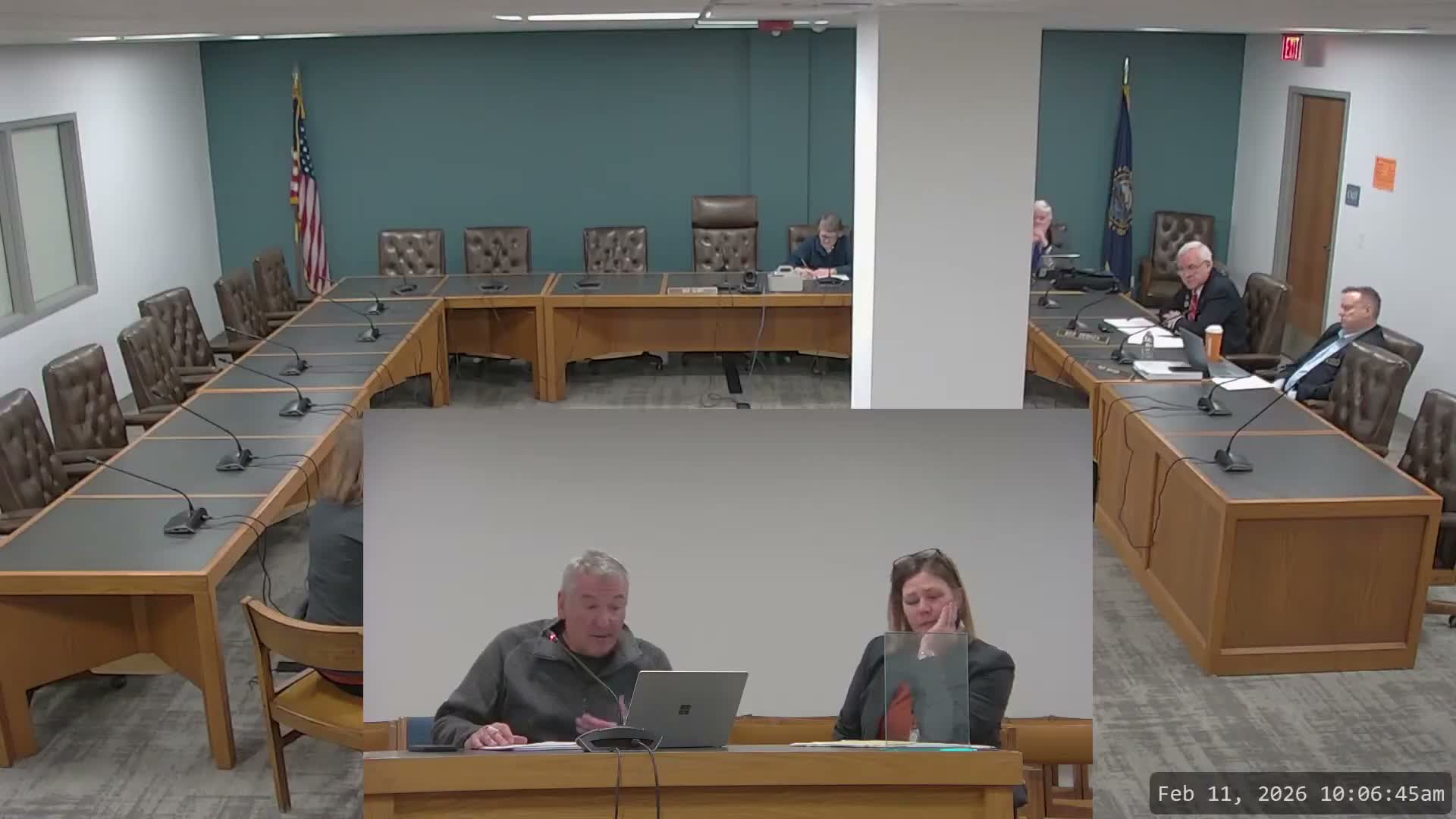
CONCORD — A Ways and Means subcommittee recommended that House Bill 1648, a proposal to exempt the first $300,000 of an owner-occupied residence from the statewide education property tax (SWEPT), be reported “ought to pass as amended” and agreed to form a one‑year study committee to resolve technical and fiscal questions.
Sponsor Dave Luna, who identified himself as the prime sponsor, told the committee he had prepared draft language aimed at addressing Department of Revenue Administration (DRA) concerns and was “really interested in what comes out of this work session” rather than offering a final amendment on the spot.
The committee focused on three central issues: (1) whether the measure applies only to SWEPT or to local property taxes more broadly; (2) how an exemption would affect the state SWEPT target and local apportioned warrants; and (3) administrative details such as the definition of owner/residency and whether income or asset tests are required.
DRA staff told the subcommittee they are “comfortable that this only applies to SWEPT,” resolving an earlier confusion noted in prior hearings. DRA also advised that an applicability statement tying implementation to property tax year 2028 would be consistent with equalization, the rate-setting process and the timing of SWEPT warrant calculations. “An applicability statement that said this is applicable to property tax year 2028 would be consistent with that implementation,” DRA staff said.
Members pressed the sponsor and DRA for modeling of fiscal effects at different exemption levels. DRA and the sponsor demonstrated how the state’s SWEPT target (testimony referenced roughly $363 million) is apportioned by equalized property value; exempting the first $300,000 of qualifying residences would reduce the statewide taxable base and raise the SWEPT rate applied to remaining values, with differing effects across towns. Using a Hopkinton example, DRA showed how the state’s direct adequacy payment from the Education Trust Fund would flow to local districts to maintain adequacy levels when SWEPT receipts change.
Lawmakers debated whether the exemption should include income or asset limits to target relief toward low‑ and moderate‑income households. DRA cautioned that adding income or asset criteria would likely require an annual application process handled by municipal assessors rather than DRA, increasing local workload and appeals. DRA suggested that if income or asset qualifications are added, a permanent application model would not be feasible and assessors would need processes for annual review and appeals.
Committee members also raised technical drafting issues: the bill’s owner and residency definitions could unintentionally exclude property held in trusts or limited liability companies, and the January 1 date used to determine primary residency might be better aligned with the April 1 property-inventory date. DRA recommended cross-referencing RSA 72:29 and related exemptions to avoid excluding common estate-planning arrangements and to ensure interpretation is consistent with existing exemptions.
After extended discussion, members agreed the bill has significant policy merit but needs more detailed fiscal modeling and line‑by‑line drafting. The subcommittee asked the sponsor and DRA to prepare an amendment that would (a) clarify that the exemption applies to SWEPT, (b) align owner/residency language with existing RSA 72 provisions or address trust/LLC edge cases, and (c) propose applicability language tied to the 2028 tax year for implementation modeling. The subcommittee voted to request an interim one‑year study committee to examine the homestead exemption, the low‑and‑moderate property tax relief program and other local property-tax exemptions, with interim and final reports to inform drafting.
The session closed with the recommendation that HB 1648 be reported “ought to pass as amended,” with the understanding the sponsor will circulate draft amendment language and that DRA will assist the study committee and drafting process. The sponsor said he would work with DRA to prepare a study amendment and submit it through legislative services.
What’s next: The sponsor and DRA will draft the study amendment and proposed fixes for definitions and applicability; the subcommittee expects a one‑year study process and midterm reporting to give members time to evaluate fiscal modeling and administrative impacts before further floor action.
Sponsor Dave Luna, who identified himself as the prime sponsor, told the committee he had prepared draft language aimed at addressing Department of Revenue Administration (DRA) concerns and was “really interested in what comes out of this work session” rather than offering a final amendment on the spot.
The committee focused on three central issues: (1) whether the measure applies only to SWEPT or to local property taxes more broadly; (2) how an exemption would affect the state SWEPT target and local apportioned warrants; and (3) administrative details such as the definition of owner/residency and whether income or asset tests are required.
DRA staff told the subcommittee they are “comfortable that this only applies to SWEPT,” resolving an earlier confusion noted in prior hearings. DRA also advised that an applicability statement tying implementation to property tax year 2028 would be consistent with equalization, the rate-setting process and the timing of SWEPT warrant calculations. “An applicability statement that said this is applicable to property tax year 2028 would be consistent with that implementation,” DRA staff said.
Members pressed the sponsor and DRA for modeling of fiscal effects at different exemption levels. DRA and the sponsor demonstrated how the state’s SWEPT target (testimony referenced roughly $363 million) is apportioned by equalized property value; exempting the first $300,000 of qualifying residences would reduce the statewide taxable base and raise the SWEPT rate applied to remaining values, with differing effects across towns. Using a Hopkinton example, DRA showed how the state’s direct adequacy payment from the Education Trust Fund would flow to local districts to maintain adequacy levels when SWEPT receipts change.
Lawmakers debated whether the exemption should include income or asset limits to target relief toward low‑ and moderate‑income households. DRA cautioned that adding income or asset criteria would likely require an annual application process handled by municipal assessors rather than DRA, increasing local workload and appeals. DRA suggested that if income or asset qualifications are added, a permanent application model would not be feasible and assessors would need processes for annual review and appeals.
Committee members also raised technical drafting issues: the bill’s owner and residency definitions could unintentionally exclude property held in trusts or limited liability companies, and the January 1 date used to determine primary residency might be better aligned with the April 1 property-inventory date. DRA recommended cross-referencing RSA 72:29 and related exemptions to avoid excluding common estate-planning arrangements and to ensure interpretation is consistent with existing exemptions.
After extended discussion, members agreed the bill has significant policy merit but needs more detailed fiscal modeling and line‑by‑line drafting. The subcommittee asked the sponsor and DRA to prepare an amendment that would (a) clarify that the exemption applies to SWEPT, (b) align owner/residency language with existing RSA 72 provisions or address trust/LLC edge cases, and (c) propose applicability language tied to the 2028 tax year for implementation modeling. The subcommittee voted to request an interim one‑year study committee to examine the homestead exemption, the low‑and‑moderate property tax relief program and other local property-tax exemptions, with interim and final reports to inform drafting.
The session closed with the recommendation that HB 1648 be reported “ought to pass as amended,” with the understanding the sponsor will circulate draft amendment language and that DRA will assist the study committee and drafting process. The sponsor said he would work with DRA to prepare a study amendment and submit it through legislative services.
What’s next: The sponsor and DRA will draft the study amendment and proposed fixes for definitions and applicability; the subcommittee expects a one‑year study process and midterm reporting to give members time to evaluate fiscal modeling and administrative impacts before further floor action.
Don't Miss a Word: See the Full Meeting!
Go beyond summaries. Unlock every video, transcript, and key insight with a Founder Membership.
✓
Get instant access to full meeting videos
✓
Search and clip any phrase from complete transcripts
✓
Receive AI-powered summaries & custom alerts
✓
Enjoy lifetime, unrestricted access to government data
30-day money-back guarantee
