IPU report: 71% of surveyed parliamentarians report public‑led intimidation; women disproportionately affected
February 12, 2026 | United Nations, International
This article was created by AI summarizing key points discussed. AI makes mistakes, so for full details and context, please refer to the video of the full meeting. Please report any errors so we can fix them. Report an error »
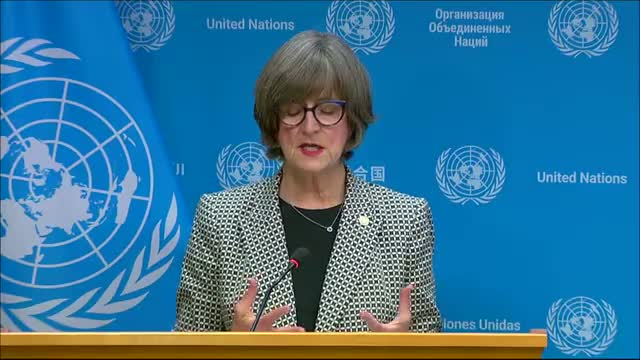
The Inter‑Parliamentary Union on Thursday released a global study, When the Public Turns Hostile, finding widespread online and offline intimidation of parliamentarians and warning that sustained harassment threatens representative democracy.
"When the public turns hostile" is based on a global survey and five in‑depth country case studies, the IPU's secretary general said at a New York briefing. "Seventy‑one percent of those we surveyed both globally and in the five countries reported having experienced violence from the public," he said, adding that online abuse accounts for the bulk of incidents in the case studies.
The report, the IPU said, sampled MPs across roughly 80–85 countries and includes five national case studies—Argentina, Benin, Italy, Malaysia and The Netherlands—chosen to provide regional and political diversity. In its presentation, the IPU said the study combines a broad survey of lawmakers with interviews and country‑level analysis.
The secretary general and the IPU human‑rights director highlighted several headline findings: online abuse is concentrated (the report cites roughly 65–70% of MPs in the five case studies reporting online abuse), women MPs reported higher exposure (IPU figures cited 76% of women versus 68% of men), and common forms of intimidation include insults, degrading language, misinformation and threats. The report also warns the growth of artificial intelligence and deepfakes is exacerbating gendered online attacks.
To illustrate consequences, the secretary general cited recent attacks in the United States: "In Pennsylvania, the governor Josh Shapiro was targeted by an arson attack last year," he said; he also said the husband of former House Speaker Nancy Pelosi "was physically assaulted in his home recently," and that Rep. Ilhan Omar "was physically attacked at a town hall event." Those examples were offered as illustrations of the phenomenon rather than as part of a systematic U.S. incident count.
The IPU framed the rise in public‑led intimidation as driven by political polarization, economic and social pressures, amplification of anger through social media and declining trust in institutions. Officials said sustained harassment has prompted some lawmakers to self‑censor or reduce public engagement, with potential consequences for representation and parliamentary deliberation.
The IPU's recommendations include: parliaments using lawmaking, oversight and budgetary powers to address intimidation; establishing centralized, impartial reporting and support units inside parliaments; conducting systematic data collection and individual security risk assessments for at‑risk MPs; and developing gender‑sensitive parliamentary procedures. The human‑rights director urged parliaments to adopt robust security protocols and to work with technology platforms "so abuses and violence are not permitted."
Report authors described the five case studies as selected for regional balance, different political and legal systems, parliaments small enough to allow interviews with a high share of members, and a minimum level of free speech so intimidation by the public can be meaningfully observed. The IPU said it has a separate mechanism—the committee on the human rights of parliamentarians—for investigating alleged violations by state actors; those cases (including several involving Palestinian and Israeli MPs) are handled through that committee.
During the question‑and‑answer session, journalists asked about sample size and country selection. The IPU said the report draws on "hundreds" of survey responses, interviews and about 500 interviews in country work, and that it did not attempt to produce a definitive incident count for every country. The organization encouraged parliaments to consider the report's recommendations and pointed to a Friday session in New York where MPs from Austria and Chile will speak further on the topic.
The IPU said member parliaments must act to protect MPs without curtailing free speech. "Charity begins at home," the secretary general said, urging parliaments to show leadership in protecting lawmakers and the institutions they serve. The IPU invited journalists to consult its publications and committee decisions online for further details.
"When the public turns hostile" is based on a global survey and five in‑depth country case studies, the IPU's secretary general said at a New York briefing. "Seventy‑one percent of those we surveyed both globally and in the five countries reported having experienced violence from the public," he said, adding that online abuse accounts for the bulk of incidents in the case studies.
The report, the IPU said, sampled MPs across roughly 80–85 countries and includes five national case studies—Argentina, Benin, Italy, Malaysia and The Netherlands—chosen to provide regional and political diversity. In its presentation, the IPU said the study combines a broad survey of lawmakers with interviews and country‑level analysis.
The secretary general and the IPU human‑rights director highlighted several headline findings: online abuse is concentrated (the report cites roughly 65–70% of MPs in the five case studies reporting online abuse), women MPs reported higher exposure (IPU figures cited 76% of women versus 68% of men), and common forms of intimidation include insults, degrading language, misinformation and threats. The report also warns the growth of artificial intelligence and deepfakes is exacerbating gendered online attacks.
To illustrate consequences, the secretary general cited recent attacks in the United States: "In Pennsylvania, the governor Josh Shapiro was targeted by an arson attack last year," he said; he also said the husband of former House Speaker Nancy Pelosi "was physically assaulted in his home recently," and that Rep. Ilhan Omar "was physically attacked at a town hall event." Those examples were offered as illustrations of the phenomenon rather than as part of a systematic U.S. incident count.
The IPU framed the rise in public‑led intimidation as driven by political polarization, economic and social pressures, amplification of anger through social media and declining trust in institutions. Officials said sustained harassment has prompted some lawmakers to self‑censor or reduce public engagement, with potential consequences for representation and parliamentary deliberation.
The IPU's recommendations include: parliaments using lawmaking, oversight and budgetary powers to address intimidation; establishing centralized, impartial reporting and support units inside parliaments; conducting systematic data collection and individual security risk assessments for at‑risk MPs; and developing gender‑sensitive parliamentary procedures. The human‑rights director urged parliaments to adopt robust security protocols and to work with technology platforms "so abuses and violence are not permitted."
Report authors described the five case studies as selected for regional balance, different political and legal systems, parliaments small enough to allow interviews with a high share of members, and a minimum level of free speech so intimidation by the public can be meaningfully observed. The IPU said it has a separate mechanism—the committee on the human rights of parliamentarians—for investigating alleged violations by state actors; those cases (including several involving Palestinian and Israeli MPs) are handled through that committee.
During the question‑and‑answer session, journalists asked about sample size and country selection. The IPU said the report draws on "hundreds" of survey responses, interviews and about 500 interviews in country work, and that it did not attempt to produce a definitive incident count for every country. The organization encouraged parliaments to consider the report's recommendations and pointed to a Friday session in New York where MPs from Austria and Chile will speak further on the topic.
The IPU said member parliaments must act to protect MPs without curtailing free speech. "Charity begins at home," the secretary general said, urging parliaments to show leadership in protecting lawmakers and the institutions they serve. The IPU invited journalists to consult its publications and committee decisions online for further details.
Don't Miss a Word: See the Full Meeting!
Go beyond summaries. Unlock every video, transcript, and key insight with a Founder Membership.
✓
Get instant access to full meeting videos
✓
Search and clip any phrase from complete transcripts
✓
Receive AI-powered summaries & custom alerts
✓
Enjoy lifetime, unrestricted access to government data
30-day money-back guarantee
