Advocates and residents urge Vermont committee to fund recovery housing, back tailored landlord-tenant change S.157
February 12, 2026 | General & Housing, HOUSE OF REPRESENTATIVES, Committees, Legislative , Vermont
This article was created by AI summarizing key points discussed. AI makes mistakes, so for full details and context, please refer to the video of the full meeting. Please report any errors so we can fix them. Report an error »
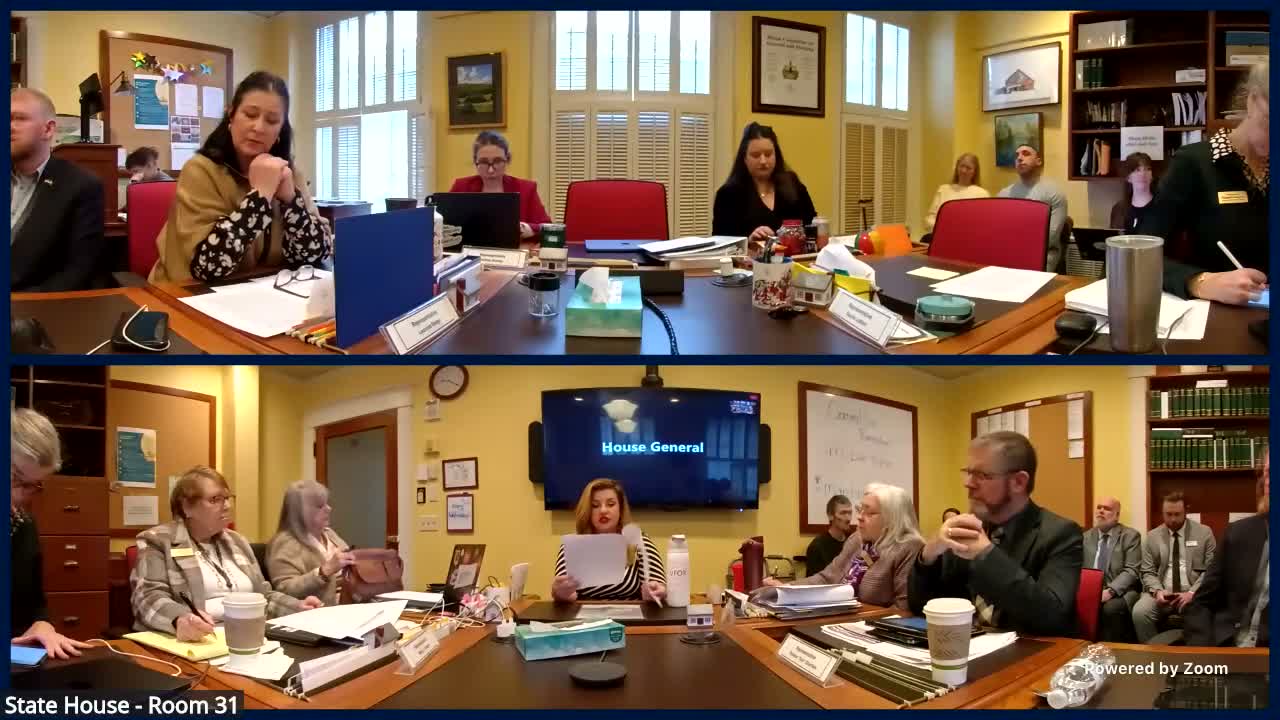
Candace Gale, director of community relations for the Vermont Foundation of Recovery, told the House General & Housing Committee on Feb. 11 that certified recovery residences are operating near capacity and that policy and money are needed to expand them statewide. "Recovery residences are not treatment facilities. They are peer based structured living environments that rely on shared standards, accountability, and community safety to function effectively," Gale said.
Gale said her organization operates 10 certified recovery homes with 79 beds and estimated statewide capacity at about 150 beds, far short of the Department of Health goal of 400 recovery-residence beds by 2030. She asked lawmakers to support S.157, described in her testimony as a narrow landlord-tenant exemption to allow certified recovery residences to follow credentialed discharge policies, and to adopt Opiate Settlement Advisory Council FY27 funding recommendations: $1,750,000 in operations funding for certified recovery residences and $200,000 in scholarships to help individuals pay initial move-in costs.
Committee members asked how scholarships would work for people exiting corrections or treatment. Gale said scholarships would cover a first month's membership or rent and the common $400 deposit to give people a month to secure work and stabilize housing. Jeff Moreau, executive director of the Vermont Alliance for Recovery Residences, said his organization certified three new operations since the committee last considered the issue and that those additions represent roughly 20 new beds.
Two people with lived experience told the committee how recovery residences helped them rejoin family life and the workforce. Nicholas Barrios, a recent graduate of Ben's House, told lawmakers the residence "saved my life" and described receiving the wraparound supports that helped him find steady work and rebuild relationships. Justice Donald, a former resident of Jonas/Jenna's Promise, said he completed intensive outpatient programming and workforce training at the residence and credited the program with helping him regain custody of his son; he contrasted an estimated $100,000 annual cost to incarcerate someone with the roughly $33,000-per-year figure he cited for program costs.
The committee did not take action on S.157 during the hearing. Witnesses said expanding certified recovery residences depends both on policy alignment and sustained operational funding. Several witnesses offered to provide written cost and program detail to committee members.
What happens next: the committee paused the hearing for a scheduled break and said it will continue with additional testimony on related housing and budget matters.
Gale said her organization operates 10 certified recovery homes with 79 beds and estimated statewide capacity at about 150 beds, far short of the Department of Health goal of 400 recovery-residence beds by 2030. She asked lawmakers to support S.157, described in her testimony as a narrow landlord-tenant exemption to allow certified recovery residences to follow credentialed discharge policies, and to adopt Opiate Settlement Advisory Council FY27 funding recommendations: $1,750,000 in operations funding for certified recovery residences and $200,000 in scholarships to help individuals pay initial move-in costs.
Committee members asked how scholarships would work for people exiting corrections or treatment. Gale said scholarships would cover a first month's membership or rent and the common $400 deposit to give people a month to secure work and stabilize housing. Jeff Moreau, executive director of the Vermont Alliance for Recovery Residences, said his organization certified three new operations since the committee last considered the issue and that those additions represent roughly 20 new beds.
Two people with lived experience told the committee how recovery residences helped them rejoin family life and the workforce. Nicholas Barrios, a recent graduate of Ben's House, told lawmakers the residence "saved my life" and described receiving the wraparound supports that helped him find steady work and rebuild relationships. Justice Donald, a former resident of Jonas/Jenna's Promise, said he completed intensive outpatient programming and workforce training at the residence and credited the program with helping him regain custody of his son; he contrasted an estimated $100,000 annual cost to incarcerate someone with the roughly $33,000-per-year figure he cited for program costs.
The committee did not take action on S.157 during the hearing. Witnesses said expanding certified recovery residences depends both on policy alignment and sustained operational funding. Several witnesses offered to provide written cost and program detail to committee members.
What happens next: the committee paused the hearing for a scheduled break and said it will continue with additional testimony on related housing and budget matters.
Don't Miss a Word: See the Full Meeting!
Go beyond summaries. Unlock every video, transcript, and key insight with a Founder Membership.
✓
Get instant access to full meeting videos
✓
Search and clip any phrase from complete transcripts
✓
Receive AI-powered summaries & custom alerts
✓
Enjoy lifetime, unrestricted access to government data
30-day money-back guarantee
